Guides
Plain reference pages for the trade and the people who buy from it, built from growers' published availability and the HortOS Plant Price Index.
Plant selection and horticulture
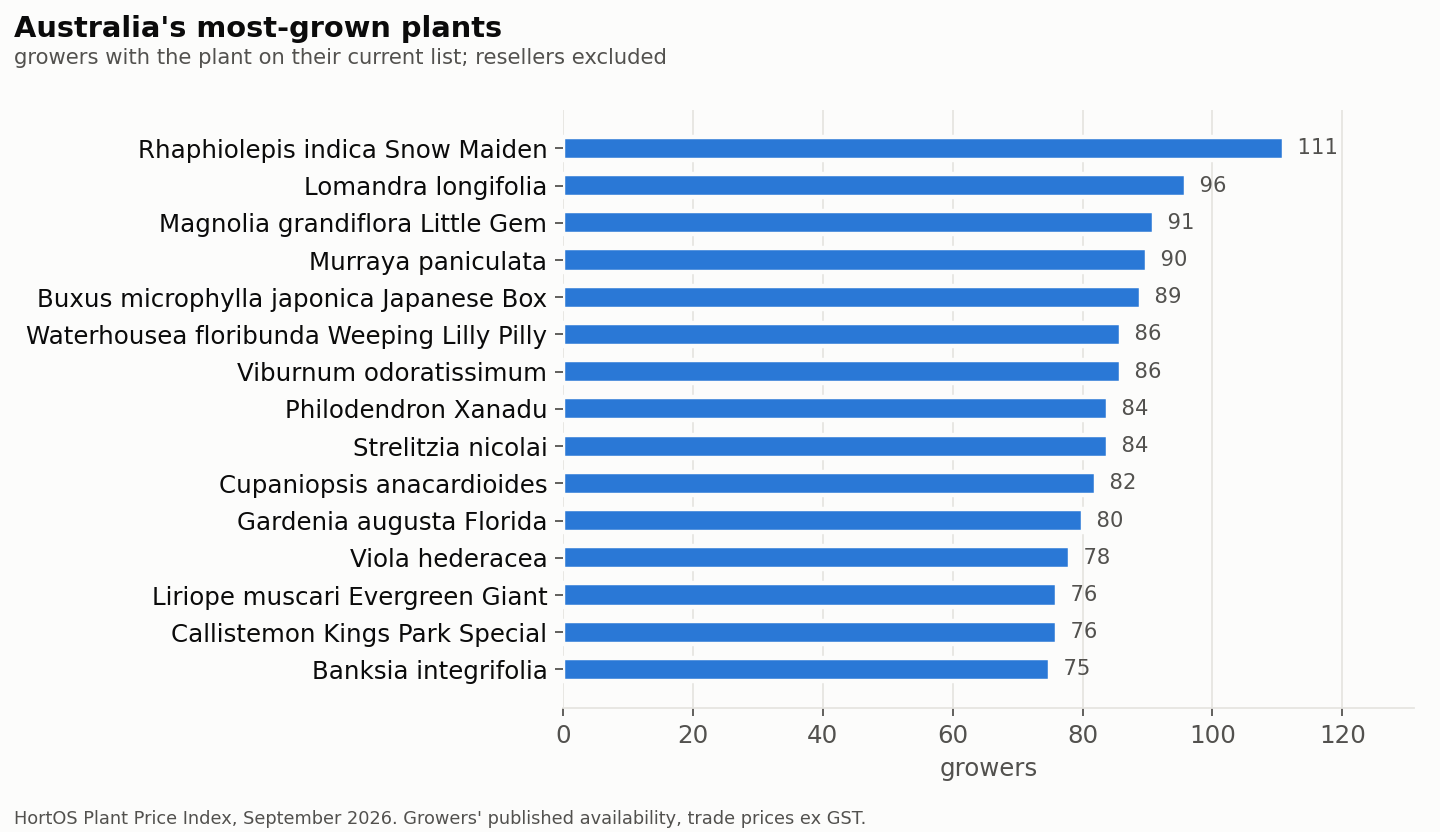
The Most Grown Native Plants in Australia, by State
A data page, not an essay: the Australian native plants held by the most wholesale growers, counted grower by grower and state by state from growers' current lists on HortOS, with the median trade price at the size most growers price. Two paragraphs on what the tables show and what they do not, then the tables, refreshed each edition.
Updated 25 September 2026. Counts and medians from the live au.hortosapp.com plant and price pages on 24 September 2026, built with the HortOS Plant Price Index method (September 2026 edition); refreshed each edition.
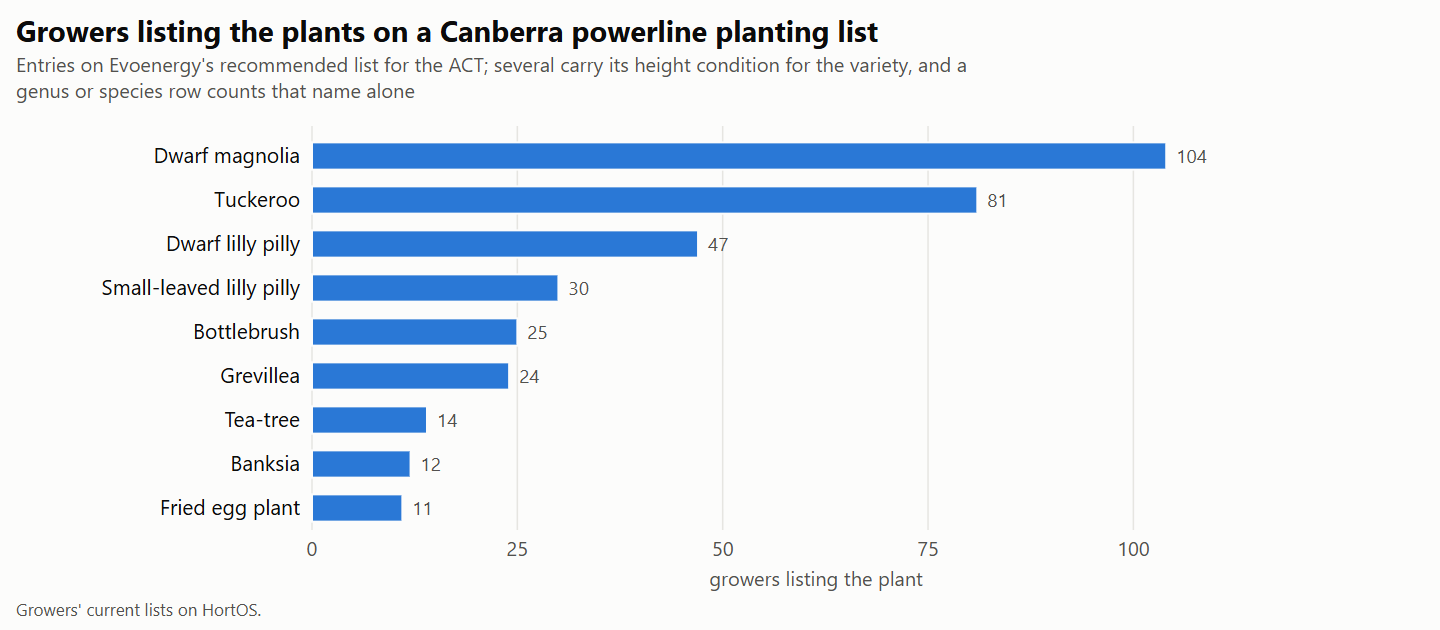
Trees and shrubs for planting near powerlines, and who lists them
What Australian network operators, a regulator and a state department publish about trees near overhead powerlines, set side by side with each body's state and date. Two plant tables then count the growers listing the plants named on Evoenergy's list for the ACT and in a Queensland council's table, with a trade median for the plants enough growers price.
Updated 21 October 2026. Figures are what the live au.hortosapp.com price and plant pages printed.
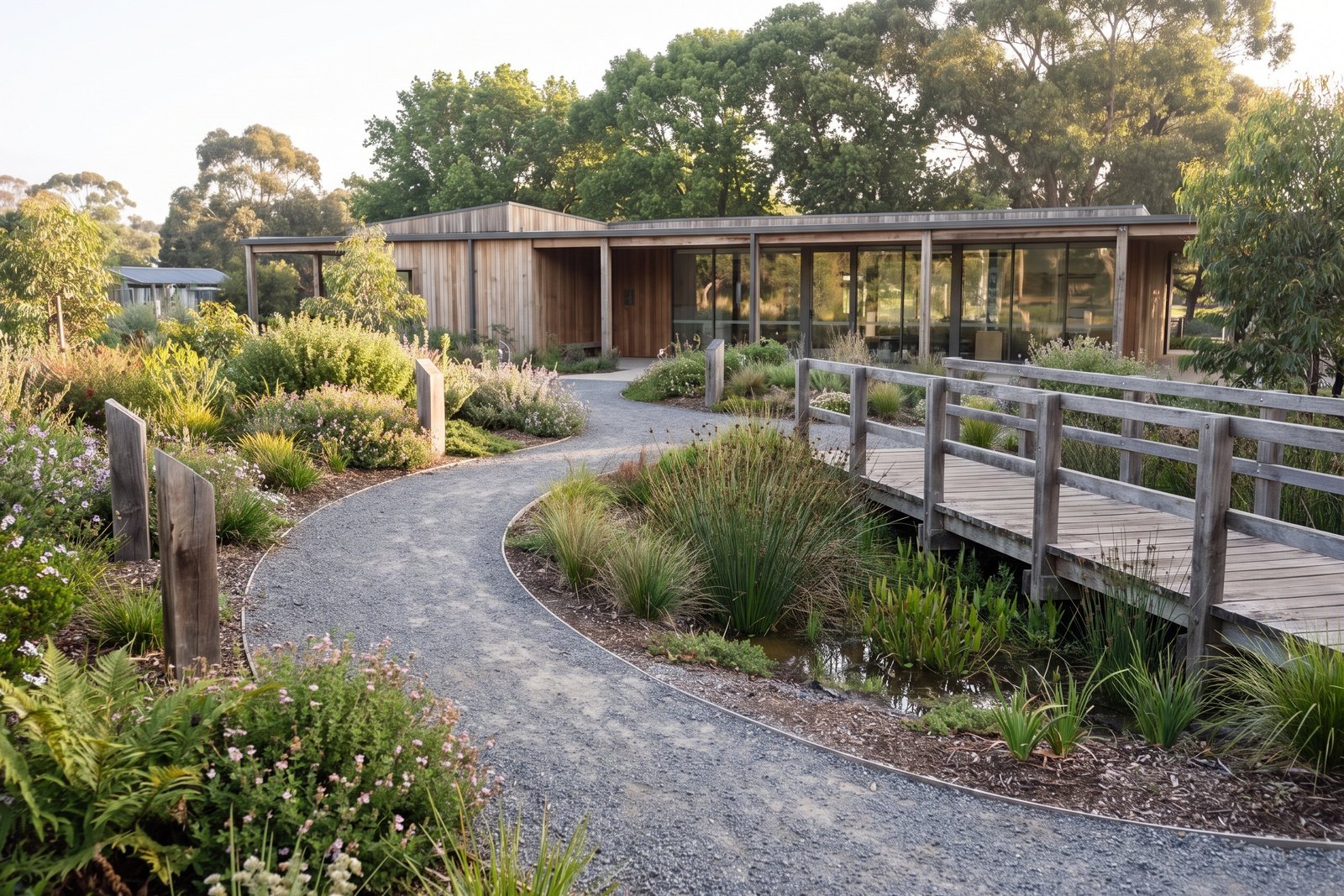
Choosing Plants for a Nature Centre or Demonstration Garden
A demonstration garden should show plants visitors can find, buy and grow, at a standard of care a home can manage. This page covers choosing themes, choosing plants growers list in numbers, labels and interpretation, care at the visitor's scale, and the records that keep the garden useful.
Updated 24 October 2026. Plant counts and median trade prices from the live au.hortosapp.com plant and price pages on 25 October 2026; state grower counts from the hubs on 24 September 2026.
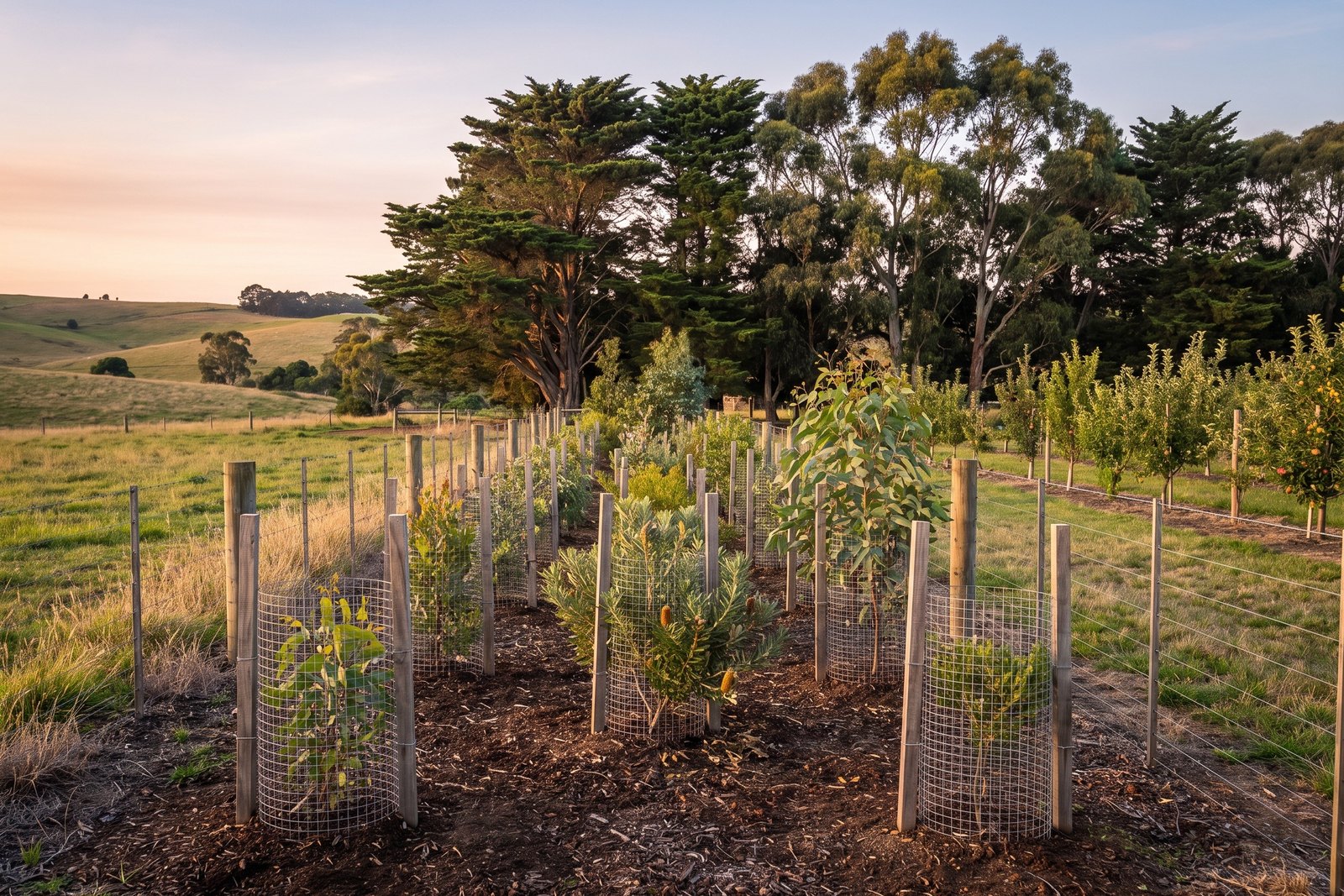
Hedgerows and Windbreaks for Small Farms
A windbreak or hedgerow protects in proportion to its height and length, and only works planted without gaps across the damaging wind. This page covers what belts do, the design rules agencies publish, species and layers, planting and protecting a belt, and where small farms find help.
Updated 24 October 2026. Plant counts and median trade prices from the live au.hortosapp.com plant and price pages on 25 October 2026; state grower counts from the hubs on 24 September 2026.
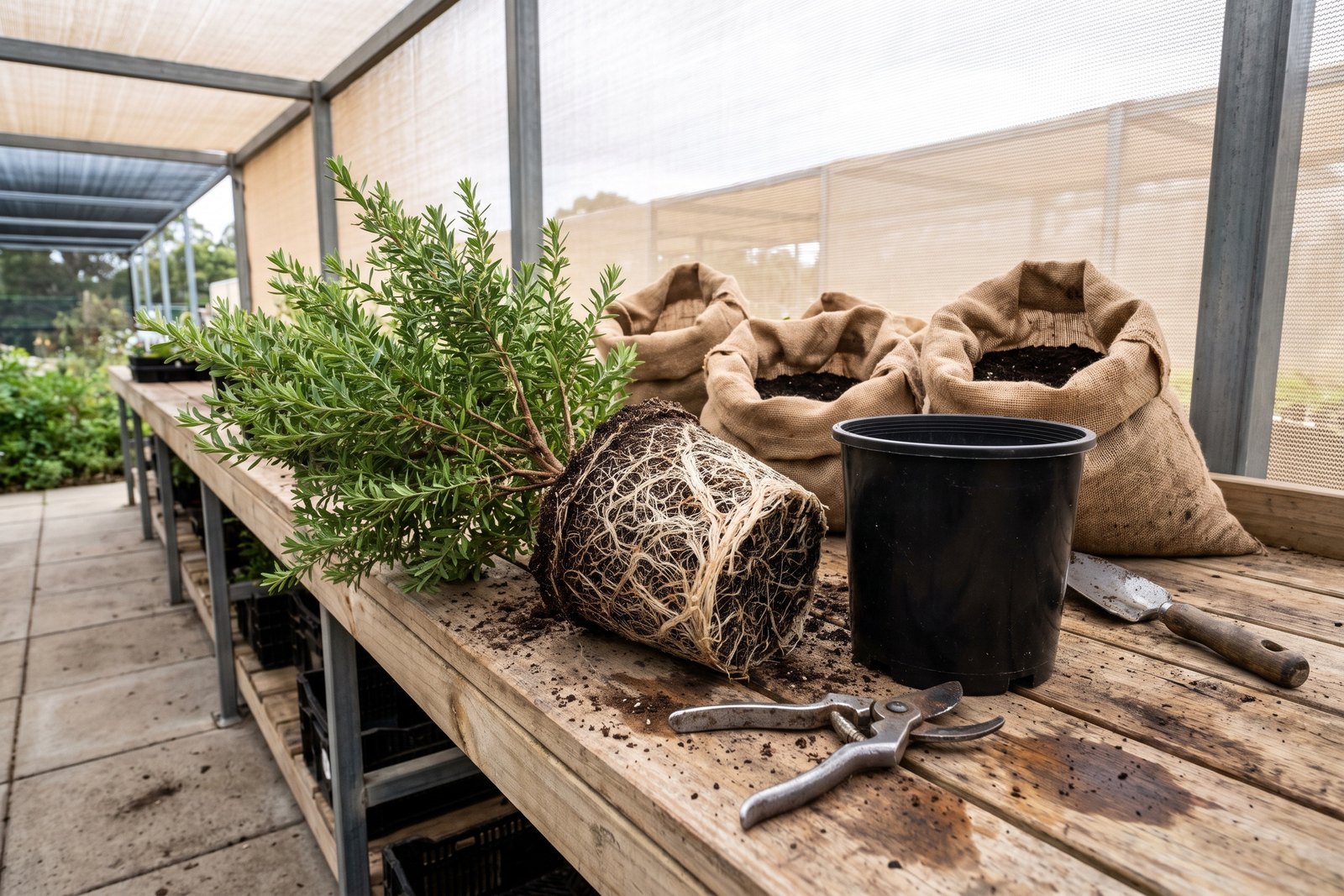
Nursery Plant Quality: Roots, Pests and Hardening Off
Quality in a nursery plant is mostly below the mix, in the roots, and a buyer who lifts one plant from each line sees what the price list cannot say. This page is the checklist: roots, stem and canopy, pests and diseases, hardening off, weeds and labels, the questions to send with the order, and the schemes that certify practice.
Updated 24 October 2026. Grower counts from the live au.hortosapp.com state hubs on 24 September 2026; median trade prices from the HortOS Plant Price Index, September 2026 edition.
Environment, wildlife and water
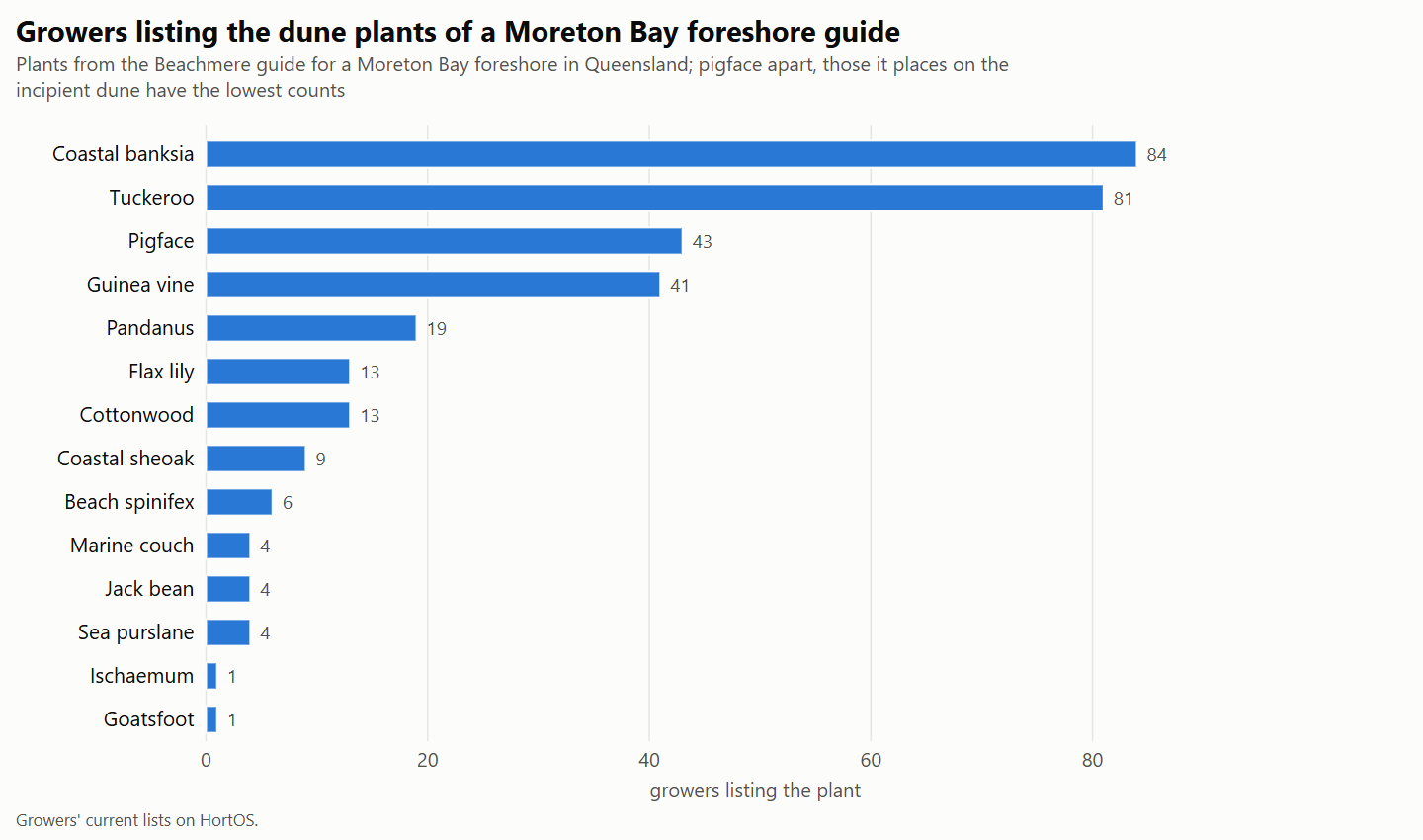
Dune restoration plants and how many growers list them
A Moreton Bay guide and Tasmania's coastal works manual place dune plants from the seaward sand to the hind dune, and a bushcare plan lists plants for one New South Wales beach. This page sets each list beside the growers listing every plant, gives tube medians for most of the beach list, and reports each source's density or season.
Updated 19 October 2026. Figures are what the live au.hortosapp.com price and plant pages printed.
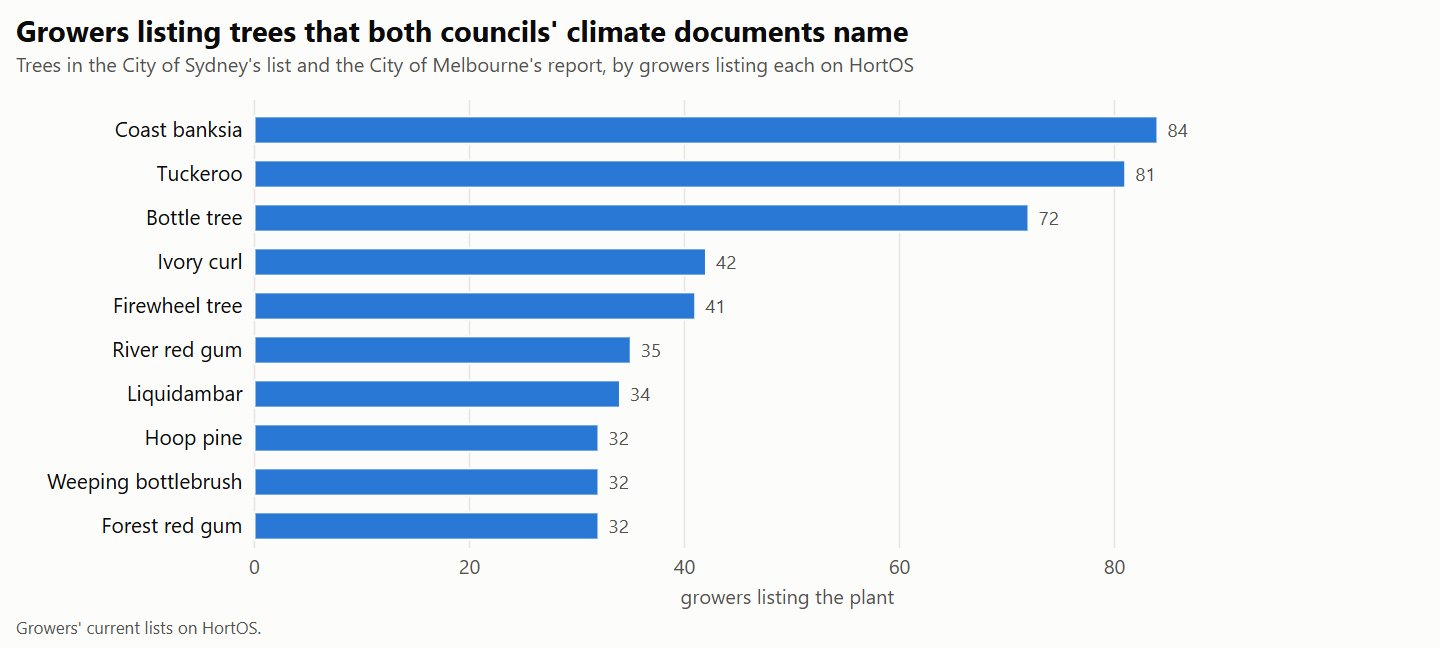
Climate ready trees: what researchers rate and who lists them
What three bodies of Australian work say about trees for hotter decades: Which Plant Where, the City of Sydney's Tree Species List and the City of Melbourne's report on future temperatures. With how many growers list each tree named in both councils' documents, where the evidence differs on one tree, and what a grower count leaves unsaid.
Updated 12 October 2026. Grower counts are what the live au.hortosapp.com plant pages printed.
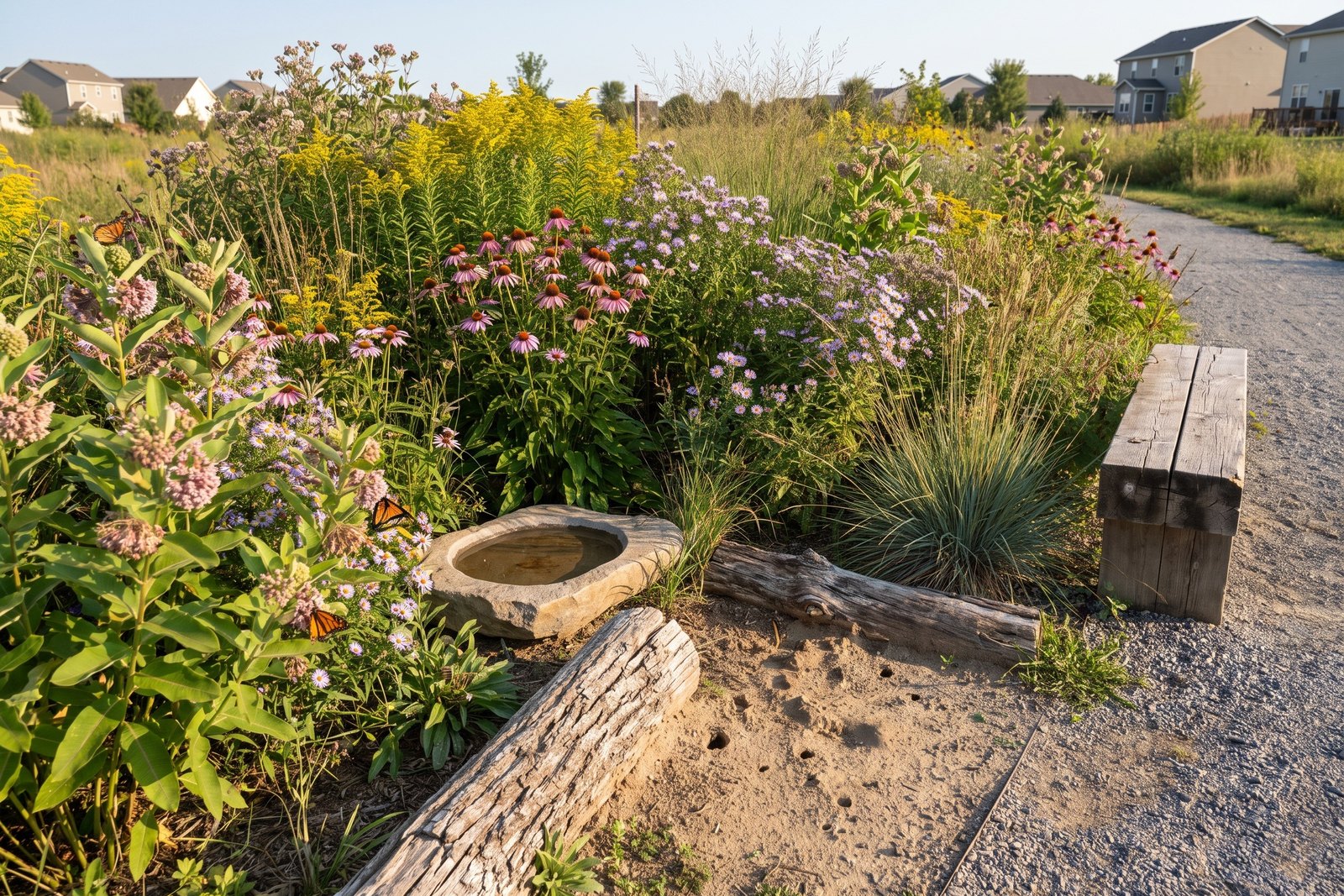
Native Plants for a Small Pollinator Patch
A small pollinator patch works when it does three jobs at once: flowers in sequence, host plants for caterpillars and places to nest, kept free of sprays. This page covers choosing the spot, native plants by the job they do, a flowering sequence and buying the plants from growers.
Updated 24 October 2026. Plant counts and median trade prices from the live au.hortosapp.com plant and price pages on 25 October 2026; state grower counts from the hubs on 24 September 2026.
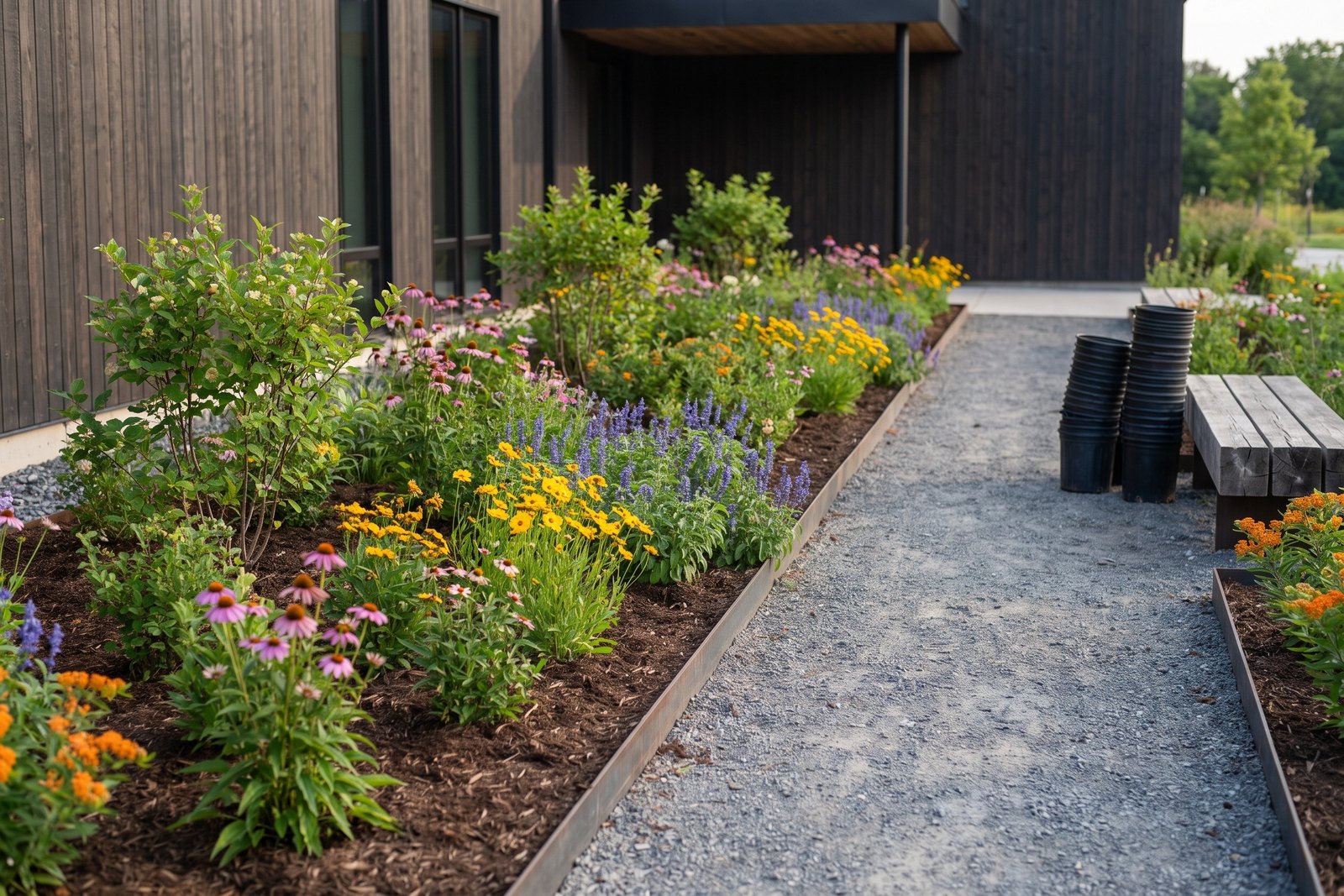
Planning a Pollinator Planting With Trade Suppliers
A pollinator planting list from a published regional guide is a wholesale order in disguise. This page shows how a club, a council or a conservation group matches the list to what growers list, chooses sizes and drifts, spreads flowering across the year, and asks the provenance, cultivar and chemical questions before the order goes in.
Updated 24 October 2026. Grower counts from the live au.hortosapp.com state hubs on 24 September 2026; median trade prices from the HortOS Plant Price Index, September 2026 edition.
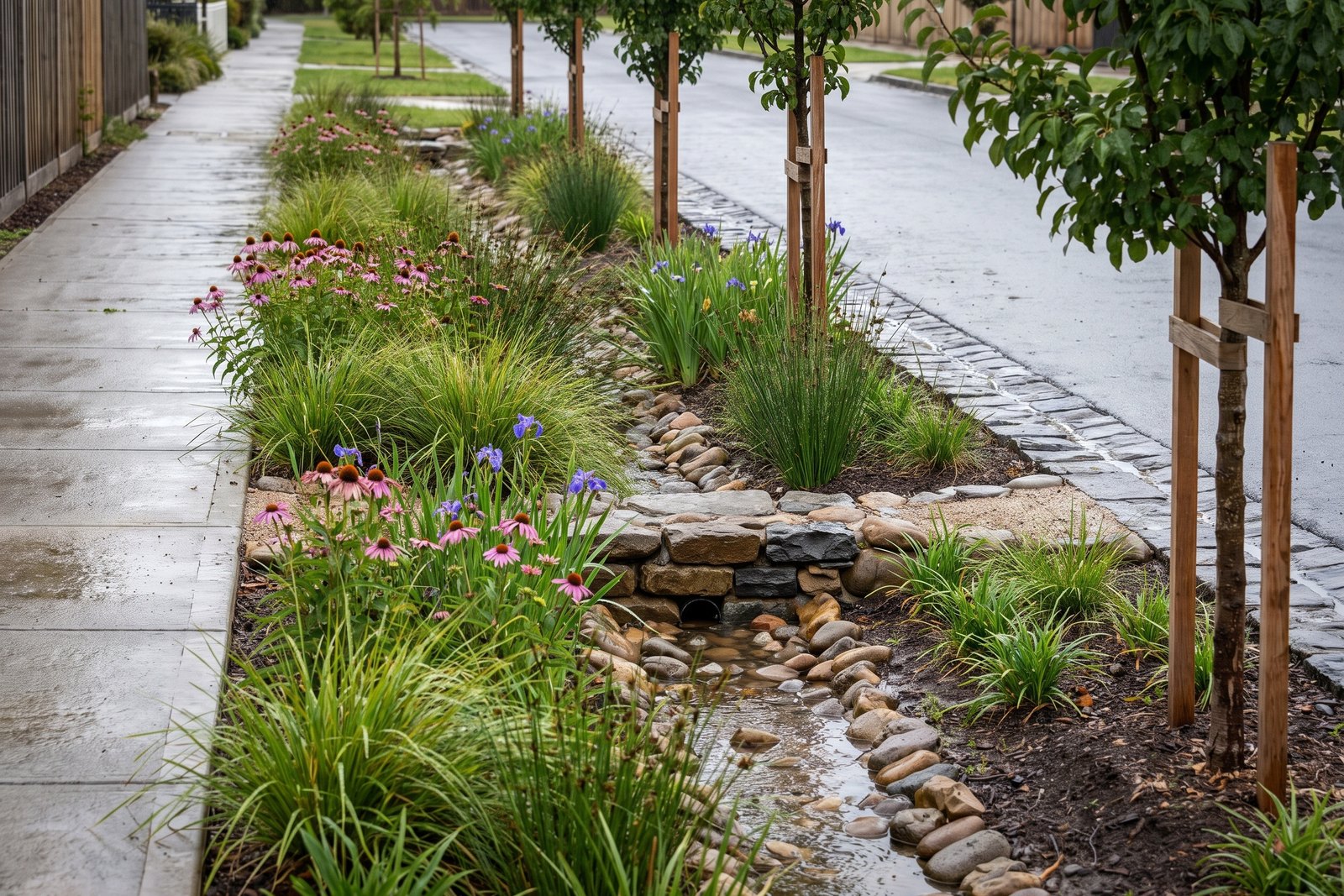
Raingardens and Bioswales: Siting, Soil and Plants
A rain garden is designed around the water first and the plants second, and its plants must take both a flood and a drought. This page covers what rain gardens and bioswales do, siting and sizing, the soil and the build, choosing plants for wet and dry, and looking after them.
Updated 24 October 2026. Plant counts and median trade prices from the live au.hortosapp.com plant and price pages on 25 October 2026; state grower counts from the hubs on 24 September 2026.
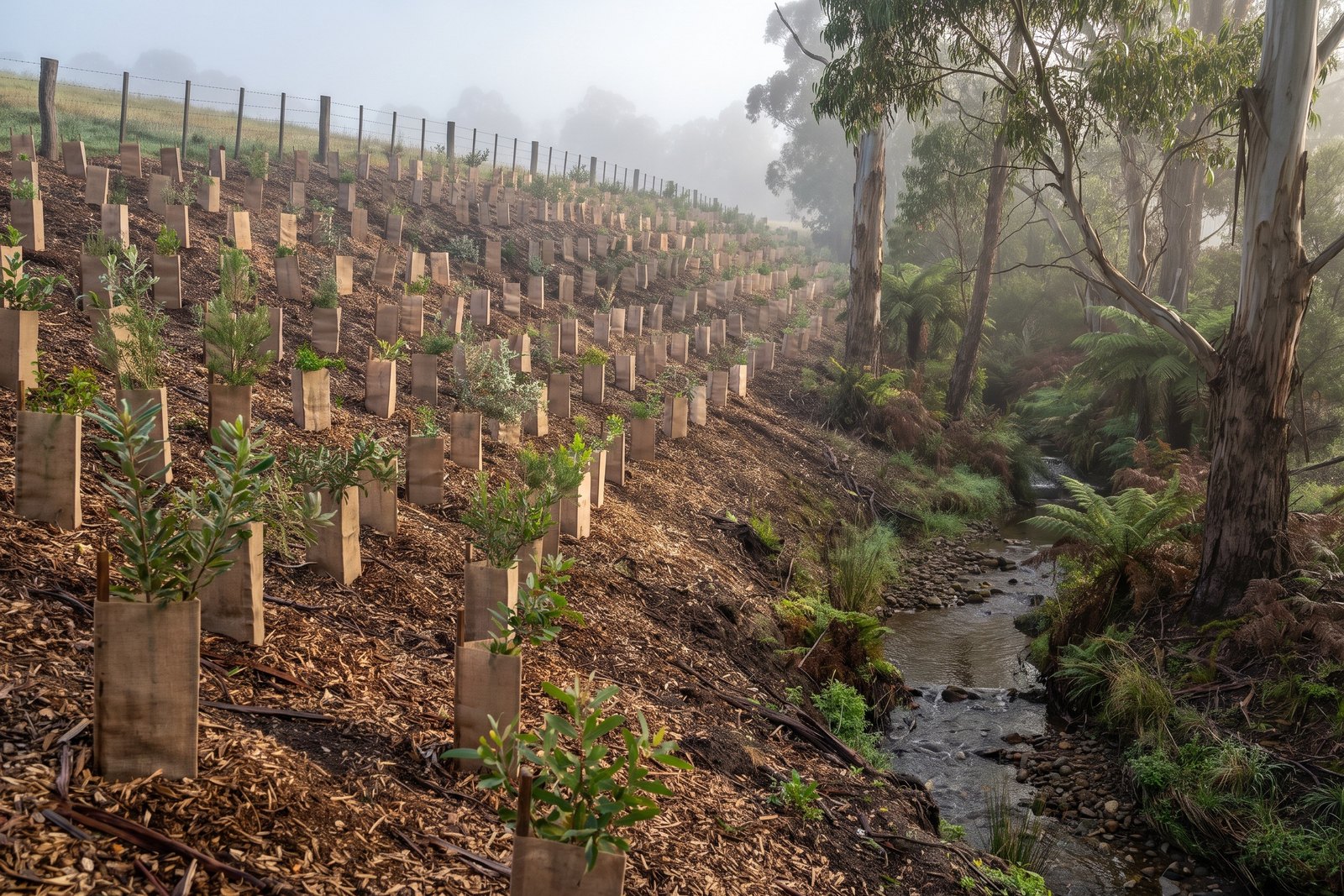
Restoration Planting and Local Ecotype Stock
A restoration planting is decided by site preparation and seed origin before the day, and by two or three years of follow-up after it. This page covers preparing the site, local ecotype stock and seed zones, planting small stock well, the first three years and counting survival.
Updated 24 October 2026. Plant counts and median trade prices from the live au.hortosapp.com plant and price pages on 25 October 2026; state grower counts from the hubs on 24 September 2026.
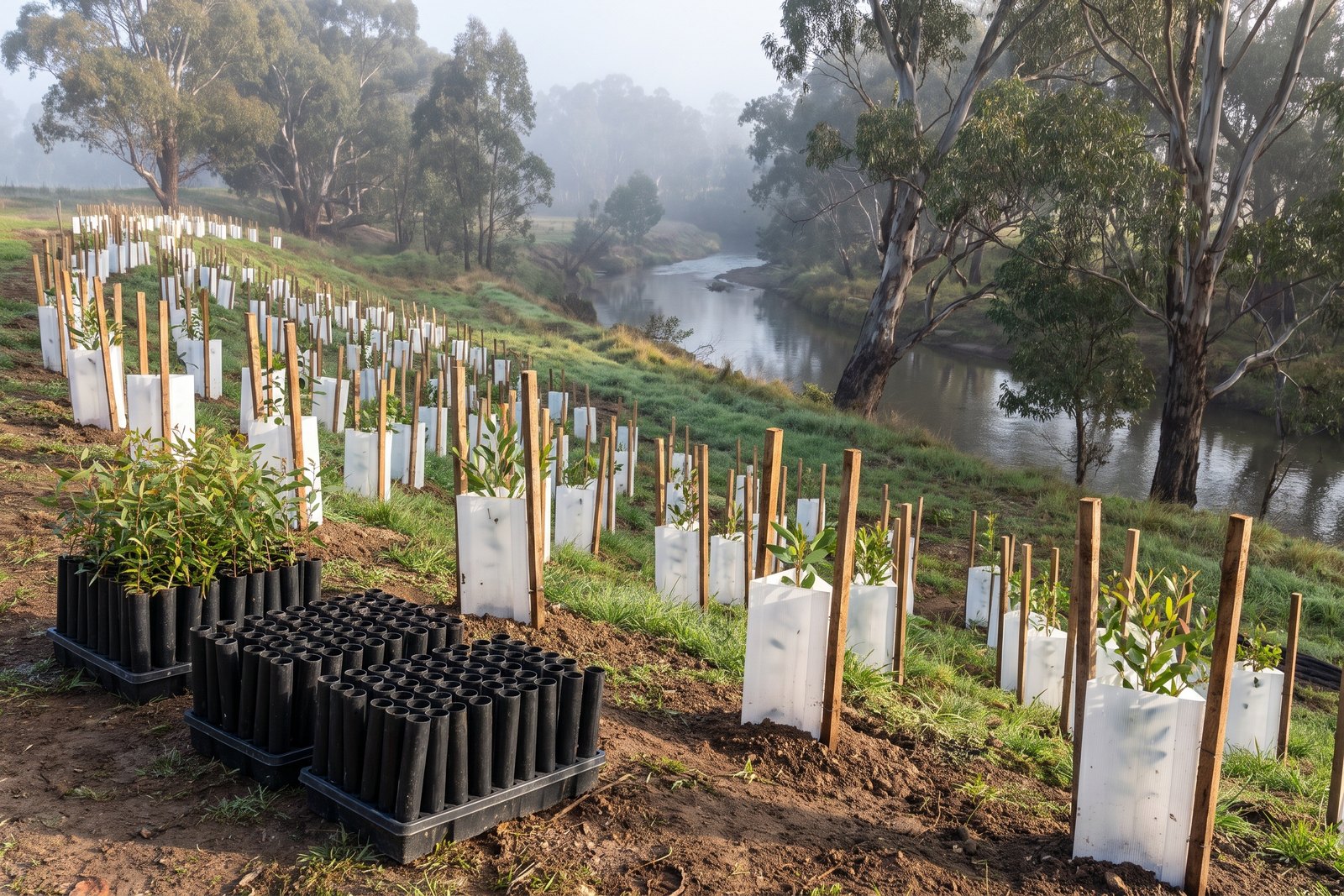
Sourcing Native Plants for a Restoration or Revegetation Project
Revegetation stock is grown to order, so a restoration project that books its growing a year ahead plants what the plan says. This page covers the provenance rule and how to ask for it, the grades the trade grows, contract growing and its timetable, reading the directory for a project, and what a grower's list cannot show.
Updated 24 October 2026. Grower counts from the live au.hortosapp.com state hubs on 24 September 2026; median trade prices from the HortOS Plant Price Index, September 2026 edition.
Money, tax, grants and rebates
Property and development
What a Hedge Costs at the Farm Gate in Australia
The plants for a hedge have a knowable wholesale price before freight, planting and margin are added. This page gives the September 2026 farm-gate medians for the seven hedge species the Australian trade grows most, at three pot sizes, with the spacing rule and worked costs for 10, 20 and 30 metre hedges.
Updated 25 September 2026. Figures from the HortOS Plant Price Index, September 2026 edition.
What Australian studies found about street trees and house prices
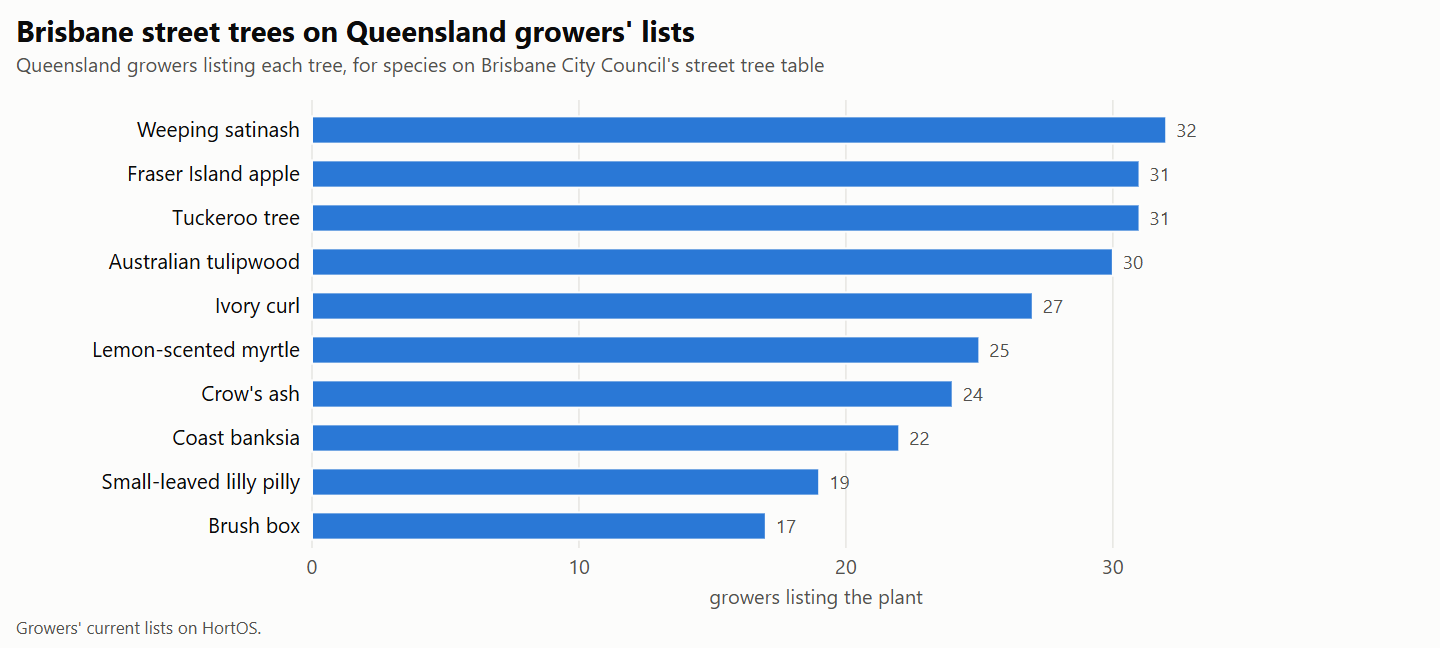
A study by study account of what Australian sale price research found for street trees and canopy near a house, in Perth, Brisbane and Sydney, with each document's method. It reports what two councils say on who plants the verge, and gives Queensland grower counts and trade medians for species on Brisbane City Council's street tree table.
Updated 17 October 2026. Figures are what the live au.hortosapp.com price and plant pages printed.
The trade and procurement

Nursery Pot Sizes Explained: Millimetres, Litres and Gallons
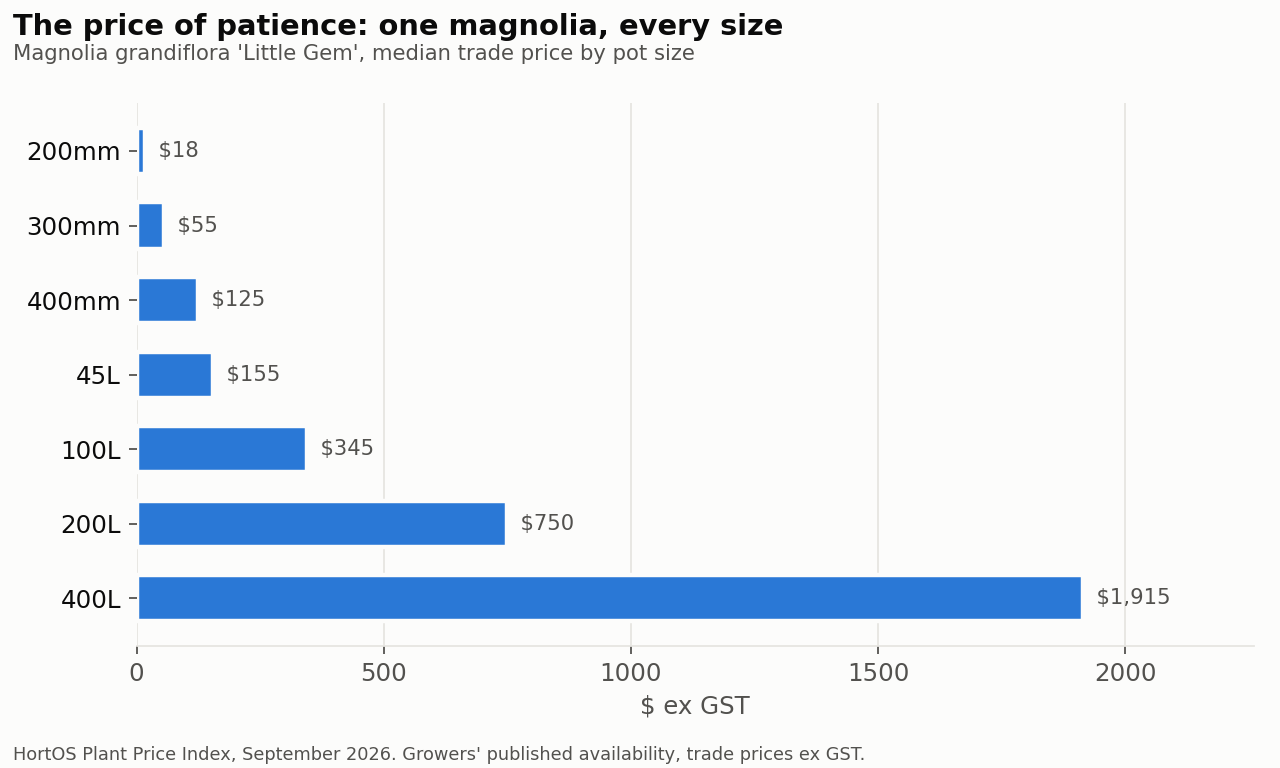
Australian growers name a pot by its rim diameter up to 400 mm and by its volume in litres above that, while American growers use gallon classes. This guide explains each step of the ladder, the approximate height and age behind it, how to convert between systems, and what the trade pays at every size.
Updated 25 September 2026. Figures from the HortOS Plant Price Index, September 2026 edition.
Buying From a Wholesale Grower When You Are Not in the Trade
Landcare groups, schools, friends groups and landholders can buy from wholesale growers when they order like the trade: in quantity, ahead of the season, on the grower's terms. This page explains who sells to whom, what an ABN and GST change, minimum orders and pooling, tubestock against pots, provenance, lead times, freight and state borders.
Updated 25 September 2026. Figures from the HortOS Plant Price Index, September 2026 edition, and the live price pages on 24 September 2026.
Reading a Wholesale Availability List and Pricing a Quote
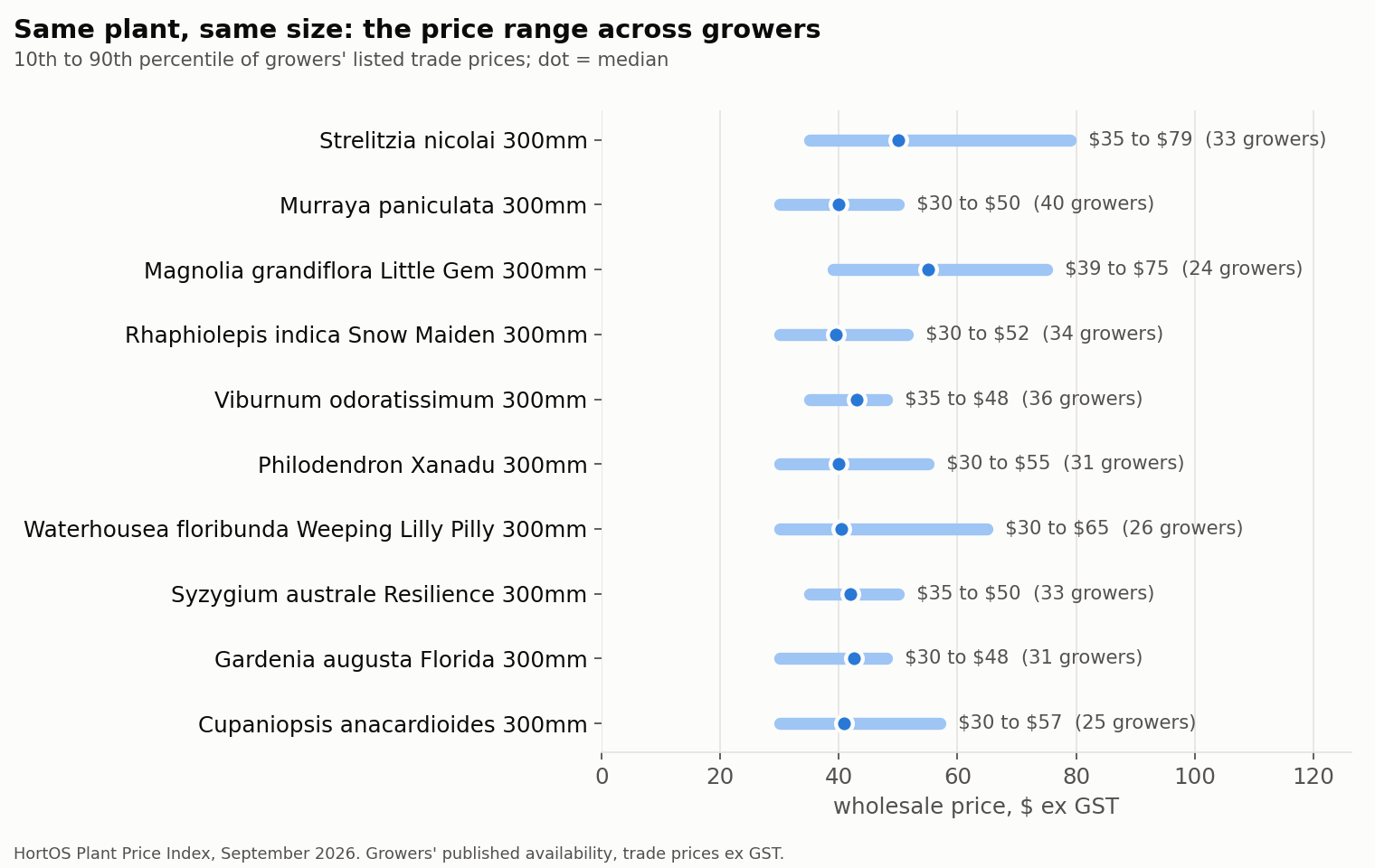
For landscapers, designers, estimators and students: what each column of a wholesale availability list means, how much the same plant at the same size varies between growers and states, how the low, median and high on the price pages are built, and how to carry the plant line of a quote from the list to the client.
Updated 25 September 2026. Figures from the HortOS Plant Price Index, September 2026 edition, and the live price pages' own method.
Buying Plants in Bulk for a Community Group
Garden clubs, community gardens, schools and friends groups can buy plants by the tray and the trolley from wholesale growers when they order like the trade. This page explains what bulk means to a grower, the three ways a group buys, how to turn a plan into quantities, what a quote request needs and how collection day works.
Updated 24 October 2026. Grower counts from the live au.hortosapp.com state hubs on 24 September 2026; median trade prices from the HortOS Plant Price Index, September 2026 edition.
Plant Grades and Container Sizes, Market by Market
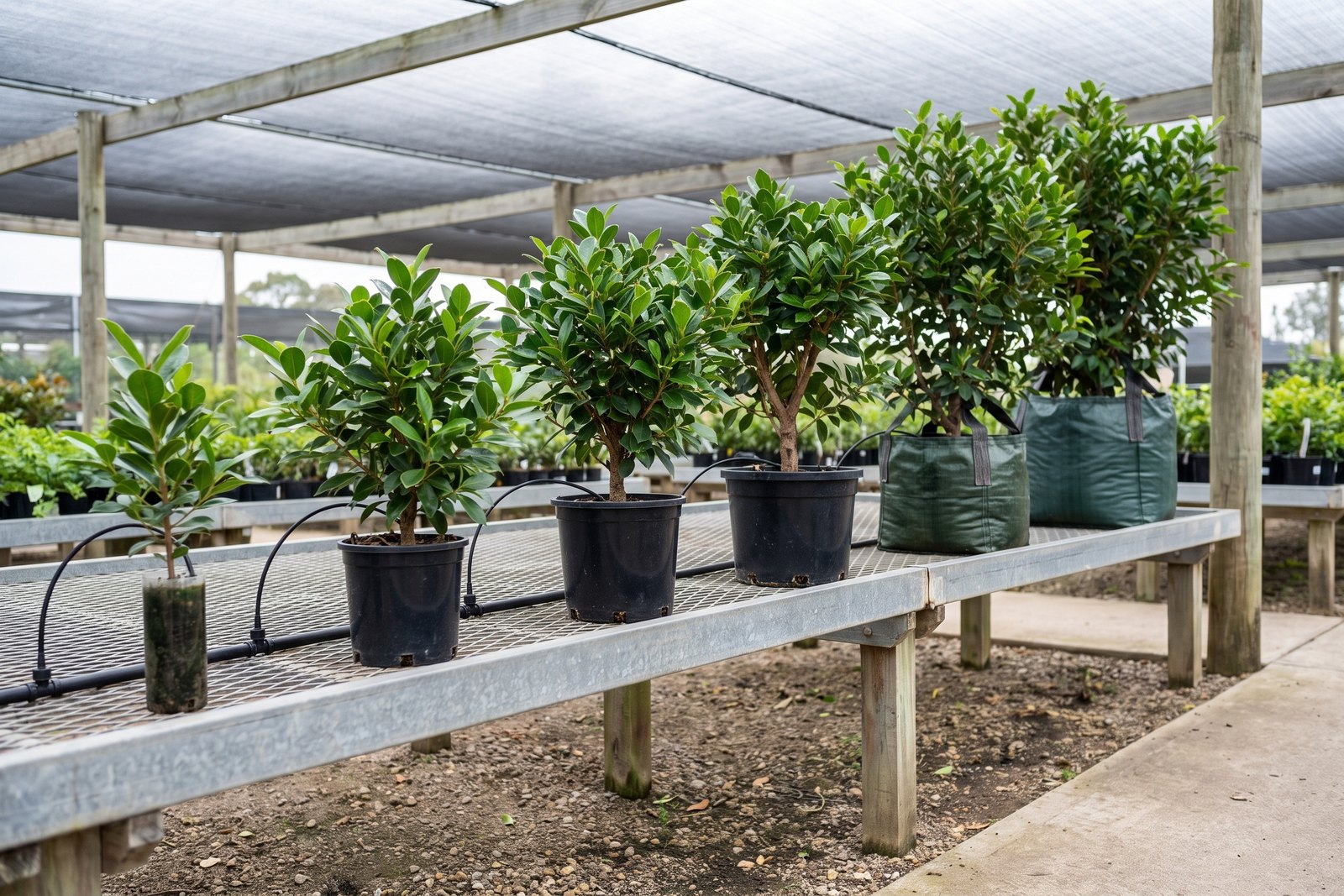
A #3 in Florida, a 200 mm pot in Sydney, a PB5 in Hamilton and a #2 in Ontario are roughly the same plant. This page sets the four markets' size ladders side by side from plug to field grown tree, explains what each grade is and how old, and names the standard each market specifies against.
Updated 24 October 2026. Grower counts from the live au.hortosapp.com state hubs on 24 September 2026; median trade prices from the HortOS Plant Price Index, September 2026 edition.
Reading a Grower's Price List and Trade Terms
A grower's price list is an offer written in shorthand, and the terms are part of the price. This page reads a trade list column by column and term by term, from the tax and freight basis to minimums, price on application, holds, substitutions, payment and claims, and turns two quotes into landed costs.
Updated 24 October 2026. Grower counts from the live au.hortosapp.com state hubs on 24 September 2026; median trade prices from the HortOS Plant Price Index, September 2026 edition.
Specifying and Procuring Trees for a Street or Park Planting
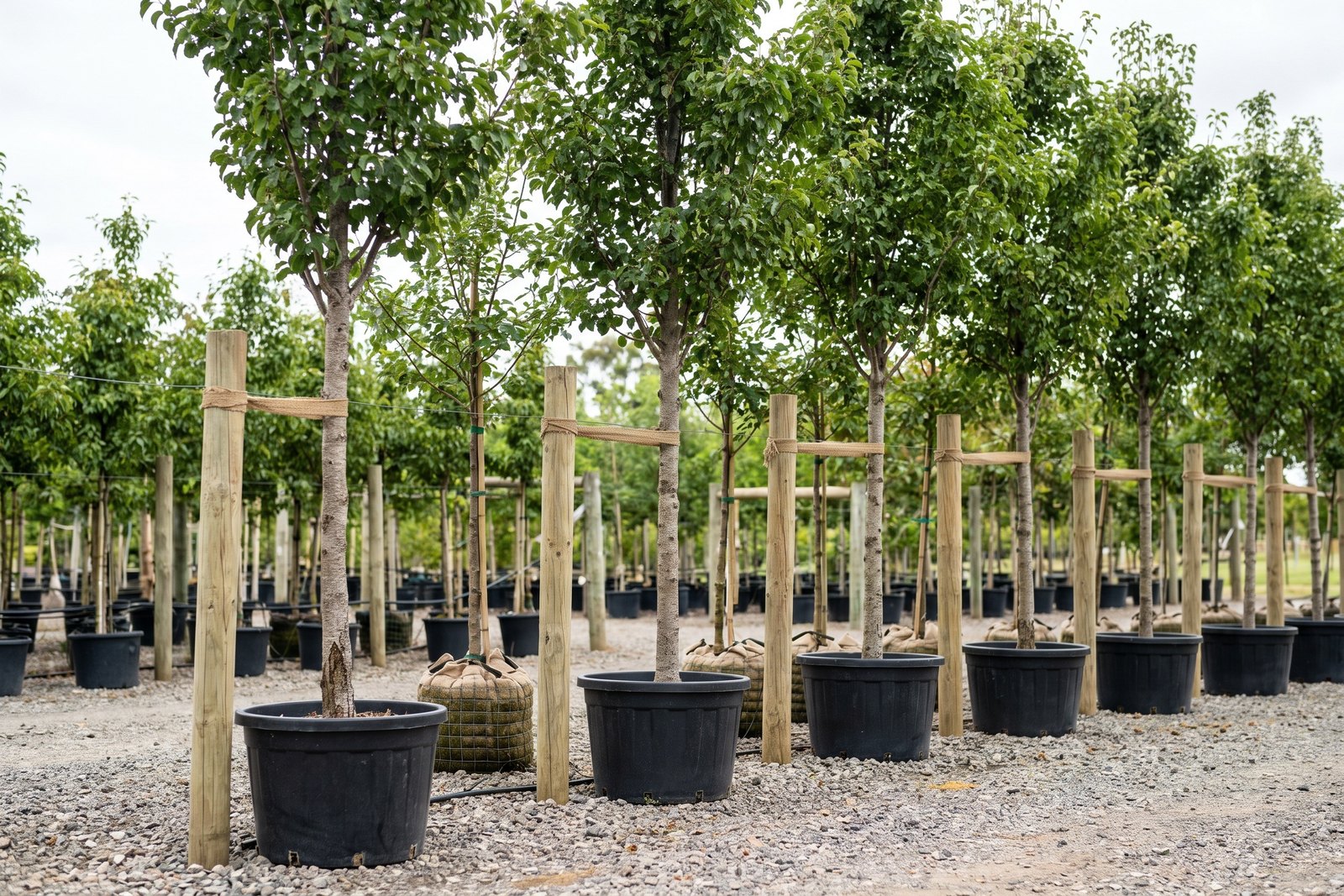
A street or park planting fails at the specification more often than at the planting. This page explains the nursery stock standard to specify against, what goes in the clause, how the trade grows and grades advanced trees, where the growers are, the quote and tender process, and the inspection at the nursery and at delivery.
Updated 24 October 2026. Grower counts from the live au.hortosapp.com state hubs on 24 September 2026; median trade prices from the HortOS Plant Price Index, September 2026 edition.
When to Order: Lead Times, Pre-Orders and Contract Growing
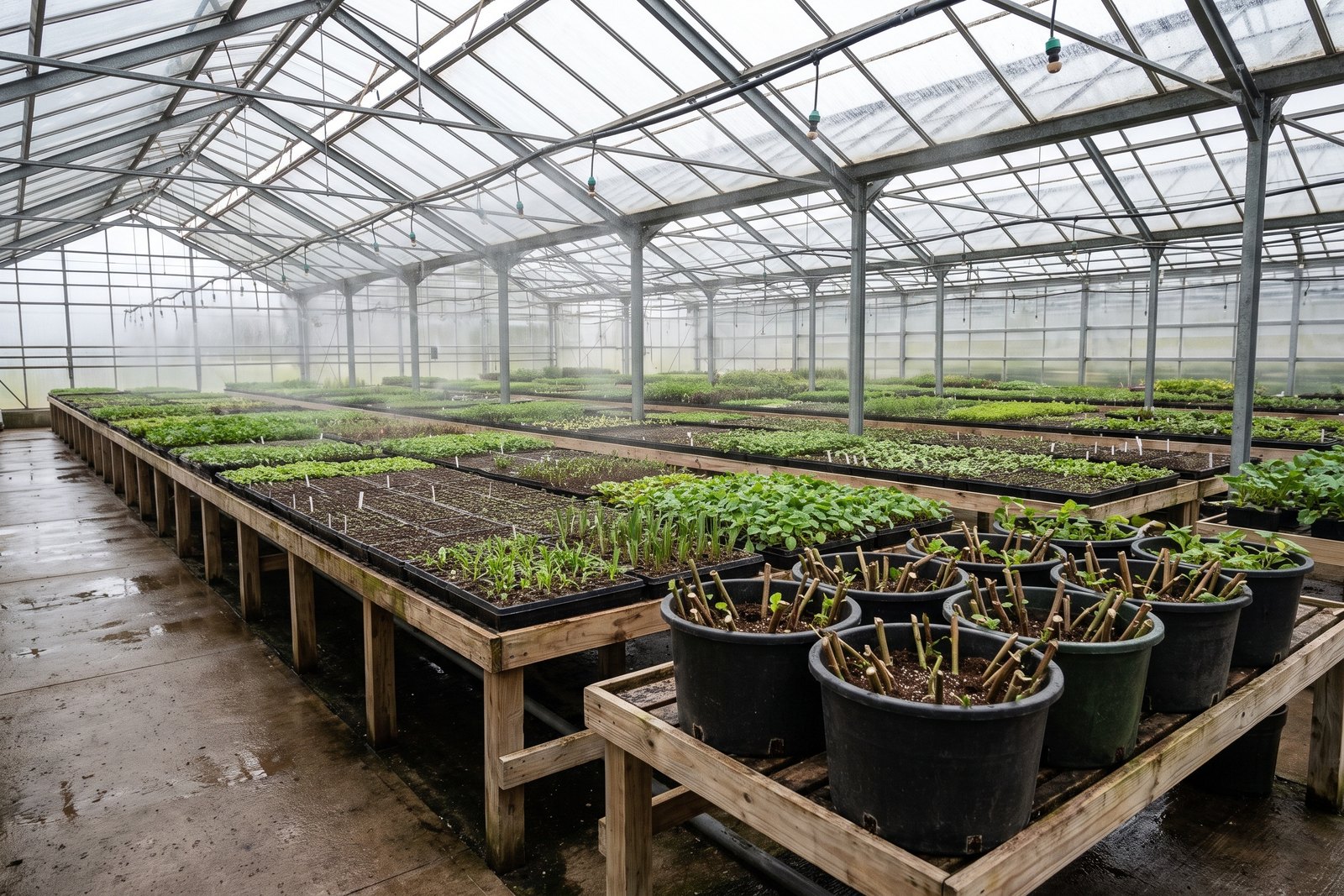
Every plant on a grower's list is a decision made a season or more ago. This page explains how long each grade takes to grow, the three ways a buyer secures stock ahead of the season, what a growing contract contains, the planting calendar in this market and how to read a current list for the year ahead.
Updated 24 October 2026. Grower counts from the live au.hortosapp.com state hubs on 24 September 2026; median trade prices from the HortOS Plant Price Index, September 2026 edition.
Community, schools and health
Shade trees for schools and playgrounds: sizes and trade prices
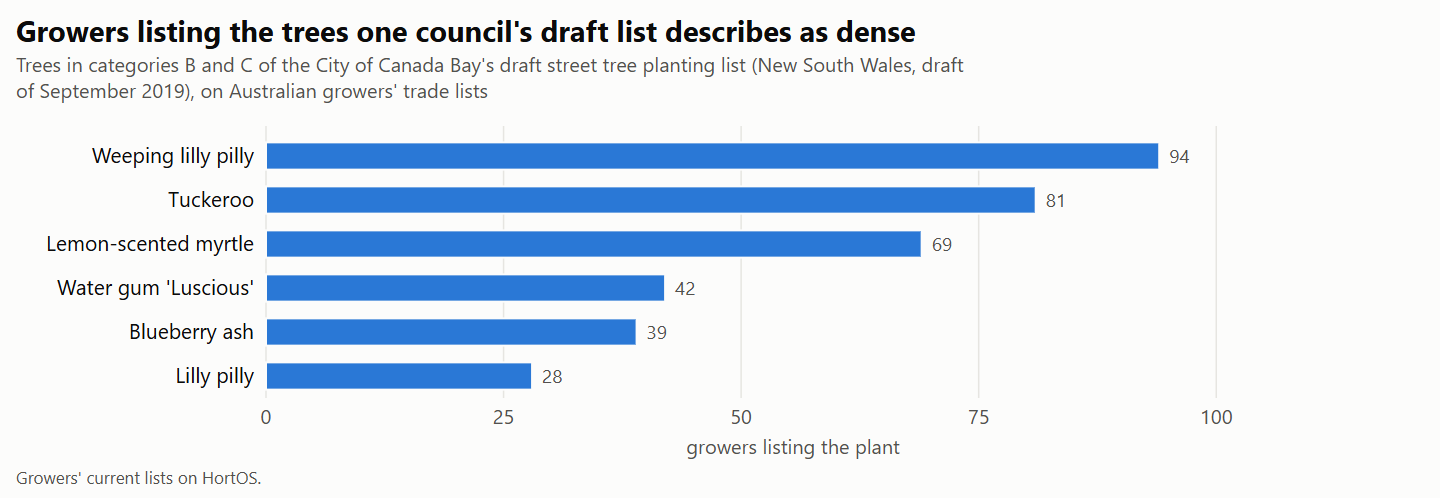
Cancer Council NSW's Guidelines to Shade, Victoria's school building handbook and the NSW Department of Education's design guide give three different answers on the size of shade tree to plant in a school ground. This page sets them side by side, with growers listing trees from one council's draft list and trade medians at three sizes.
Updated 18 October 2026. Figures are what the live au.hortosapp.com price and plant pages printed.
School garden grants in Australia and when each last ran
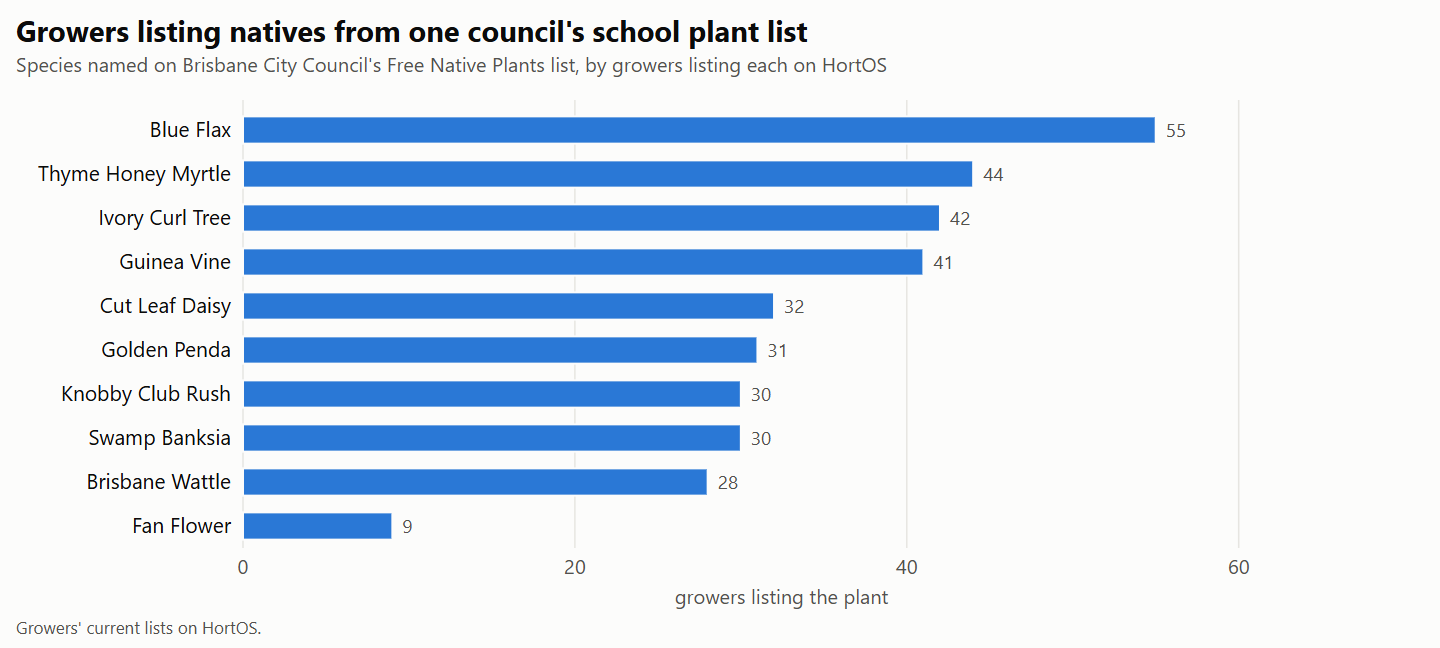
A dated record of Australian school garden programs: who could apply, what each gave in its latest round and its status when the funder's page was read on 5 October 2026. A second table shows grower counts and median trade prices for native species on Brisbane City Council's school plant list.
Updated 5 October 2026. Figures are what the live au.hortosapp.com price and plant pages printed.
Poisonous plant lists for childcare and the natives growers list
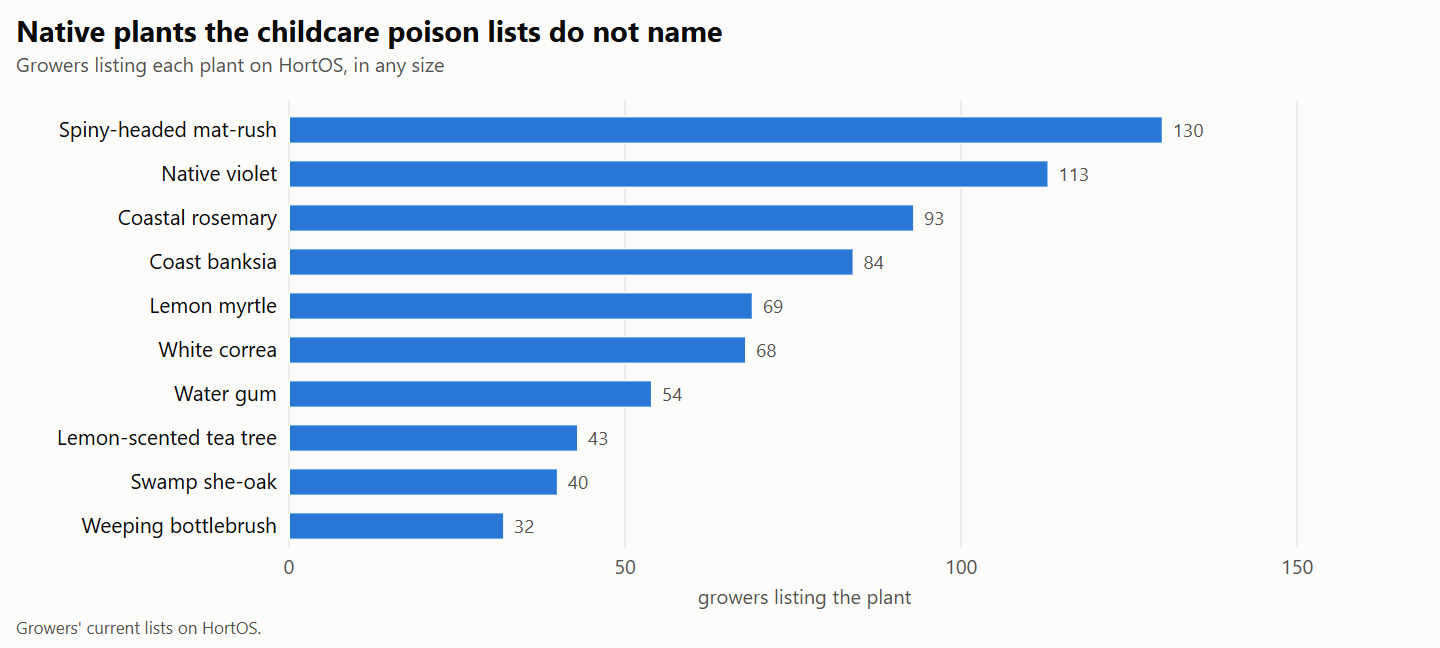
What four Australian documents say about poisonous plants around young children: the Kidsafe NSW list, the Queensland Poisons Information Centre's categories, a Sydney hospital factsheet and a NSW regulator's note. A table then gives grower counts and median trade prices for native plants those lists do not name. The service and its regulator decide.
Updated 8 September 2026. Figures are what the live au.hortosapp.com price and plant pages printed.
What the plants for a community garden cost at trade
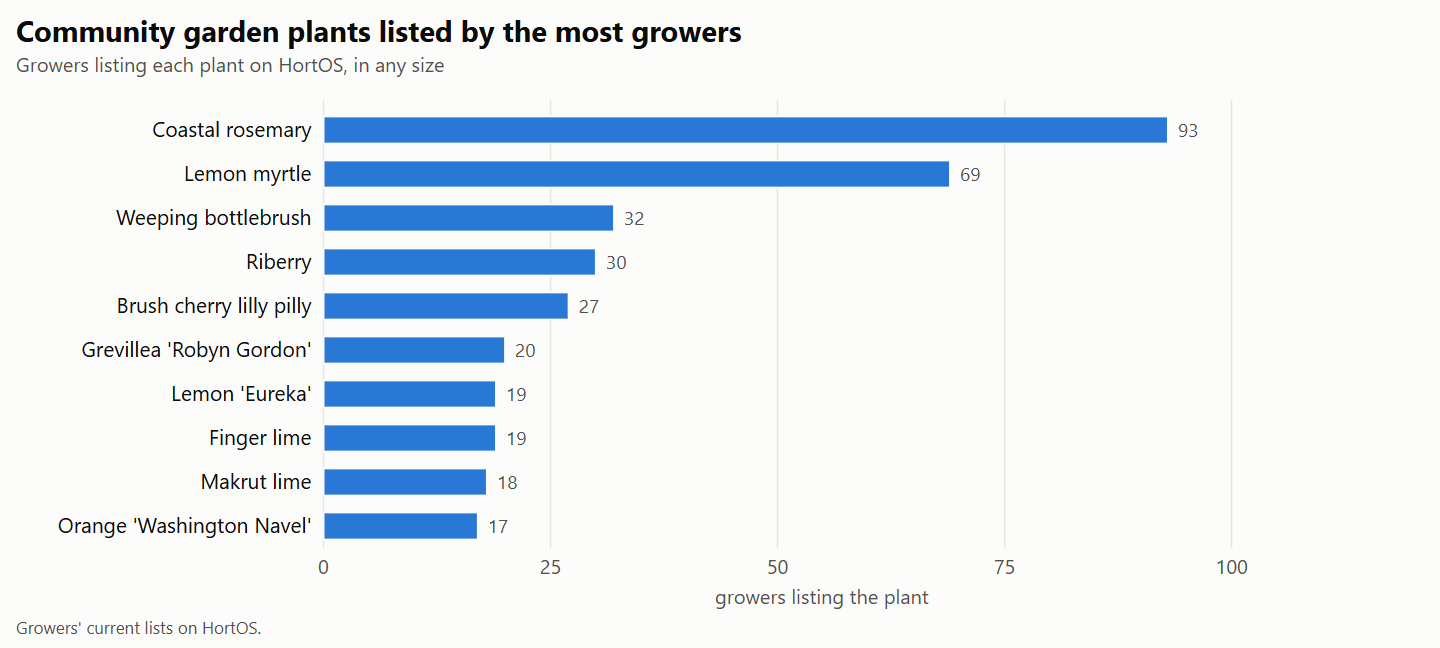
A council's application form can ask a community garden group to cost its planting. This guide sets out what Maitland, South Perth and Brisbane councils ask or fund, then gives median trade prices by pot size for fruit trees, bush food, herbs and native border plants that growers list on HortOS.
Updated 18 October 2026. Figures are what the live au.hortosapp.com price and plant pages printed.
Choosing Plants for a Community Garden on a Budget
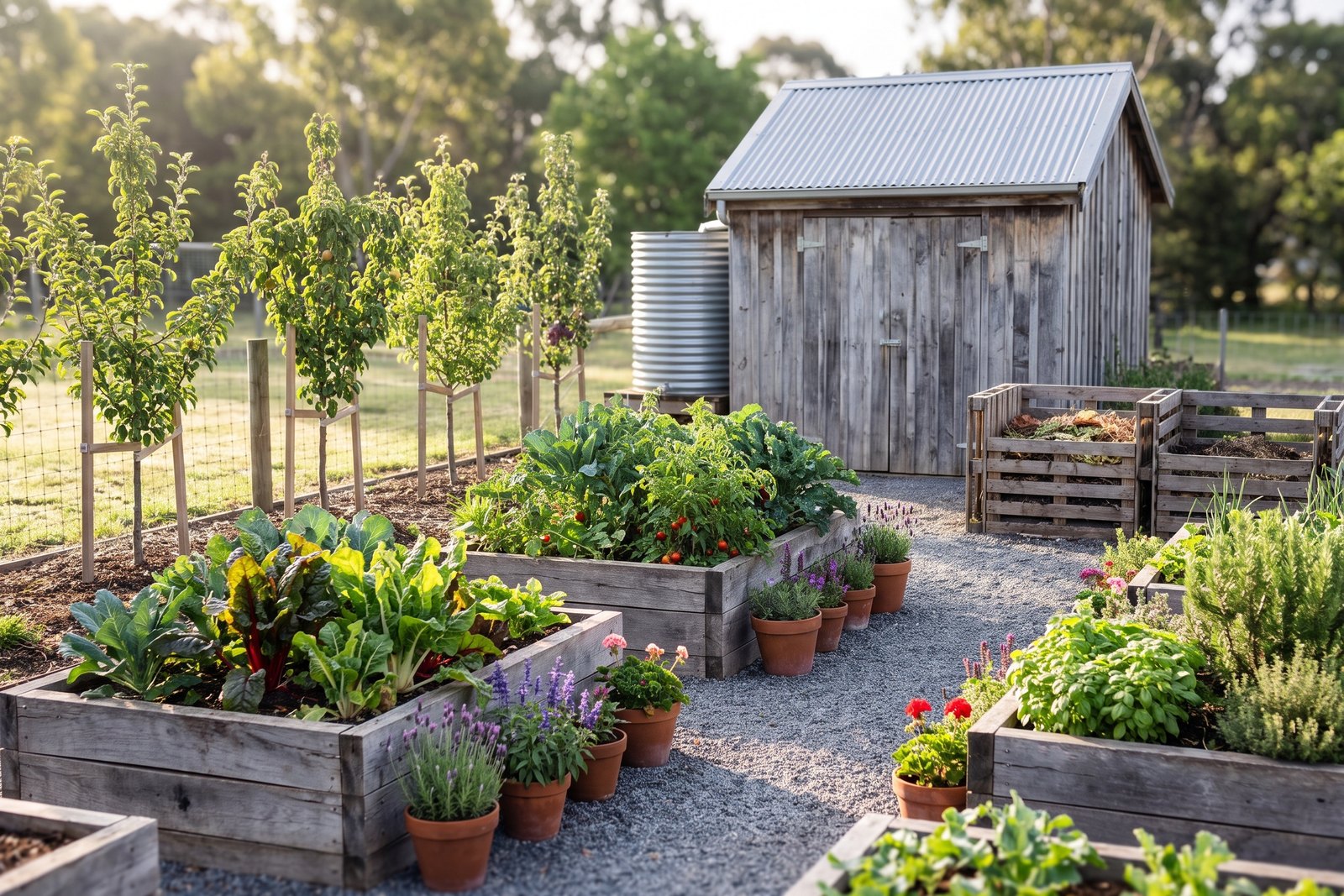
A community garden's plant budget goes furthest on plants that come back every year, bought small, from what growers list in numbers. This page sets out the order to spend in, the plants that earn their place, buying small and together, and where fruit and shade trees fit.
Updated 24 October 2026. Plant counts and median trade prices from the live au.hortosapp.com plant and price pages on 25 October 2026; state grower counts from the hubs on 24 September 2026.
Planting Trees at a Park or Street Tree Event
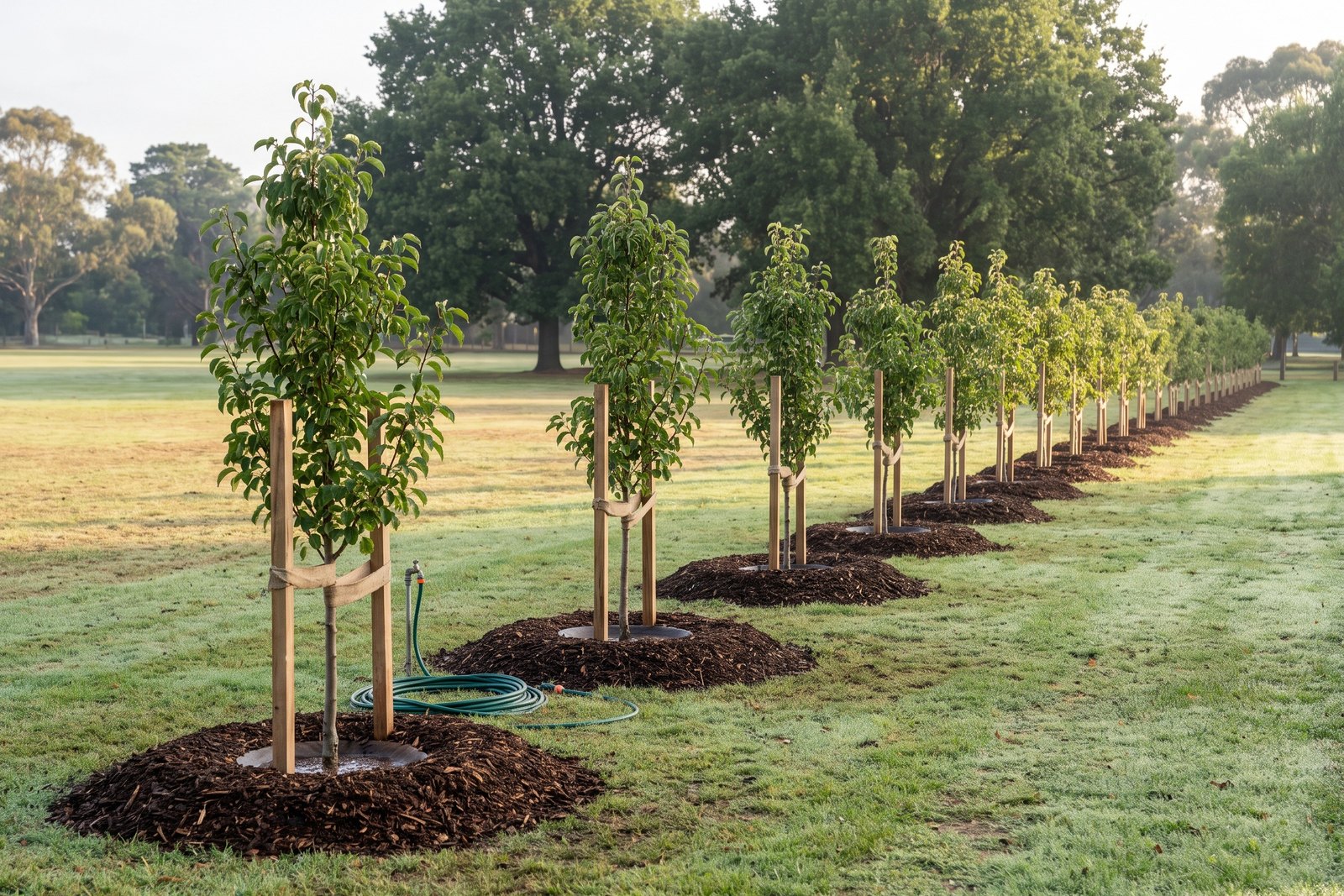
A tree planting day is judged two summers later, and the sizes, spacing and aftercare plan decided before it keep the trees alive. This page covers sizes volunteers can plant, spacing for the mature canopy, the planting method arborists publish, running the day and the first two summers.
Updated 24 October 2026. Plant counts and median trade prices from the live au.hortosapp.com plant and price pages on 25 October 2026; state grower counts from the hubs on 24 September 2026.
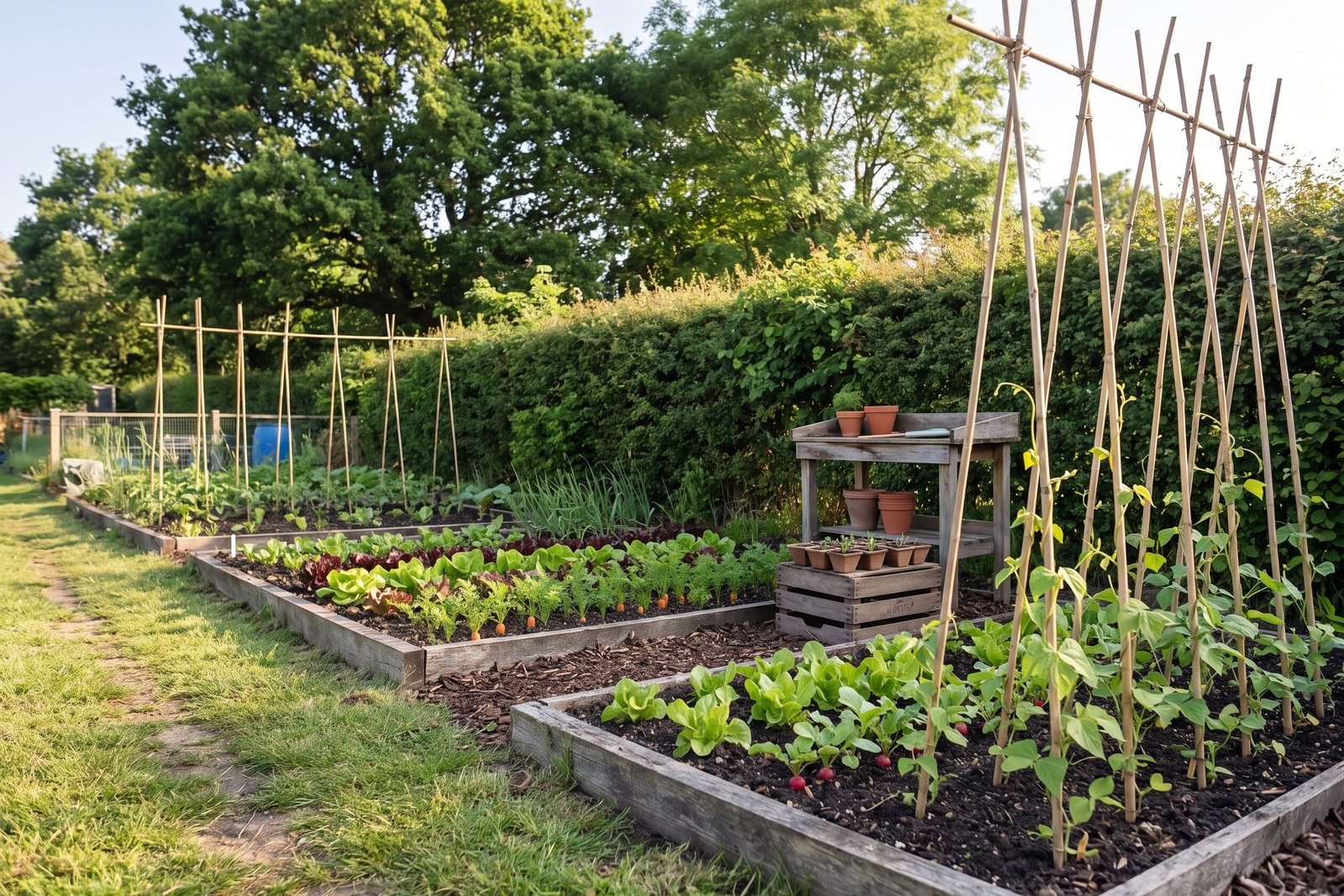
Planting an Allotment or Community Plot, Season by Season
A plot is planted by its own district's calendar, worked back from the frost dates, with permanent edges that stay while the beds turn over. This page explains reading a district's season, a planting calendar by season, the permanent plants that frame a plot and the plot rules that shape it.
Updated 24 October 2026. Plant counts and median trade prices from the live au.hortosapp.com plant and price pages on 25 October 2026; state grower counts from the hubs on 24 September 2026.
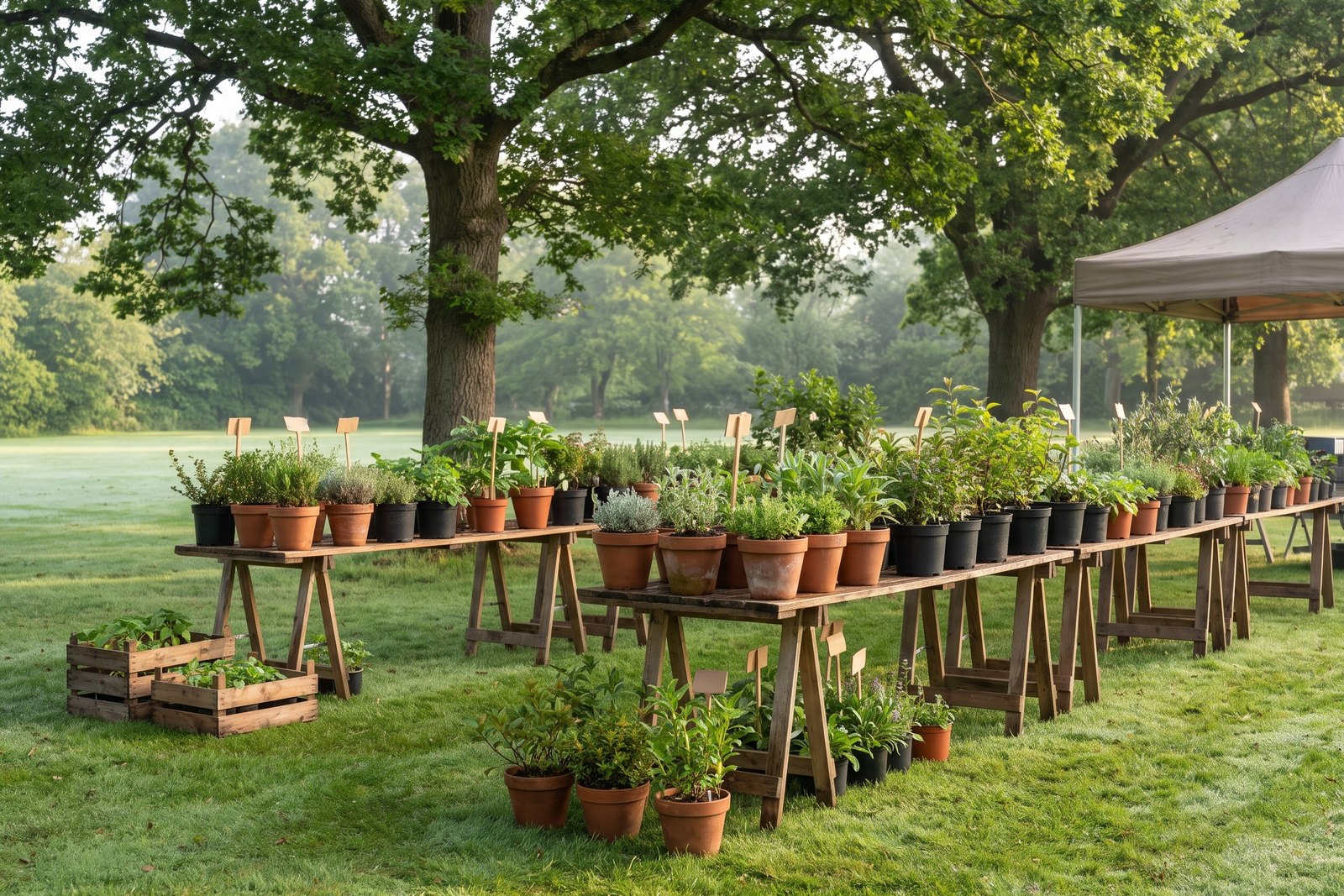
Running a Club or Society Plant Sale
A society plant sale works when member-grown stock and plants bought in from growers are planned together. This page covers the member-grown calendar, keeping members' pots healthy, filling the gaps from growers, labels and price bands, and the records that make next year's sale better.
Updated 24 October 2026. Plant counts and median trade prices from the live au.hortosapp.com plant and price pages on 25 October 2026; state grower counts from the hubs on 24 September 2026.
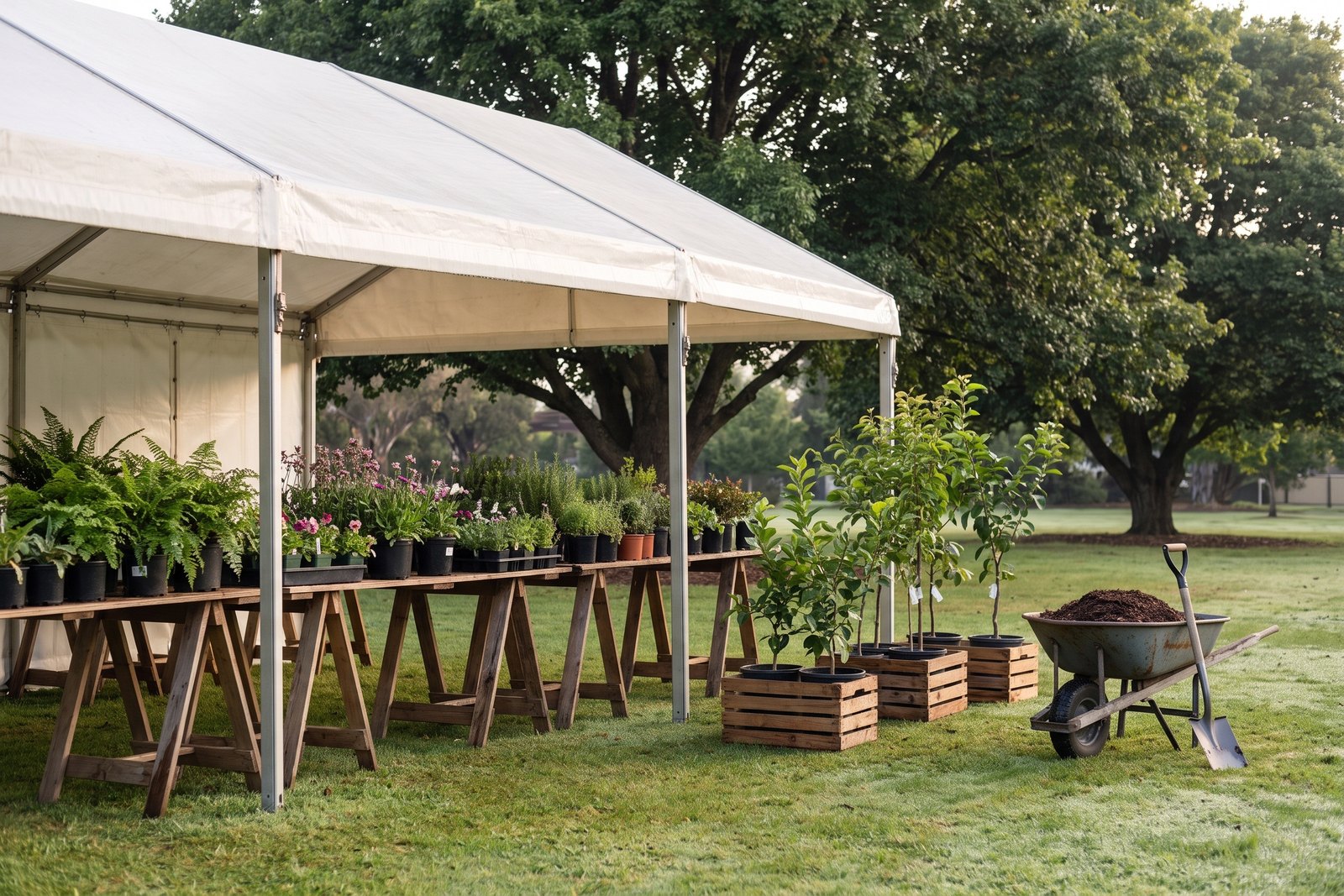
Running a Community Plant Sale or Tree Giveaway
A plant sale or a tree giveaway is a wholesale order with a date on it. This page sets out how a club, school, friends group or council plans the stock: what sells and what gives well, ordering for a date, receiving and holding the plants, the rules a sale meets, and the mistakes that send plants home unsold.
Updated 24 October 2026. Grower counts from the live au.hortosapp.com state hubs on 24 September 2026; median trade prices from the HortOS Plant Price Index, September 2026 edition.
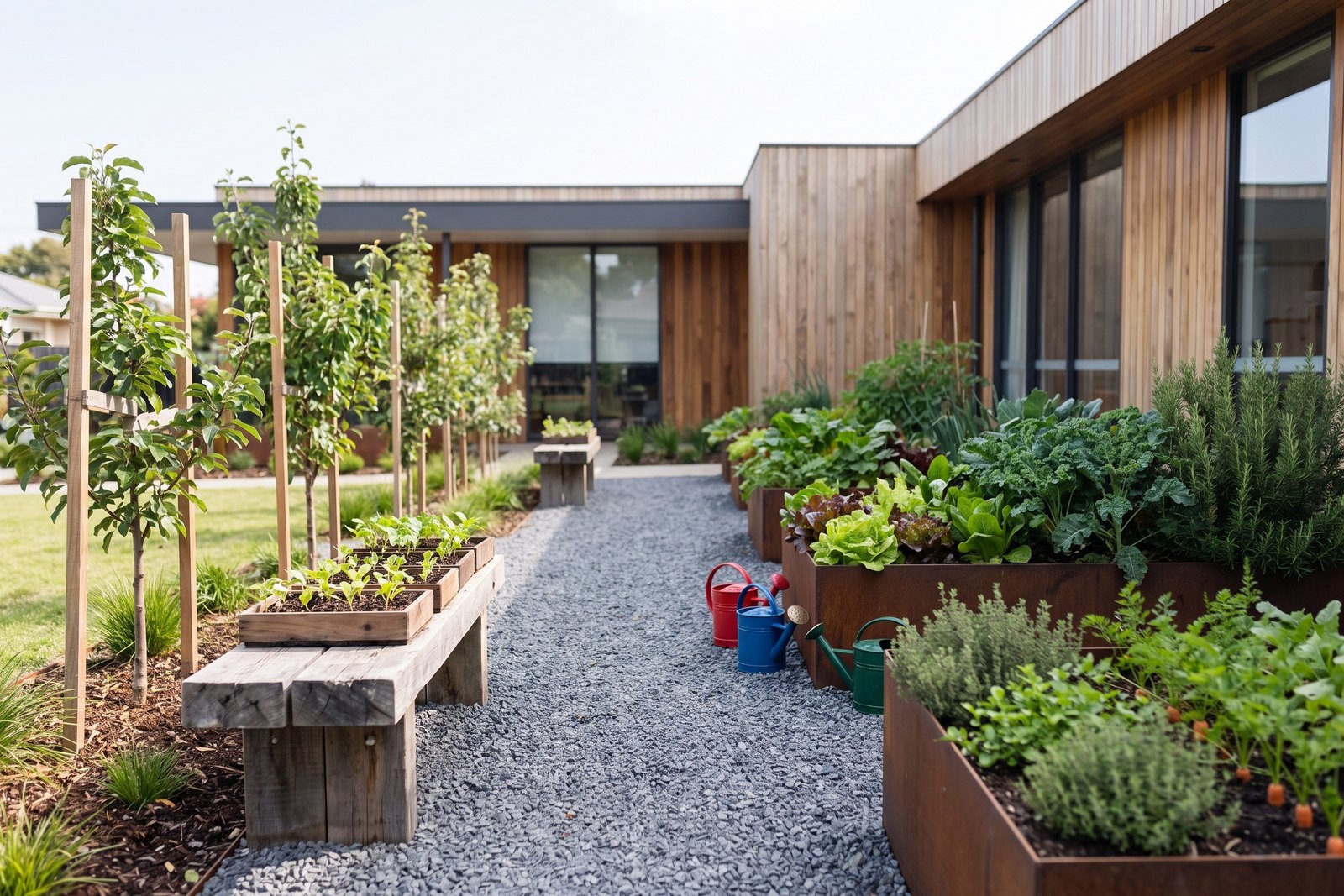
School Garden Planting and Buying for Teachers and Parent Groups
A school garden is planned around the school year, not the planting season, so its plants must survive the weeks the school is empty. This page covers planning around the holidays, who buys and how, choosing hardy plants, sizes for the planting day, and the programs that help schools.
Updated 24 October 2026. Plant counts and median trade prices from the live au.hortosapp.com plant and price pages on 25 October 2026; state grower counts from the hubs on 24 September 2026.
Home life, pets and food
Infrastructure and commercial sites

Street Trees and Canopy: What Advanced Stock Costs and Who Holds It
The advanced-tree story from the HortOS Plant Price Index as a standing page: the trees the trade grows for streets and parks, the farm-gate median at 45, 100 and 200 litres, how many growers in each state hold advanced stock, why lead times run to years, and what a council pays for a street tree against a giveaway.
Updated 25 September 2026. Figures from the HortOS Plant Price Index, September 2026 edition, and the live au.hortosapp.com price pages on 24 September 2026.
Car Park Shade Tree Rules and What the Trees Cost at Trade
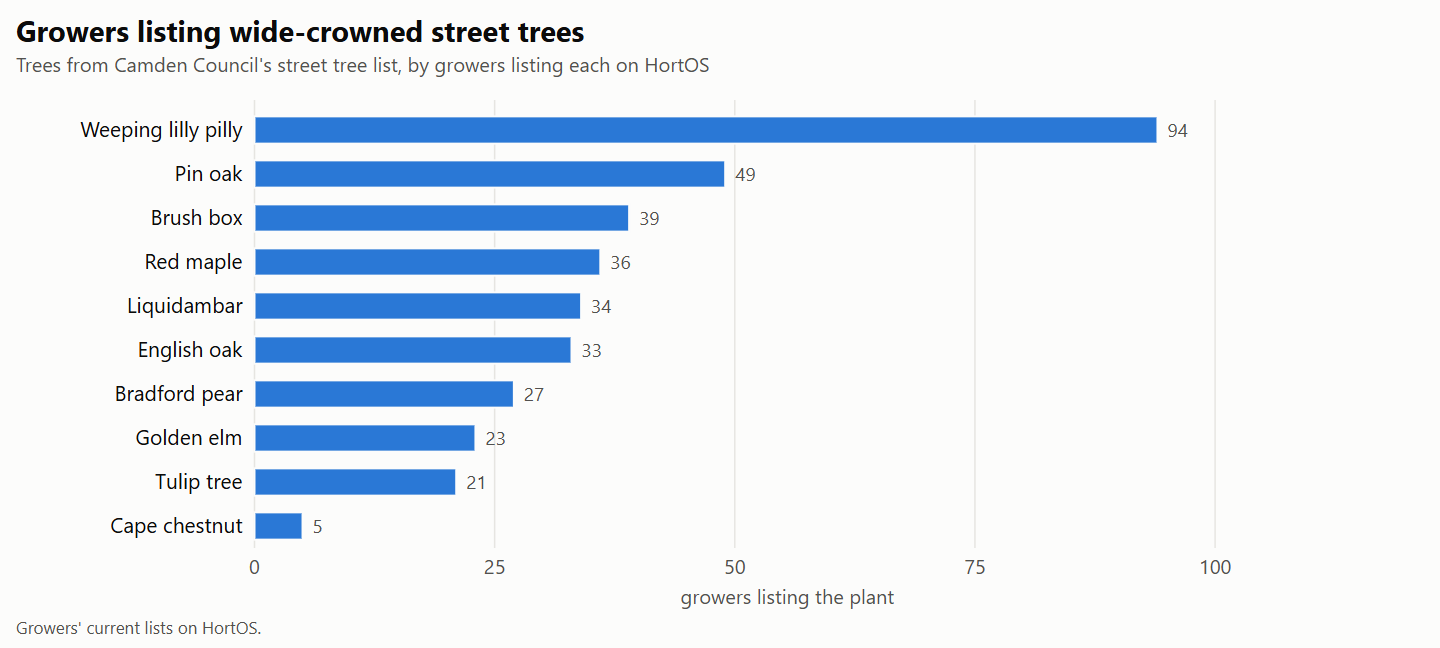
Car park shade tree rules in Australia are written council by council. This page sets side by side what planning documents from New South Wales, Victoria and Western Australia ask for, reports what they say a tree in paving needs, and gives trade medians for wide-crowned trees from one council's street tree list.
Updated 21 October 2026. Figures are what the live au.hortosapp.com price and plant pages printed.
Data and reference pages
What Plants Cost at the Nursery in 2026
The general reference behind every article on what a garden costs: the median trade price ex GST at each pot size, the middle half around it, the spread across growers, the state premium and how it flips with size, what a farm-gate price leaves out, and worked figures for a hedge, a feature tree and a bed of ground covers.
Updated 25 September 2026. Figures from the HortOS Plant Price Index, September 2026 edition, and the live price pages on 24 September 2026; refreshed each edition.

Nursery Industry Statistics 2026, and How to Cite the Index
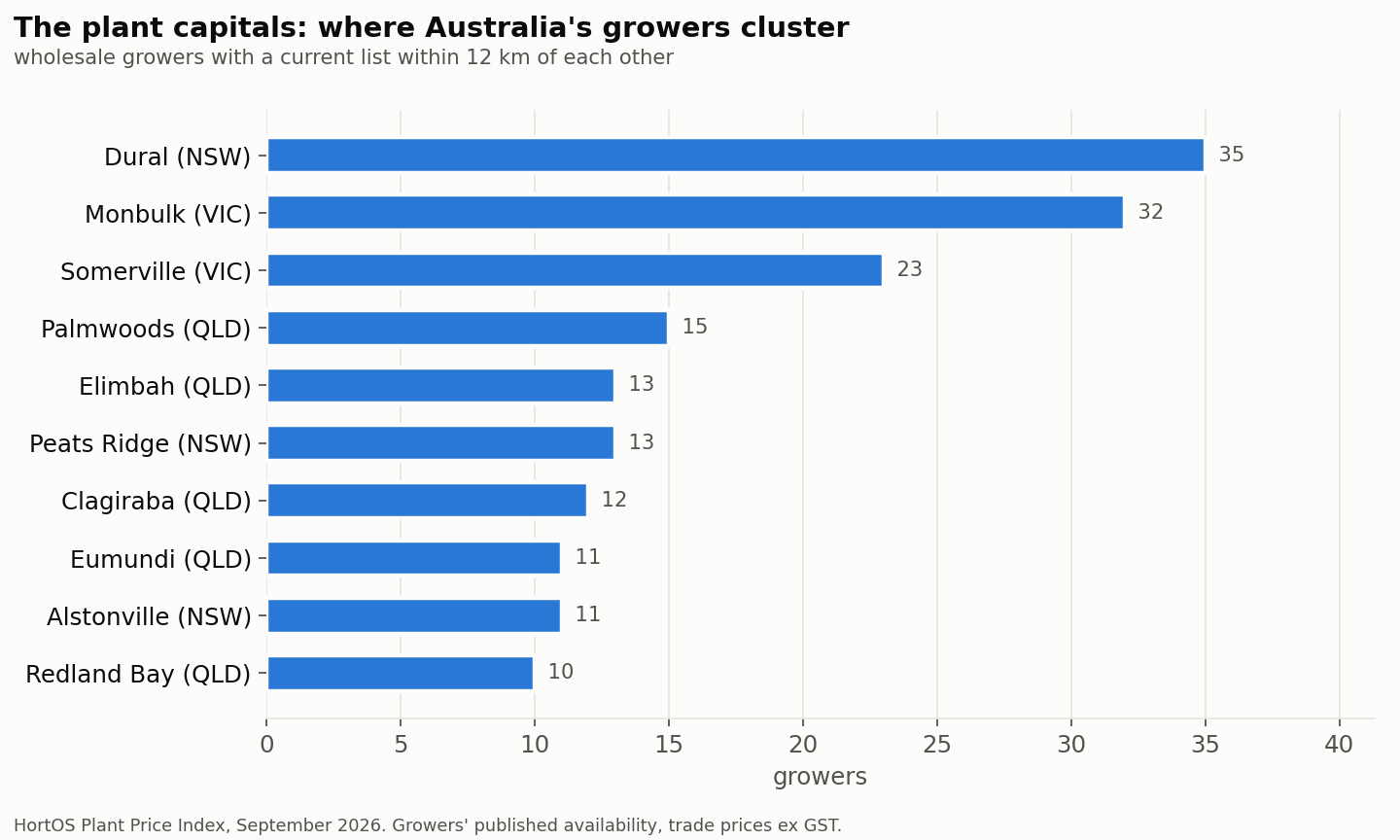
The two kinds of nursery industry number, the industry's own survey and the live supply picture, for Australia: growers listed by state, plants on current lists, the single-grower share, median trade prices by size, plant capitals and advanced-tree growers from the September 2026 Index, Hort Innovation's production value, and how to cite the Index, its data file and its licence.
Updated 25 September 2026. Figures from the HortOS Plant Price Index, September 2026 edition, and Hort Innovation's nursery industry statistics project (published 31 August 2026); refreshed each edition.