Hedgerows and Windbreaks for Small Farms
A windbreak or hedgerow protects in proportion to its height and length, and only works planted without gaps across the damaging wind. This page covers what belts do, the design rules agencies publish, species and layers, planting and protecting a belt, and where small farms find help.
Updated 24 October 2026. Plant counts and median trade prices from the live au.hortosapp.com plant and price pages on 25 October 2026; state grower counts from the hubs on 24 September 2026.
On this page
On a small farm the wind costs more than most owners count: dry soil, lambs and calves lost in cold snaps, bruised fruit, and topsoil blown off bare paddocks. The one idea that matters most is that a windbreak or hedgerow protects in proportion to its height and length, and only works when it is planted without gaps, at right angles to the wind that does the damage.
This page covers designing and planting hedgerows and windbreaks on a small farm or lifestyle property: what they do, the design rules the agencies publish, species and layers, planting and protecting them, and where to find help. It draws on the agencies named below and on HortOS, a free directory of Australian wholesale plant growers with their published availability and trade prices.
Quick facts
| Height sets reach | The taller the belt, the further the shelter reaches downwind, commonly ten to fifteen times its height. |
|---|---|
| Length and gaps | A belt needs to be long and unbroken. Wind funnels through gaps and speeds up. |
| Porosity | A belt that filters the wind shelters a larger area than a solid wall. Aim for a little under half the wind passing through. |
| Layers | Tall trees, medium trees and shrubs together make a belt dense from the ground up. |
| Protect while young | Fence out stock, guard against browsing, and control weeds for the first years. |
| Where the growers are | Growers listing shelter species are on the state hubs: New South Wales, Victoria, Queensland. |
What windbreaks and hedgerows do
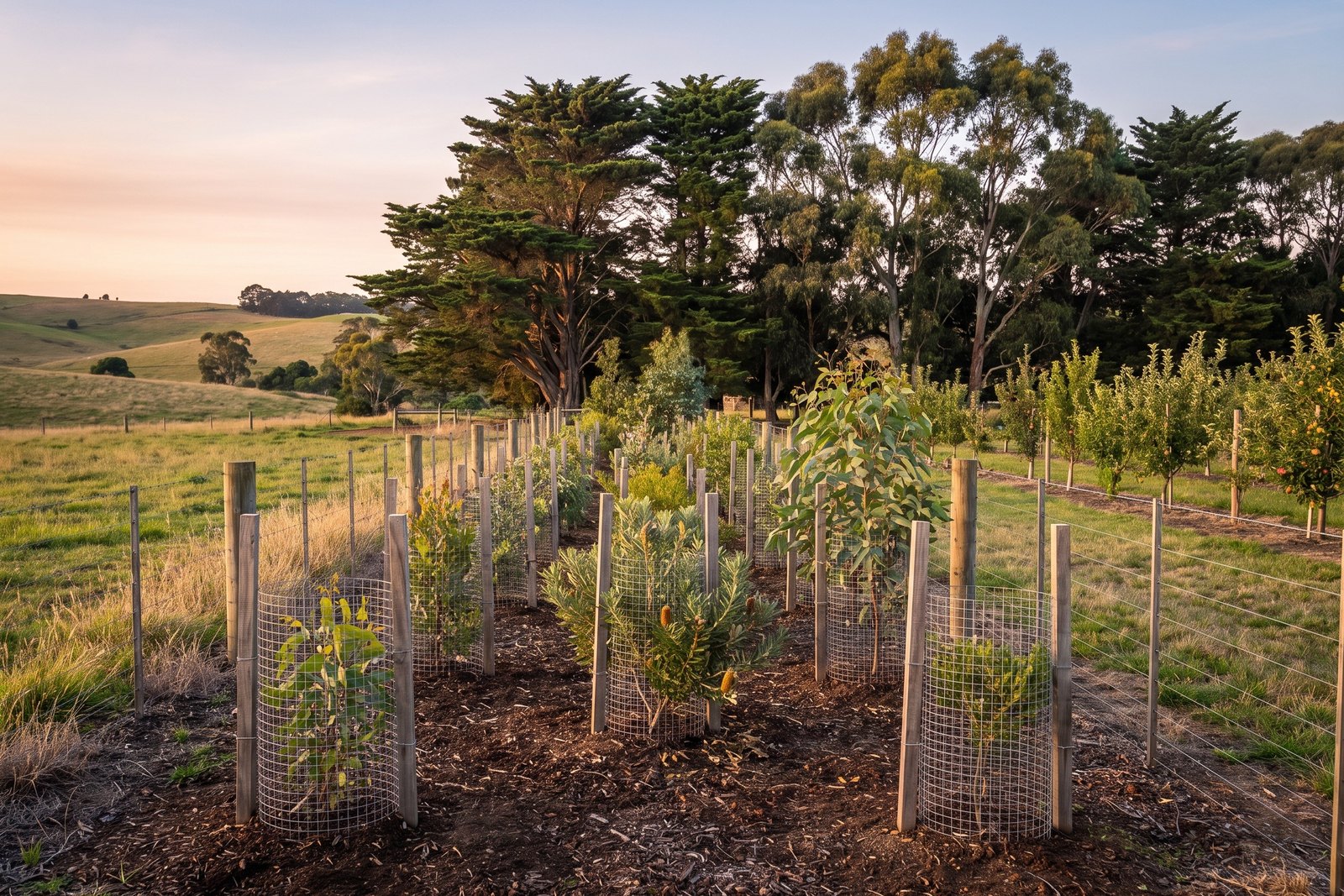
A windbreak slows the wind. Behind it soil keeps its moisture, crops and pasture grow faster, stock lose less energy keeping warm, and fruit and flowers are less damaged. A hedgerow is a lower, denser line of mixed shrubs and small trees along a fence or field edge, which does the same on a smaller scale and adds food and cover for birds and insects that work the crops.
Both are long-lived. A belt planted this year shapes the farm for decades, so the design is worth getting right on paper before a single tree is ordered.
Shelter does more than slow the wind. A belt along a boundary screens sheds and yards from the road, holds dust and spray drift back from the house and the neighbours, and gives stock somewhere to stand out of the weather.
Planning a hedgerow
A hedgerow suits the small property where a full shelterbelt would take too much ground. A double row of mixed shrubs and small trees along a fence, planted close and staggered, makes a dense line within a few years. Choose species that flower and fruit at different times, so the hedgerow feeds birds and insects through the year, and include some with dense or thorny twigs where stock or wind press hardest.
Plan the hedgerow's width at maturity, not at planting. Shrubs that will spread wide need that room clear of the fence, the track and the neighbour's boundary, with a strip left at the base for getting to the fence for repairs.
The design rules
The Kangaroo Island Landscape Board advises planting shelterbelts at right angles to the wind that needs blocking, with at least two rows 12 to 24 metres wide combining trees and shrubs. It says a shelterbelt can reduce wind speed up to ten times its height, and that to be effective it needs to be twelve times as long as the trees' mature height, without gaps.
Gaps are the weak point. Wind funnels through a gateway or a missing tree and speeds up on the far side, so plan gateways at an angle or behind a short overlapping belt.
Species and layers
Most belts combine three layers. A row of the tallest suitable trees gives height. A row of medium trees or large shrubs fills the middle, and a row of dense shrubs closes the base where wind would otherwise run under the canopy. Mixing species spreads the risk of losing a whole belt to one pest or one drought, and native species suited to the district usually establish best.
The table lists shelter and hedgerow species of the kind small farms plant, with how many growers listed each on HortOS on 25 October 2026. It shows which species are easy to buy in numbers, not which suit a farm. Prices are medians across growers' current trade lists on HortOS on 25 October 2026: one price per grower, ex GST, freight not included, with the number of growers pricing each size in brackets. Grower counts are the growers listing each plant on HortOS on 25 October 2026, in any size. A median needs three growers pricing a size. Anyone can see the prices on HortOS, and only the trade can order.
| Plant | Growers listing it | Size most growers price | Median there |
|---|---|---|---|
| Coastal rosemary (Westringia fruticosa) | 93 | 140mm (45) | $6.25 |
| Coast banksia (Banksia integrifolia) | 84 | 200mm (25) | $12.50 |
| River she-oak (Casuarina cunninghamiana) | 59 | Tube (24) | $2.00 |
| Spotted gum (Corymbia maculata) | 52 | Tube (14) | $2.29 |
| Lightwood (Acacia implexa) | 46 | Tube (14) | $2.40 |
| Lemon-scented tea tree (Leptospermum petersonii) | 43 | 200mm (11) | $13.50 |
| Weeping bottlebrush (Callistemon viminalis) | 32 | Tube (8) | $3.50 |
| Red box (Eucalyptus polyanthemos) | 27 | 400mm (9) | $99.00 |
| Blackwood (Acacia melanoxylon) | 25 | Tube (5) | $2.20 |
| Sweet bursaria (Bursaria spinosa) | 24 | Tube (13) | $2.50 |
| Black she-oak (Allocasuarina littoralis) | 21 | Tube (3) | $56.00 |
Of the species in the table, coastal rosemary (Westringia fruticosa) had the most growers listing it, 93, and black she-oak (Allocasuarina littoralis) the fewest of those shown, 21. For a long belt, a species many growers list is easier to buy in the numbers needed and to replace.
Planting and protecting a belt
- Prepare the line. Rip or cultivate the planting line and control weeds for a season before planting.
- Plant small, into moist soil. Seedlings, tubes and 140 mm pots are cheap enough to plant in the numbers a long belt needs, and establish well in moist soil.
- Fence it. Stock browse and trample young shelter. Fence the belt on both sides with room for the mature width.
- Guard and mulch. Guards protect against browsing animals and wind, and mulch or a weed mat holds moisture.
- Weed for three years. Weeds take the water young trees need. Control them until the belt shades them out.
As the belt matures
A belt changes as it grows. Remove guards once the plants are well above them and the stems are strong, so the guards do not constrict the trunks. Replace losses in the first few years before the gaps become permanent. Where the lower branches of the tallest row lift and let wind run under the canopy, the shrub row closes the gap, which is why most designs keep one. A belt planted with several species ages unevenly, so it can be renewed a section at a time rather than all at once.
Help and funding
Landcare Australia and regional landscape boards help landholders plan shelter and sometimes fund it. Ask the local Landcare group what support runs in your district.
What to watch for
- Gaps and gateways. A gap speeds the wind. Angle gateways or overlap belt ends.
- A solid wall. A belt so dense no wind passes through creates turbulence behind it. Aim to filter the wind.
- One species. A belt of one species can be lost to one pest or drought. Mix species and layers.
- No fence. Stock destroy an unfenced young belt within a season.
- Shade on the wrong side. A tall belt shades the paddock beside it. Site it so shade falls where it does least harm.
Getting it right
- Map the damaging winds, the paddocks and the stock, and decide what the belt must protect.
- Set the belt at right angles to the damaging wind, long and unbroken, with angled gateways.
- Choose tall trees, medium trees and shrubs suited to the district, with several species in each layer.
- Prepare the line, fence it and plan guards before ordering the plants.
- Order the seedlings and small pots a season ahead, and plant in autumn and winter in the south and the early wet season in the north.
- Control weeds and check guards for three years, and replace losses from the species that thrived.
A word of caution
The design figures on this page are the agencies' named here, for their own conditions, and a local adviser should check a design against the farm's soils and winds. The counts are what HortOS printed on 25 October 2026, and the live pages change as growers update their lists.
Sources
- Kangaroo Island Landscape Board, Increasing farm productivity with shelterbelts: shelterbelt width, length and height.
- Landcare Australia: community groups, grants and projects.
- Greening Australia, Florabank Guidelines: best practice for native seed.
- Australian Interstate Quarantine: moving plants between states.
More guides
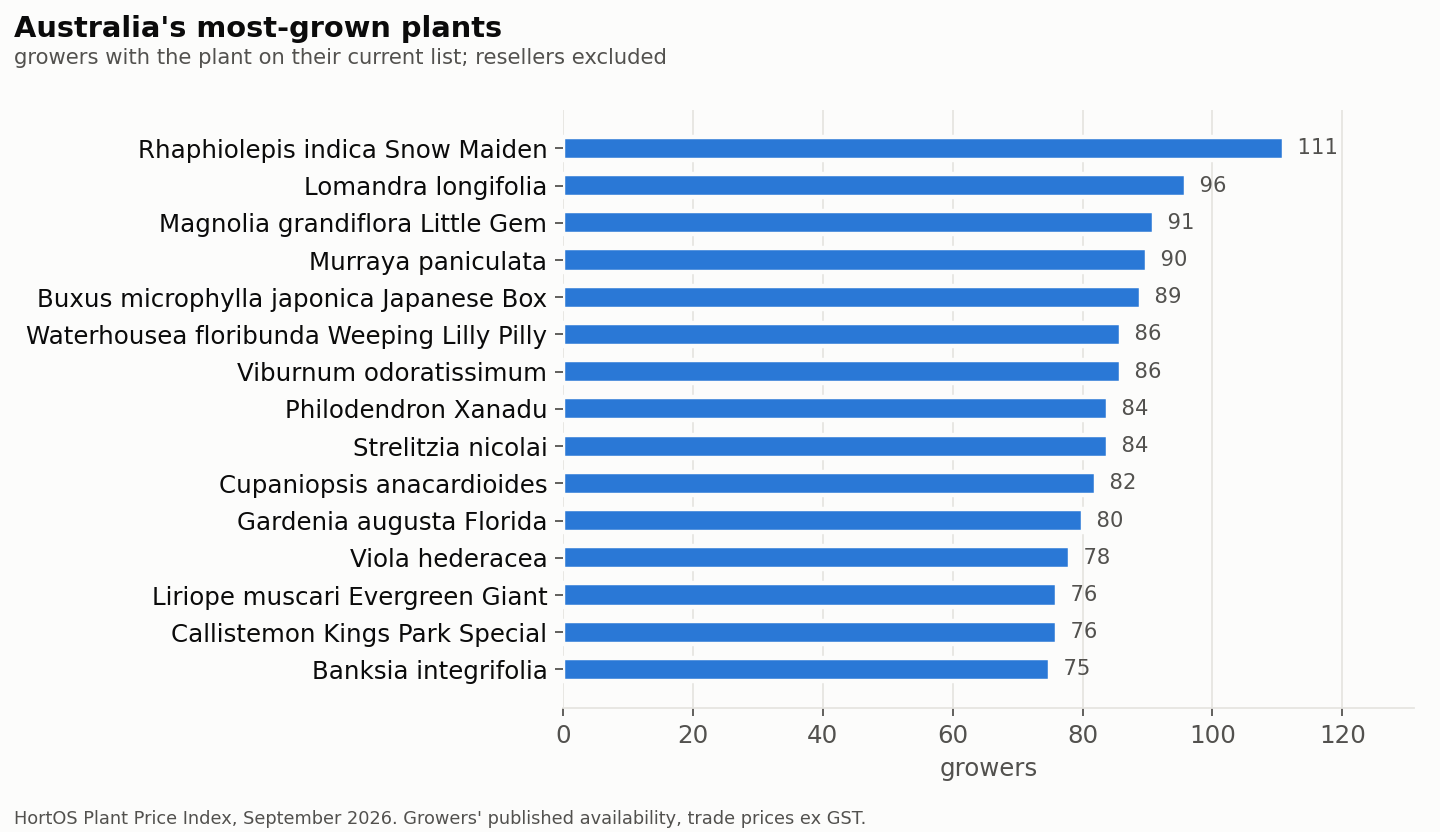
The Most Grown Native Plants in Australia, by State
A data page, not an essay: the Australian native plants held by the most wholesale growers, counted grower by grower and state by state from growers' current lists on HortOS, with the median trade price at the size most growers price. Two paragraphs on what the tables show and what they do not, then the tables, refreshed each edition.
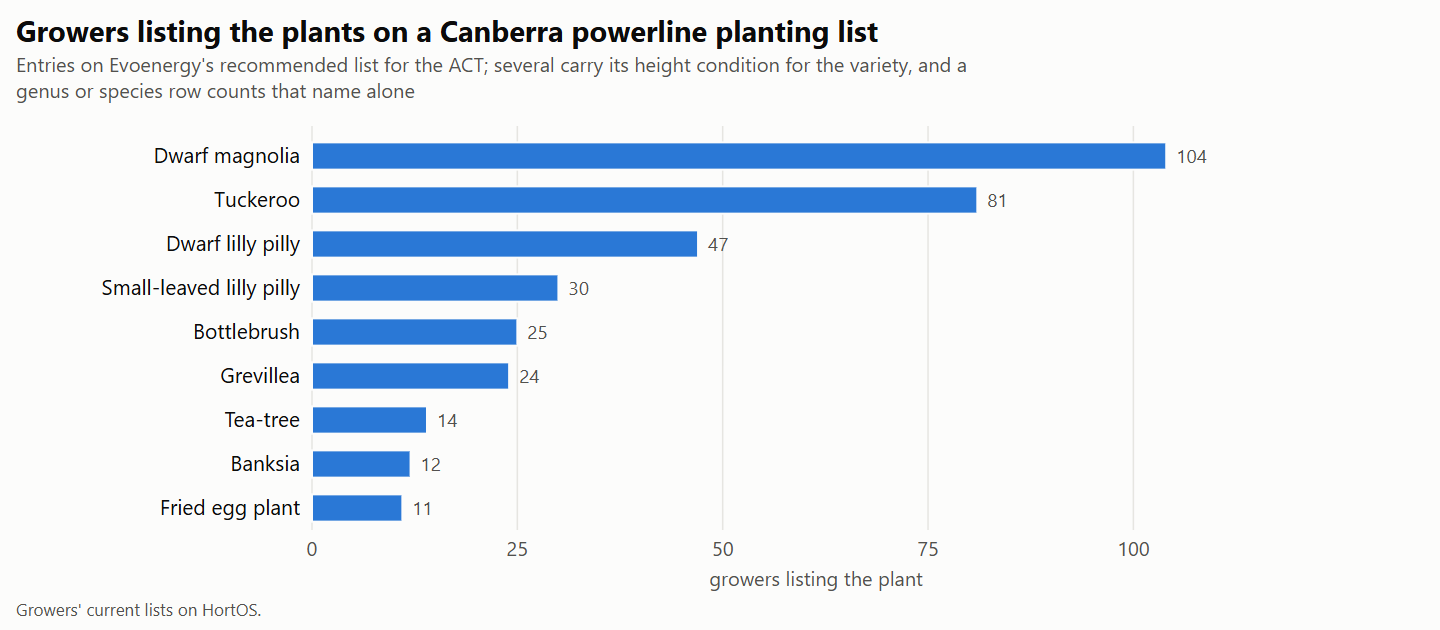
Trees and shrubs for planting near powerlines, and who lists them
What Australian network operators, a regulator and a state department publish about trees near overhead powerlines, set side by side with each body's state and date. Two plant tables then count the growers listing the plants named on Evoenergy's list for the ACT and in a Queensland council's table, with a trade median for the plants enough growers price.
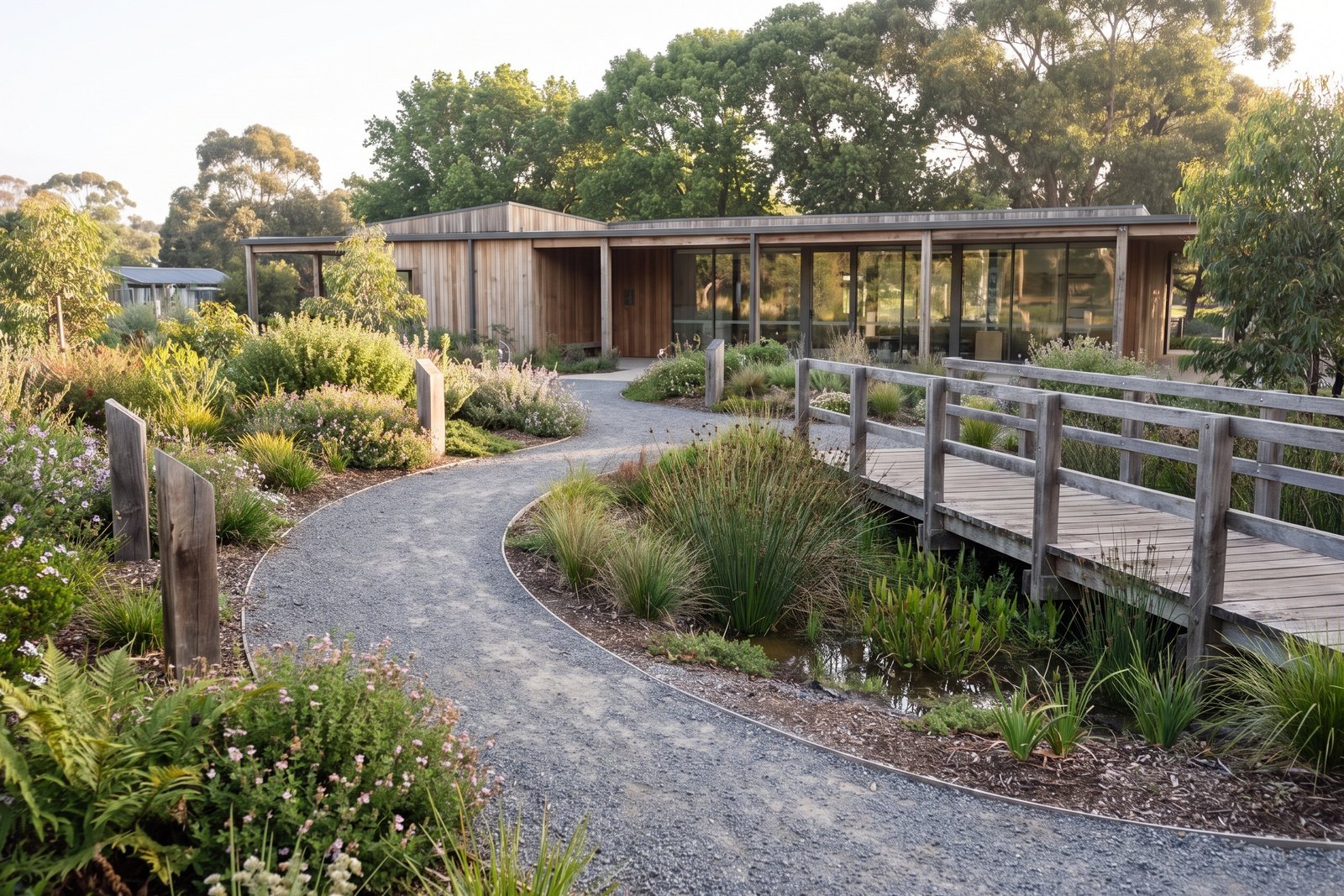
Choosing Plants for a Nature Centre or Demonstration Garden
A demonstration garden should show plants visitors can find, buy and grow, at a standard of care a home can manage. This page covers choosing themes, choosing plants growers list in numbers, labels and interpretation, care at the visitor's scale, and the records that keep the garden useful.