Sourcing Native Plants for a Restoration or Revegetation Project
Revegetation stock is grown to order, so a restoration project that books its growing a year ahead plants what the plan says. This page covers the provenance rule and how to ask for it, the grades the trade grows, contract growing and its timetable, reading the directory for a project, and what a grower's list cannot show.
Updated 24 October 2026. Grower counts from the live au.hortosapp.com state hubs on 24 September 2026; median trade prices from the HortOS Plant Price Index, September 2026 edition.
On this page
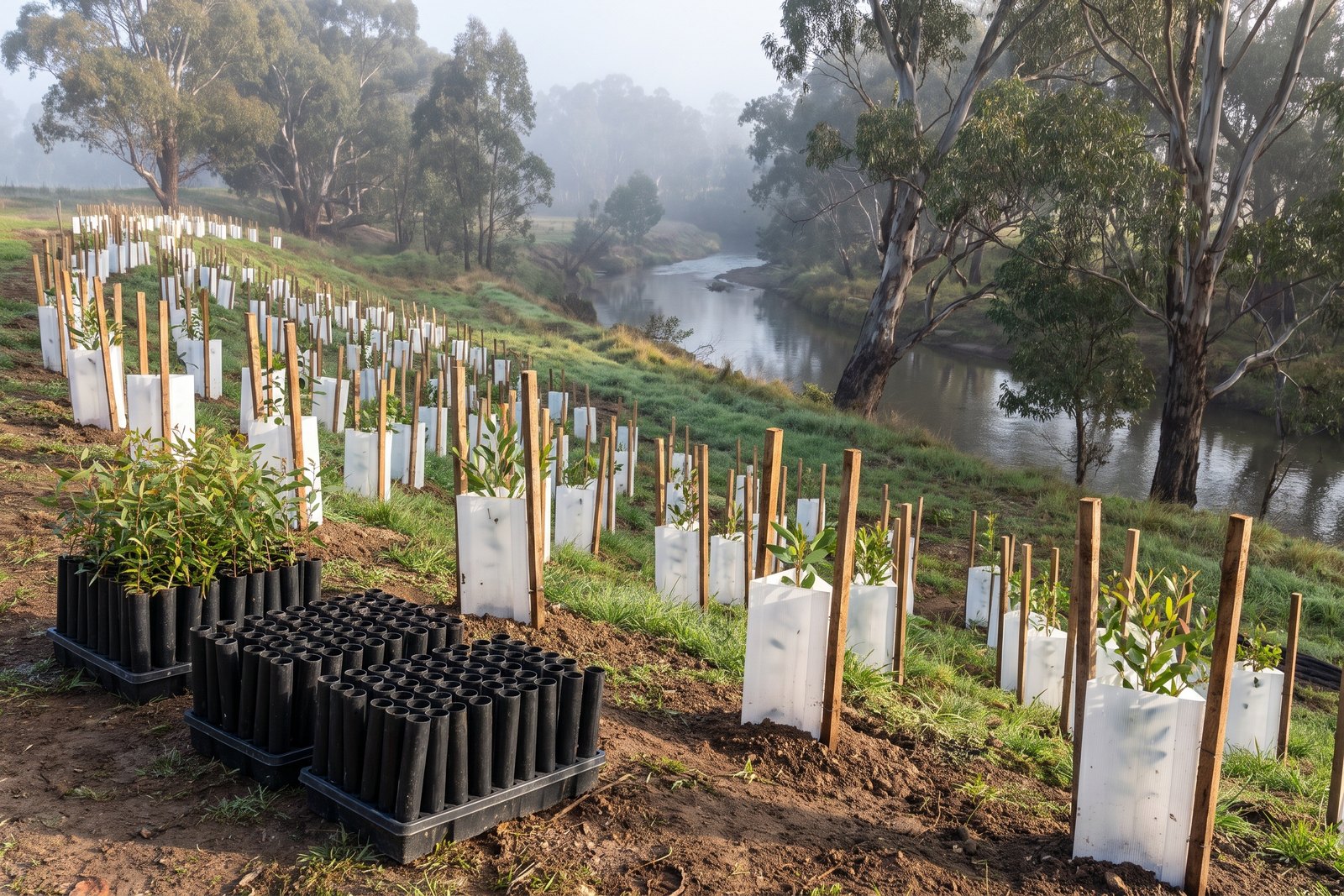
A restoration planting is an order for ten thousand small plants of forty species from seed collected within a few kilometres of the site, delivered in one week of one season, and no grower holds that on its list. The one idea that matters most is that revegetation stock is grown to order, so the group that books its growing a year ahead plants what the plan says, and the group that orders in autumn plants what is left.
This page covers how a Landcare or catchment group, a land trust, a conservation authority or a council sources native plants for a restoration or revegetation project. It covers provenance and what to ask for, the grades the trade grows, contract growing and its timetable, how to read a list for the sizes and quantities a project needs, and what the directory cannot show. Greening Australia's Florabank guidelines set out how native seed is collected, stored and recorded by provenance, and the Australian Network for Plant Conservation's translocation guidelines cover the planting of threatened species. It also draws on HortOS, a free directory of Australian wholesale plant growers with their published availability and trade prices. It does not choose species, which is the site's ecologist's job.
Quick facts
| Provenance first | Decide the seed source rule before anything else: local provenance from the same catchment or ecological district, a wider zone, or a climate adjusted mix. The grower grows to the rule it is given. |
|---|---|
| The grade | Most revegetation is planted from a tube, about 50 mm square and 120 mm deep, or a forestry tube: cheap, quick to plant and quick to root. Larger grades are for the edges, the gateways and the sites that must look planted on day one. |
| Grown to order | A grower sows a project's seed in late summer for the following winter or spring. Book the growing a year ahead; a top-up from current lists is the exception, not the plan. |
| Quantities | Dense revegetation runs 1 to 2 plants per square metre for shrubs and trees, 4 to 6 for grasses and sedges; a hectare of mixed planting is 10,000 to 15,000 plants. |
| What a list shows | Each grower's current list on HortOS shows the native species it lists today, by size, with the date it was updated; a project reads it for top-ups and for which growers grow the genera it needs. On 24 September 2026, 45 growers in New South Wales, 43 in Victoria and 37 in Queensland listed tubestock on HortOS, the grade most revegetation uses, and the state hubs list every grower by town. |
| What a list cannot show | Provenance, straight species or selection, growing practice and chemicals used are not on a list. They are questions to the grower, and the answers belong in the quote. |
Provenance: what to ask for
A native plant is not necessarily a local plant. The same species grown from seed collected three hundred kilometres away may flower at the wrong time, suit the wrong soil, or cross with the local population. Greening Australia's Florabank guidelines set out how native seed is collected, stored and recorded by provenance, and the Australian Network for Plant Conservation's translocation guidelines cover the planting of threatened species. The practical form of the rule is a sentence in the quote request: seed collected within a named distance of the site, or within a named district or zone, with the collection records kept by the grower.
Three kinds of grower answer that sentence differently. A revegetation specialist collects seed to order, keeps records by batch and expects the question. A native plant nursery growing a regional range can usually say where its seed came from and will grow a project's seed if given the time. A production nursery growing a national range of named natives may buy its liners in and cannot always say. HortOS lists all three; the grower's page and a phone call tell a project which it is.
Grades and quantities
Revegetation is planted small because small plants root into the site rather than into their pot, and because a volunteer plants three hundred tubes in a morning and thirty pots. A tube, about 50 mm square and 120 mm deep, or a forestry tube is the grade most projects use. A tube costs a few dollars at trade and a pot several times that, so the budget buys two to three times the cover in tubes. Plant grades and container sizes by market explains the grade names.
| Planting type | Plants per hectare | Grade | Season |
|---|---|---|---|
| Dense shrub and tree revegetation | 10,000 to 15,000 | a tube | the wet season, after the first soaking rain |
| Woodland or savanna infill | 2,000 to 5,000 | a tube with guards | the wet season |
| Riparian and wetland edge | 15,000 to 30,000 | tubes and sedge plugs | when water levels fall |
| Gateway and edge planting | 200 to 500 | a 200 mm pot and a 300 mm pot | the planting season, staked |
The counts are planning figures from common practice and the ecologist's plan sets the real ones. Add ten per cent for losses in the first summer and a second order for infill in the second year, which the grower can grow from the same seed batch if asked at the start.
Contract growing and its timetable
A project of any size is grown under contract: the group supplies or specifies the seed, the grower sows, grows and holds the plants, and the group pays a deposit on sowing and the balance on dispatch. The timetable runs backwards from the planting week. Seed is collected in the summer or autumn before; sowing follows; the plants are hardened off in the weeks before dispatch; the planting follows the first soaking rains of the season.
- Twelve months out. Settle the species list, the provenance rule and the counts. Ask three growers whether they will grow to order and on what terms.
- Nine months out. Sign the growing contract, pay the deposit, and agree who collects the seed and who holds the records.
- Three months out. Visit or ask for photographs. Count the trays against the contract and agree the dispatch week.
- Two weeks out. Confirm the count, the guards and stakes, the delivery or pickup, and the watering plan for the trays on site.
Lead times, pre-orders and contract growing explains the growing contract in detail and what makes a nursery plant good quality explains the root and hardening checks a project applies before the trays leave.
Reading the directory for a project
HortOS shows what each grower lists today, which is useful for a project in three ways. A top-up order for a species that failed can be found by its plant page, which shows every grower listing it by size. The state hubs (New South Wales, Victoria, Queensland, South Australia) show which growers near a site list natives at all, and in what breadth, which is the shortlist for a contract growing enquiry. And the updated date on each list says who is active this season.
Median trade prices in this guide are from the HortOS Plant Price Index, September 2026 edition: one price per grower, ex GST, freight not included, a median only where three or more growers price a size. Anyone can see the prices on HortOS, and only the trade can order; a conservation group holding a trade account orders like any landscaper, and one that does not reads the lists and buys through its council, a community nursery or the grower's own trade account.
What to watch for
- Native read as local. A species label says nothing about provenance. Write the seed source rule into the quote and the contract.
- Ordering in the planting season. Revegetation stock is sown the summer before. An autumn order buys what the lists hold, not what the plan says.
- Large grades for speed. Pots cost several times the tube and do not establish faster on a prepared site. Spend the difference on guards, follow-up watering and the second-year infill.
- Treating the list as the plan. The list shows what growers list today; the plan is what the site needs. Where the two differ, the plan is grown to order.
- No records. A funder or a council may ask where the seed came from and what was planted where. Keep the grower's batch records, the dispatch dockets and a planting map.
Getting it right
- Settle the species list and the provenance rule with the site's ecologist, and write both into every request.
- Shortlist growers on the state hub that list natives in the grades the plan uses, and ask each whether it grows to order.
- Sign a growing contract a year ahead with the seed source, the counts, the grade, the dispatch week and the payment terms in it.
- Order guards, stakes and the follow-up watering at the same time as the plants.
- Inspect the trays before dispatch: roots, hardening off and the count against the contract.
- Plant after the first soaking rains, keep the records, and book the second-year infill from the same seed batch.
A word of caution
The grower counts on this page are what the HortOS hubs printed on 24 September 2026, and the live pages change as lists arrive. Which species suit a site, and what the provenance rule should be, are the site's ecologist's and the funder's to decide, with the named guidelines beside them. A list on HortOS cannot show provenance, growing practice or treatments; the grower's written answer is the record, and HortOS never answers on a grower's behalf.
Sources
- Greening Australia, Florabank: native seed and provenance guidelines.
- Australian Network for Plant Conservation, translocation guidelines: moving and planting threatened plants.
- Landcare Australia: community groups, grants and projects.
- Nursery Production Farm Management System, Australian Plant Production Standard: the production standard and NIASA accreditation.
- Australian Interstate Quarantine: moving plants between states.
More guides
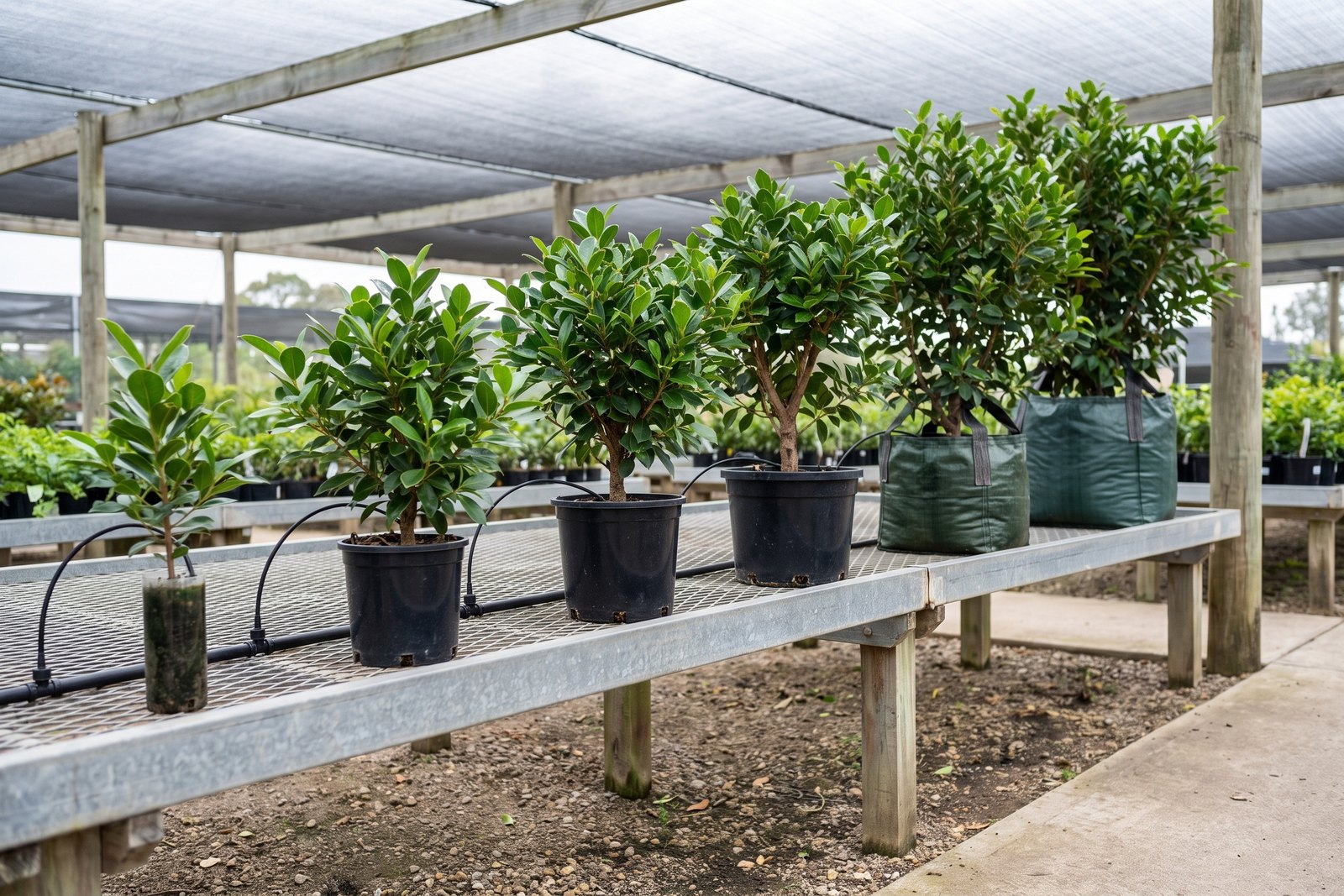
Plant Grades and Container Sizes, Market by Market
A #3 in Florida, a 200 mm pot in Sydney, a PB5 in Hamilton and a #2 in Ontario are roughly the same plant. This page sets the four markets' size ladders side by side from plug to field grown tree, explains what each grade is and how old, and names the standard each market specifies against.
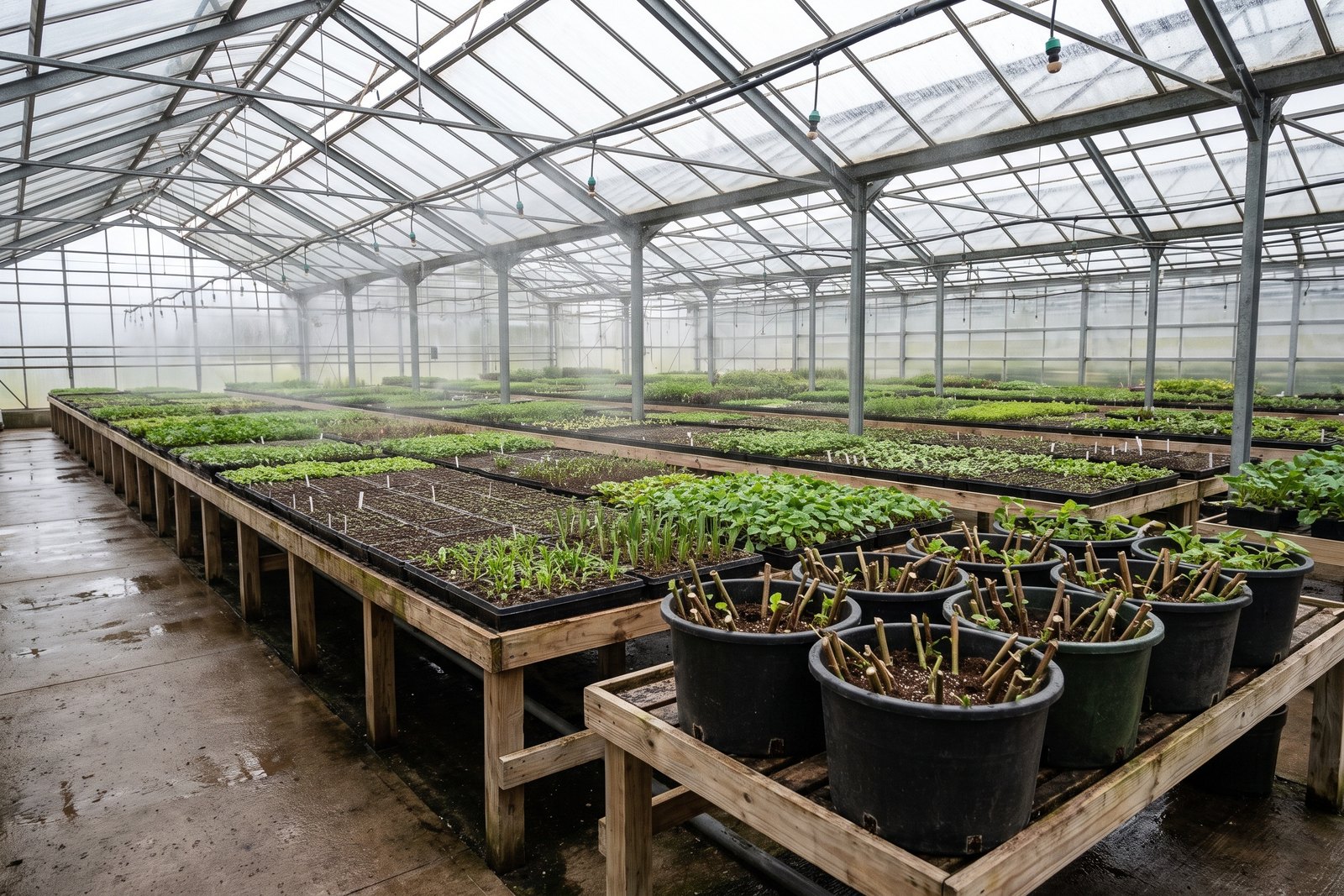
When to Order: Lead Times, Pre-Orders and Contract Growing
Every plant on a grower's list is a decision made a season or more ago. This page explains how long each grade takes to grow, the three ways a buyer secures stock ahead of the season, what a growing contract contains, the planting calendar in this market and how to read a current list for the year ahead.
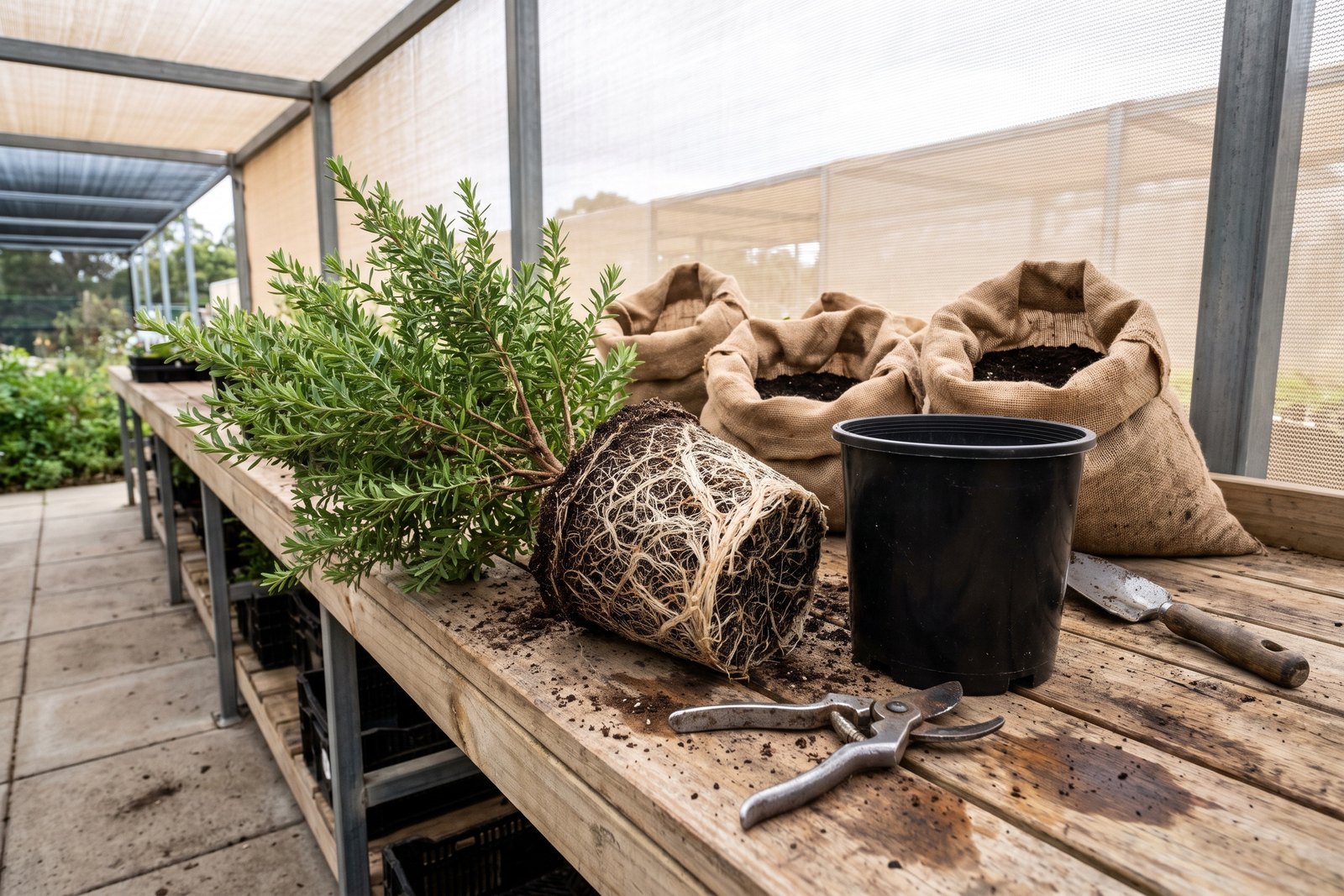
Nursery Plant Quality: Roots, Pests and Hardening Off
Quality in a nursery plant is mostly below the mix, in the roots, and a buyer who lifts one plant from each line sees what the price list cannot say. This page is the checklist: roots, stem and canopy, pests and diseases, hardening off, weeds and labels, the questions to send with the order, and the schemes that certify practice.