Running a Community Plant Sale or Tree Giveaway
A plant sale or a tree giveaway is a wholesale order with a date on it. This page sets out how a club, school, friends group or council plans the stock: what sells and what gives well, ordering for a date, receiving and holding the plants, the rules a sale meets, and the mistakes that send plants home unsold.
Updated 24 October 2026. Grower counts from the live au.hortosapp.com state hubs on 24 September 2026; median trade prices from the HortOS Plant Price Index, September 2026 edition.
On this page
A plant sale pays for the year's projects and a tree giveaway puts canopy into streets nobody else will plant, and both fail the same way: the plants arrive late, in the wrong size, or in a condition the committee would not sell to a friend. The one idea that matters most is that a sale or a giveaway is a wholesale order with a date on it, and the grower is the partner who makes the date.
This page sets out how a club, a school, a friends group or a council plans the stock side of a plant sale or a giveaway. It covers what to order and when, how growers price it, how to receive and hold it, and what the rules say about selling plants. It draws on HortOS, a free directory of Australian wholesale plant growers with their published availability and trade prices, and on what the Australian Taxation Office, the industry body and the community greening bodies publish. It does not cover the permits for a public event, which are the venue's and the council's to set.
Quick facts
| The stock | Sales turn over small grades fastest: tubes and 140 mm pots, flowering perennials in bud, a few larger feature plants. A giveaway is usually one size of a short list of local species. |
|---|---|
| When to order | Most of the trade's planting is done in autumn and spring; a grower's spring tubestock was sown or struck the summer before. Order the sale stock a season ahead; a giveaway grown to order needs a year. |
| The price basis | Trade prices are ex GST, one price per grower, freight on top; a sale sets its own price above that and a giveaway pays the trade price in full. |
| Where the plants come from | Every grower on HortOS is on its state hub by town: New South Wales, Victoria, Queensland, South Australia. |
| Selling plants | A club that sells plants is trading, and the Australian Taxation Office's GST pages set out when a not-for-profit must register; most small clubs sit under the threshold and keep their receipts. |
| Moving plants | Plants that cross a state border move under that state's plant quarantine rules; the Australian Interstate Quarantine site sets out which plants need a certificate for each state. |
What a sale sells and what a giveaway gives
A plant sale lives on turnover. Small, cheap, flowering and labelled sells; large, slow and unlabelled comes home. The stock that moves is tubes and 140 mm pots of plants a visitor recognises, herbs and vegetables in season, flowering perennials in bud rather than in full flower, and a dozen larger plants as the table's anchors. A club that grows some of its own stock buys the rest from a grower in the same sizes, so the tables read as one range.
A giveaway is the opposite problem. The council or the group wants every household to leave with the same thing, planted by the same weekend, so the order is one or two sizes of a short list of species suited to the district. Many councils run a free plant giveaway for ratepayers each year, usually tubestock of local species grown to order by a community or wholesale nursery, and Landcare Australia's grants have funded community plantings for decades. A giveaway's budget is the trade price times the count plus guards, stakes and the day itself, and nothing comes back.
Ordering for a date
- Set the date first. The grower needs the dispatch date before anything else. A spring sale is ordered in autumn, when the grower is deciding what to pot on; a giveaway of plants grown to order is booked a year out.
- Order the grower's units. Trays of tubes and 140 mm pots, whole trolley shelves of pots. A sale of 600 plants is twelve to fifteen trays plus a trolley of larger pots, which is a morning's work for a grower and a trailer load for the club.
- Ask for the quote in writing. Species, size, quantity, price ex GST, dispatch date and the freight or pickup arrangement. Buying plants in bulk for a community group explains the ways a group holds an account and reading a grower's price list and trade terms explains the words a quote uses.
- Agree what happens to the surplus. A sale rarely sells everything. Ask whether the grower takes unsold pots back at a credit, whether the club holds them for the next sale, or whether a school or a reserve takes them. Decide before the sale, not on the night.
Median trade prices in this guide are from the HortOS Plant Price Index, September 2026 edition: one price per grower, ex GST, freight not included, a median only where three or more growers price a size. The price check compares the lines of a quote against the prices growers publish, which tells a treasurer what the sale price leaves the club after costs.
Receiving and holding the stock
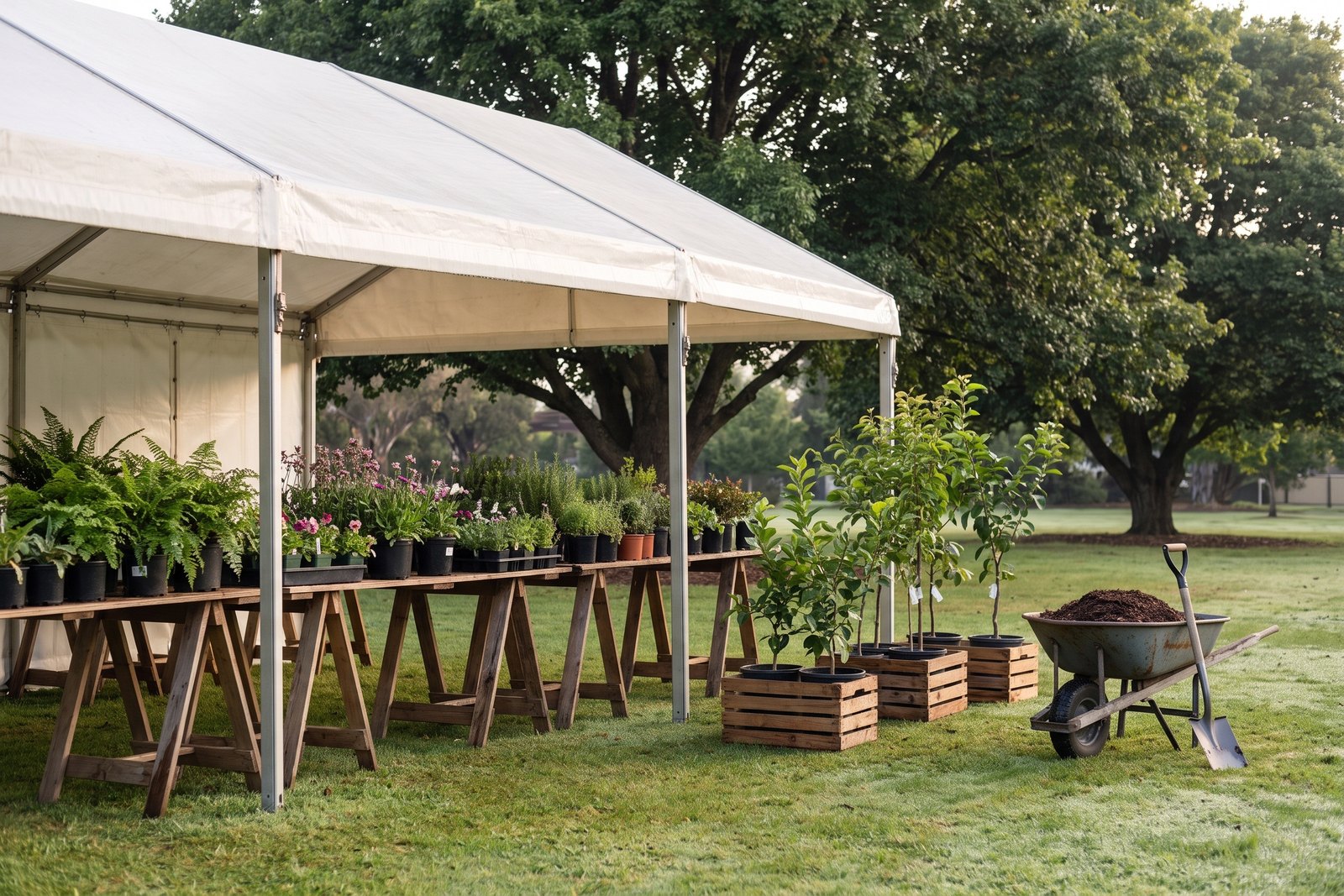
Plants that leave an irrigated nursery bench want water the day they arrive and every day until they are sold or planted. A sale that receives its stock on a Wednesday for a Saturday needs a holding area in part shade, a hose, and someone on the roster for Thursday and Friday. Stand the trays on the ground or on a tarpaulin, never on hot paving, and keep the labels with the plants.
For a giveaway the holding problem is larger because the count is larger. A council giving away 2,000 tubes holds forty to fifty trays for a week, which is a shade house or a covered loading dock, not a car park. Many councils ask the grower to hold the plants until the morning and deliver to the site, and pay the freight for the certainty.
The rules a sale meets
- Tax. A club that sells plants is trading, and the Australian Taxation Office's GST pages set out when a not-for-profit must register; most small clubs sit under the threshold and keep their receipts.
- Plant health. Plants that cross a state border move under that state's plant quarantine rules; the Australian Interstate Quarantine site sets out which plants need a certificate for each state. A sale that buys from a local grower and sells to local gardens meets no border.
- Labels. A plant sold with a name, a size and a price moves; one with a cultivar name protected by a breeder's right is sold under the name the grower supplied it with. Keep the grower's tags where they came with the plants.
- Weeds. Plants that a council or a state agency lists as invasive or as a pest should not be on a community table, whatever the garden book says. Check the species list against the local listing before the order goes in.
What to watch for
- Ordering by the sale date, not the grower's season. A grower cannot bring a tray forward by six weeks. Ask what will be ready on the date, and build the range from that.
- One size of everything. Visitors buy at two or three price points. A table of identical pots sells its first row and stops.
- No shade, no water, no roster. A tray left on hot paving for two days arrives at the table wilted, and a wilted plant does not sell at any price.
- Pricing from the trade price alone. Add GST where it applies, the freight, the labels, the hire of the tables and the plants that will not sell. A sale price that is twice the trade price is often the break-even, not the profit.
- A giveaway with no planting advice. A tube handed over with no word on where to plant it is a tube that dies in its pot. One printed line on spacing, water and the first summer doubles the survivors.
Getting it right
- Fix the date and the venue, then work backwards to an order date a season earlier.
- Choose the range at two or three price points, mostly tubes and 140 mm pots, and check every species against the local weed listing.
- Shortlist growers on the state hub that list the sizes you want, ask three for a written quote ex GST with the dispatch date, and settle the surplus question in the same email.
- Ask the treasurer how GST applies to the sale and set the prices with the full cost in front of you.
- Arrange a shaded, watered holding area and a watering roster from delivery to the day.
- Count trays at delivery, keep the grower's tags with the plants, and hand every giveaway plant over with a line of planting advice.
A word of caution
The grower counts and prices on this page are what HortOS printed on 24 September 2026, and the live pages change as lists arrive. Whether a sale owes tax is the Australian Taxation Office's to rule on; whether a species may be sold or planted in a district is the council's or the state agency's. The grower's word on stock, dates and terms is the one that counts, and HortOS never answers on a grower's behalf.
Sources
- Australian Taxation Office, GST: when a body registers and claims GST.
- Landcare Australia: community groups, grants and projects.
- Australian Interstate Quarantine: moving plants between states.
- Greenlife Industry Australia: the nursery industry's national body.
- Stephanie Alexander Kitchen Garden Foundation: school kitchen garden programme.
More guides
Buying Plants in Bulk for a Community Group
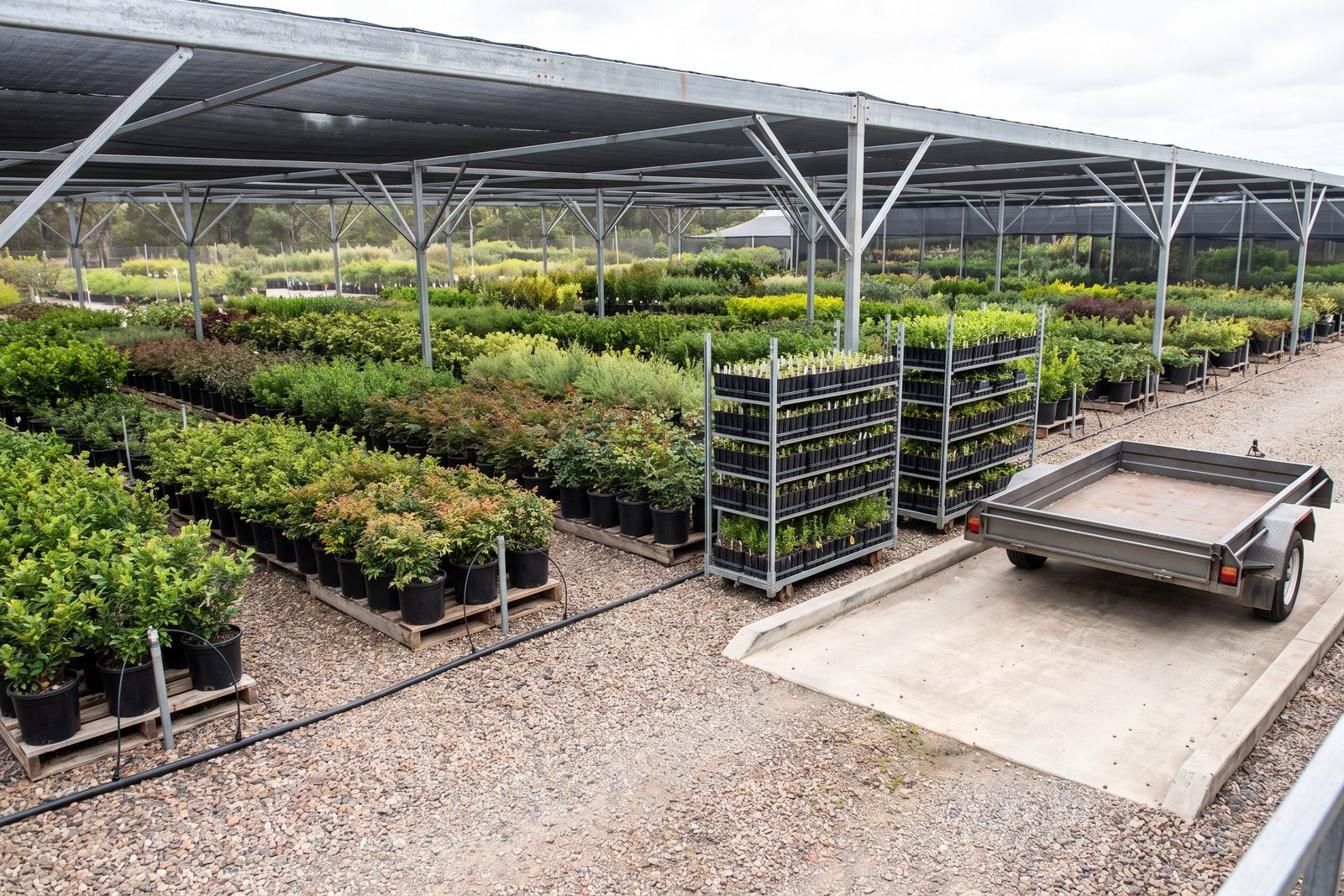
Garden clubs, community gardens, schools and friends groups can buy plants by the tray and the trolley from wholesale growers when they order like the trade. This page explains what bulk means to a grower, the three ways a group buys, how to turn a plan into quantities, what a quote request needs and how collection day works.
Reading a Grower's Price List and Trade Terms
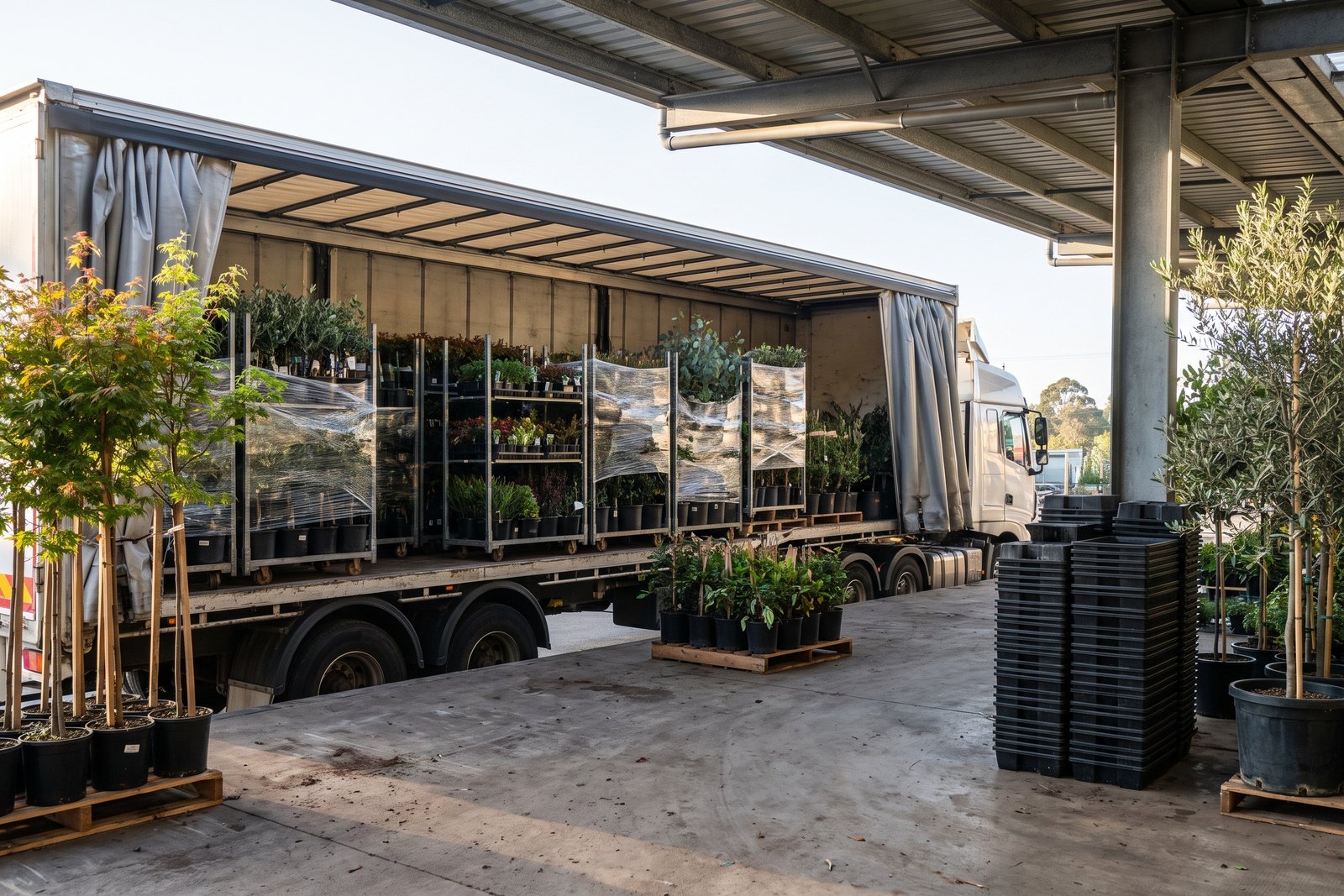
A grower's price list is an offer written in shorthand, and the terms are part of the price. This page reads a trade list column by column and term by term, from the tax and freight basis to minimums, price on application, holds, substitutions, payment and claims, and turns two quotes into landed costs.
Shade trees for schools and playgrounds: sizes and trade prices
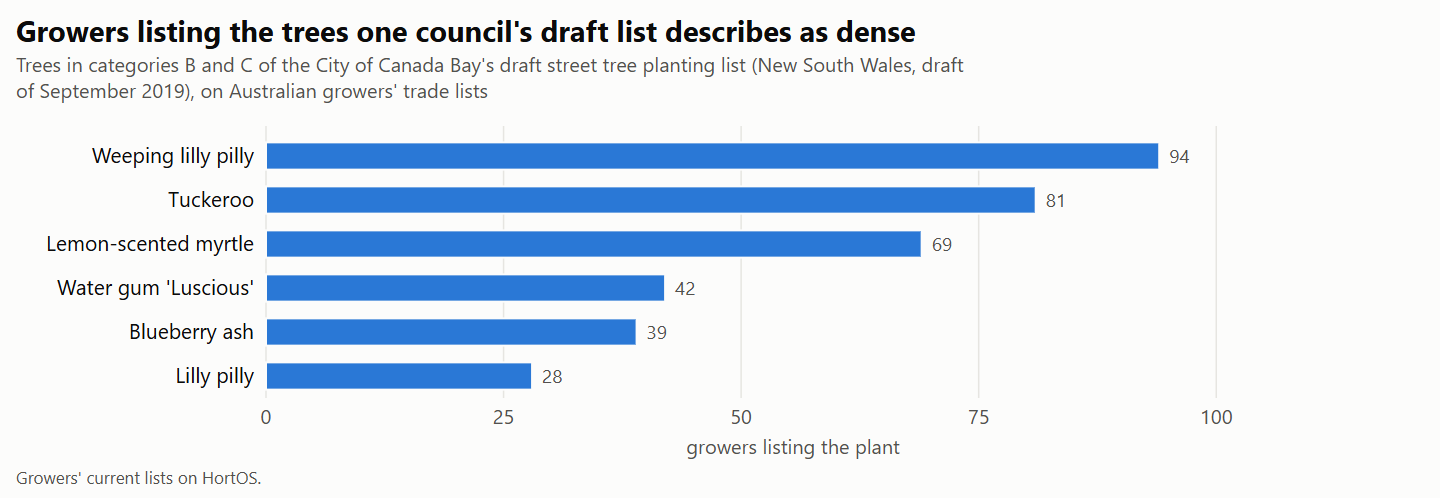
Cancer Council NSW's Guidelines to Shade, Victoria's school building handbook and the NSW Department of Education's design guide give three different answers on the size of shade tree to plant in a school ground. This page sets them side by side, with growers listing trees from one council's draft list and trade medians at three sizes.