Choosing Plants for a Community Garden on a Budget
A community garden's plant budget goes furthest on plants that come back every year, bought small, from what growers list in numbers. This page sets out the order to spend in, the plants that earn their place, buying small and together, and where fruit and shade trees fit.
Updated 24 October 2026. Plant counts and median trade prices from the live au.hortosapp.com plant and price pages on 25 October 2026; state grower counts from the hubs on 24 September 2026.
On this page
A community garden committee nearly always has more beds than money, and the first season's plant budget decides how the garden looks for years. The one idea that matters most is that a plant budget goes furthest on plants that come back every year, bought small, from the plants growers already grow in numbers.
This page sets out the order to spend in, the kinds of plants that earn their place in shared beds, how to buy small and buy together, and where fruit trees fit. It draws on the people who support community gardens, on HortOS, a free directory of Australian wholesale plant growers with their published availability and trade prices, and on what growers listed on 25 October 2026. It is a guide to choosing, and it leaves prices to the cost guides.
Quick facts
| Spend in this order | Soil, water and mulch first, then the permanent plants: edges, hedges, fruit and herbs. Annual seedlings come last and are often grown from seed by members. |
|---|---|
| Buy small | Tubes and 140 mm pots cost a fraction of larger pots and establish quickly in a prepared bed. In the September 2026 edition of the HortOS Plant Price Index the median trade price was $7.00 for a 140 mm pot and $14.00 for a 200 mm pot, ex GST, one price per grower. |
| Perennials pay back | A perennial planted once flowers, feeds and shades for years. An annual bed has to be bought and planted again every season. |
| Choose what growers list | A plant many growers list is easy to replace and cheap to buy in numbers. A rare plant is a gamble for a shared bed. |
| Shared edges | Hardy perennials and grasses along paths and fences cut weeding and mowing, the jobs volunteers most often drop. |
| Where the growers are | Every grower on HortOS sits on its state hub by town: New South Wales, Victoria, Queensland, South Australia. |
Spend in this order
The plants are rarely the first cost that matters. Plants put into poor soil, without water or mulch, die in the first dry spell and are bought twice. A committee that spends on soil, a tap or a tank, and mulch before plants gets more from every plant it then buys.
- Soil, compost and mulch for the beds that will be planted this season.
- Water: a tap, a tank, hoses and a roster for the hot months.
- Permanent plants: the edges, the hedge, the fruit trees and the herbs. These are the plants the garden will still have in ten years.
- Seed and seedlings for the annual beds, much of it raised by members or swapped.
A garden that follows that order spends most on the second and third years' harvest, not the first season's show. What the plants for a community garden cost at trade sets out the money in detail.
The plants that earn their place
In a shared garden a plant earns its place when it does a job for years with little care. Groundcovers and grasses hold the edges and keep weeds down. Hardy flowering perennials feed bees and lift the garden for visitors. Herbs feed members all year. A few fruiting shrubs and trees give the garden a harvest that members return for. Locally, Community Gardens Australia describes itself as the peak body and networking organisation connecting community gardeners around Australia so ask them which plants have worked nearby.
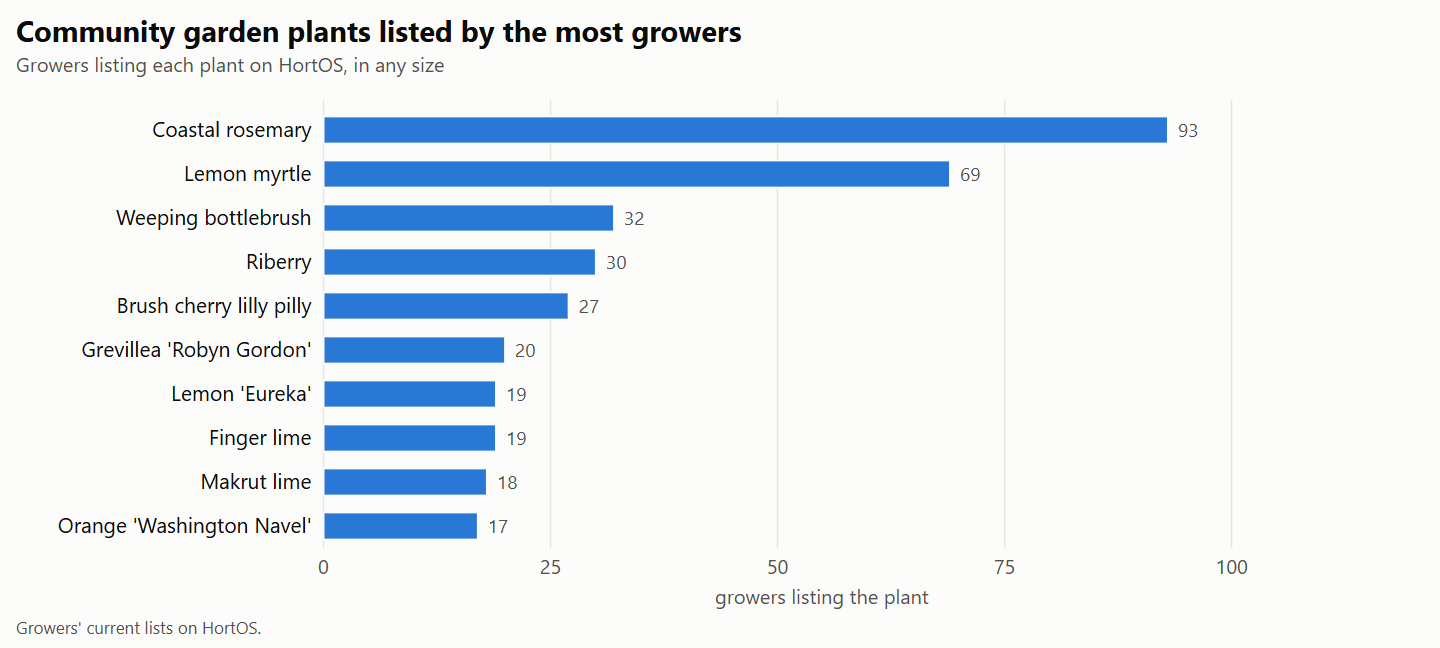
The table lists hardy plants of the kind shared beds use, with how many growers listed each on HortOS on 25 October 2026. Prices are medians across growers' current trade lists on HortOS on 25 October 2026: one price per grower, ex GST, freight not included, with the number of growers pricing each size in brackets. Grower counts are the growers listing each plant on HortOS on 25 October 2026, in any size. A median needs three growers pricing a size. Anyone can see the prices on HortOS, and only the trade can order.
| Plant | Growers listing it | Size most growers price | Median there |
|---|---|---|---|
| Spiny-head mat-rush (Lomandra longifolia) | 130 | 140mm (65) | $6.50 |
| Native violet (Viola hederacea) | 113 | 140mm (57) | $6.50 |
| Coastal rosemary (Westringia fruticosa) | 93 | 140mm (45) | $6.25 |
| Common tussock grass (Poa labillardieri) | 73 | 140mm (33) | $6.75 |
| White correa (Correa alba) | 68 | 140mm (33) | $6.95 |
| Blue flax-lily (Dianella caerulea) | 55 | 140mm (22) | $6.75 |
| Purple coral pea (Hardenbergia violacea) | 53 | 140mm (21) | $7.50 |
| Creeping boobialla (Myoporum parvifolium) | 50 | 140mm (25) | $6.50 |
| Cut-leaf daisy (Brachyscome multifida) | 32 | Tube (10) | $1.77 |
| Common everlasting (Chrysocephalum apiculatum) | 19 | 140mm (3) | $70.00 |
| Rosemary (Rosmarinus officinalis) | 16 | 140mm (4) | $7.20 |
| French lavender (Lavandula dentata) | 5 | Fewer than three growers | Not shown |
Of the plants in the table, spiny-head mat-rush (Lomandra longifolia) had the most growers listing it, 130, and French lavender (Lavandula dentata) the fewest of those shown, 5. A count here is growers listing the plant, not how many plants exist or how well it suits a site. A plant many growers list is one a committee can buy again cheaply when a volunteer forgets to water.
Buying small and buying together
Small plants are the community garden's friend. Tubes and 140 mm pots root into a prepared bed within a season and catch up with larger pots planted beside them. The difference in price buys mulch, a tap fitting or another bed. In the September 2026 edition of the HortOS Plant Price Index the median trade price was $7.00 for a 140 mm pot and $14.00 for a 200 mm pot, ex GST, one price per grower.
- Order in the grower's units. Growers sell small plants by the tray. A garden that needs forty plants of one kind orders a tray and shares the spare few with a neighbouring garden.
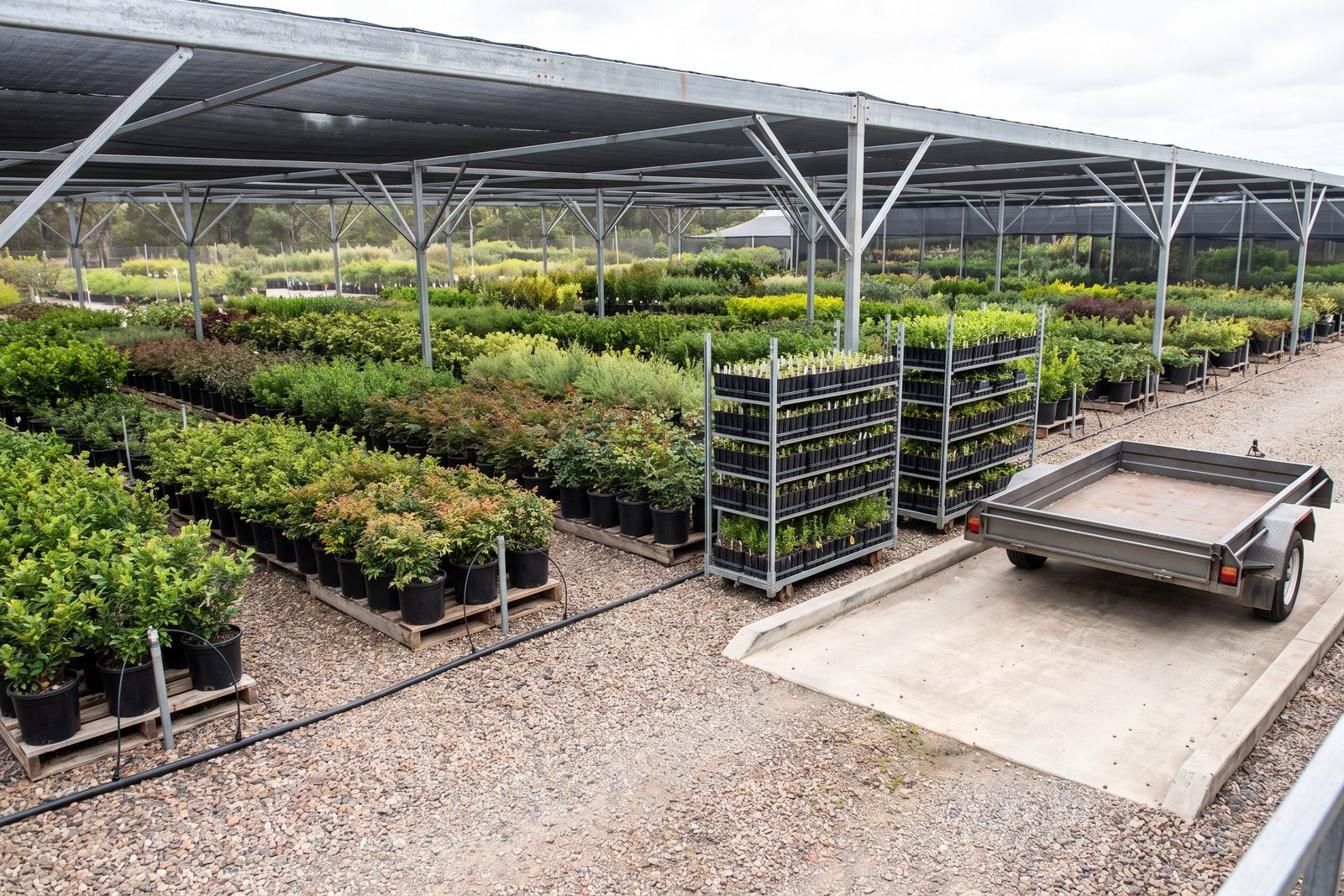
- Pool with other gardens. Two or three gardens ordering together reach a grower's minimum and split the freight. Buying plants in bulk for a community group sets out how.
- Divide what you have. Grasses, perennials and herbs divide every year or two. A garden that divides its own clumps doubles its planting for nothing.
- Swap with members. Members' cuttings and seedlings fill annual beds. Keep swapped plants to the annual beds until you know they carry no weeds or pests.
Keeping the first year's plants alive
A community garden loses more plants in its first summer than in the next five, and most of those losses are avoidable. New plants need water more often than established ones, and a shared garden is where watering most often falls between volunteers. Put the plants that need least water on the edges and the furthest beds, and the thirsty ones nearest the tap.
- A written roster. A simple weekly roster on the shed door, with a name for each day in the hot months, keeps new plants alive better than goodwill.
- Mulch after every planting. A layer of mulch over moist soil halves how often a bed needs water and keeps weeds down while plants establish.
- Label and record. A label in each bed and a list in the shed of what went where, and when, tells the next committee what worked.
- Replace from the same list. When a plant dies, replace it from the plants that have thrived nearby rather than trying something new in the same spot.
A garden that keeps its first year's plants alive spends its second year's budget on new beds instead of replacements. That is where a small budget starts to show.
Fruit, shade and the long view
A few fruit trees and shade trees change a community garden more than any other purchase. They are also the plants most likely to need the land manager's permission, because they outlast the committee that planted them. Ask the council or the landowner before planting a tree, and record where each one went.
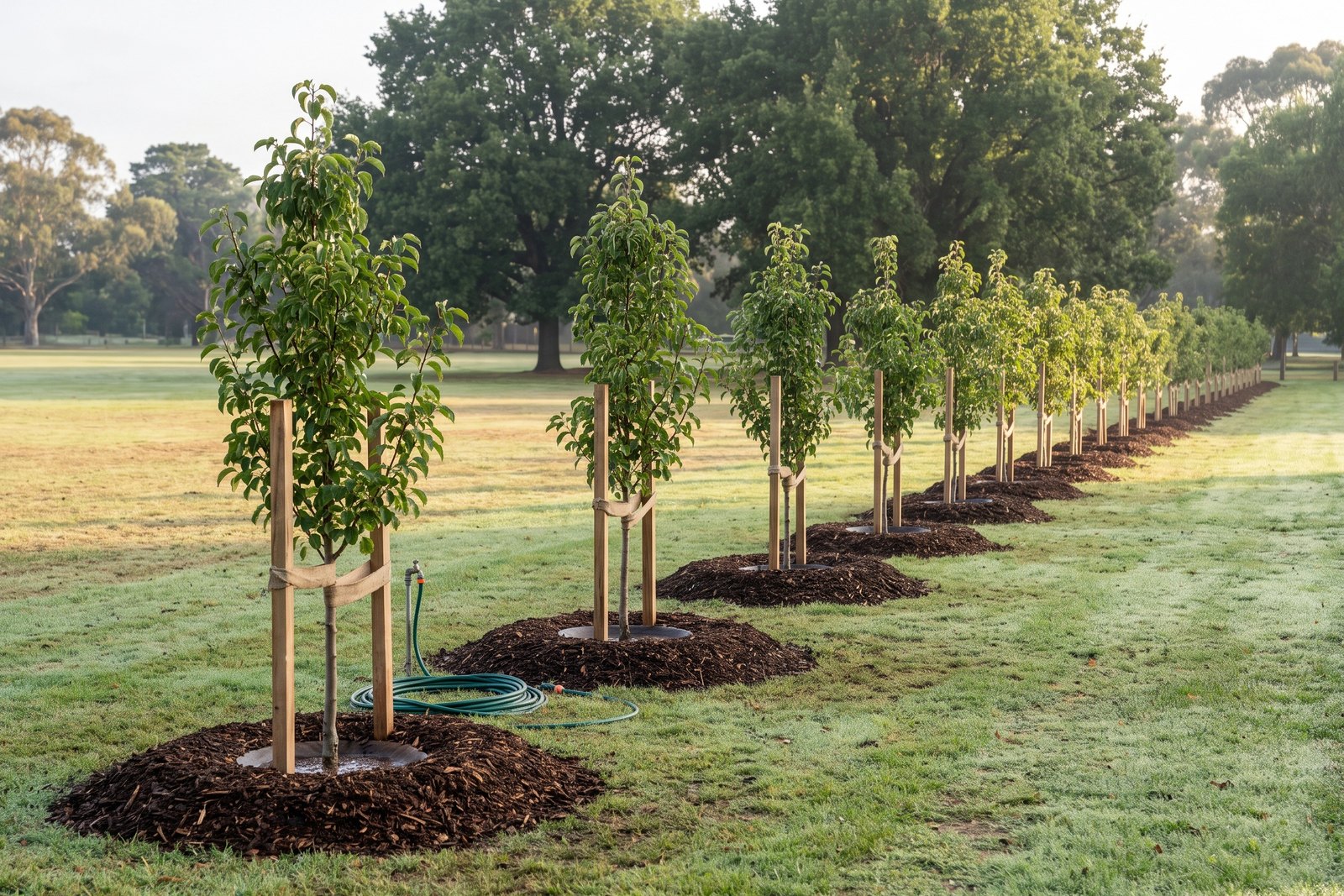
Trees are cheapest and establish best when planted small in the cool months, June to August in most of the country. Plant them on the side of the garden where their shade will not fall on the vegetable beds, and give each a ring of mulch and a guard. Planting trees at a park or street tree event covers sizes, spacing and the first two summers of care.
What to watch for
- Spending the budget on the first season. A garden full of flowering annuals in the opening month is bare by the next year. Put most of the money into plants that stay.
- Big pots for show. A large pot costs several times a small one and rarely establishes faster in a prepared bed. Buy small and buy more.
- Rare plants in shared beds. A plant nobody nearby grows cannot be replaced when it dies. Keep the unusual plants for a member's own plot.
- No water plan. Most losses in a community garden happen in the first hot spell after planting. A roster and a tap matter more than the plant list.
- Trees without permission. A tree planted without the council's or the landowner's agreement may have to come out. Ask first.
Getting it right
- List the jobs the garden needs plants for: edges, shade, food, flowers and screening.
- Spend on soil, water and mulch before plants, and set up a watering roster.
- Choose hardy perennials, herbs and fruit that growers near you list in numbers.
- Buy tubes and 140 mm pots, in whole trays, pooling with another garden where you can.
- Divide and swap to fill the annual beds, and keep a list of what went where.
- Ask the council or landowner before planting trees, and plant them in the cool months.
A word of caution
The counts and prices on this page are what HortOS printed on the dates given, and the live pages change as growers update their lists. Which plants suit a garden depends on its soil, climate and members, and the local gardening network knows that best. On stock, sizes and terms the grower's word is the one that counts.
Sources
- Community Gardens Australia: the national community gardens network.
- Sustainable Gardening Australia: community garden and gardening resources.
- Landcare Australia: community groups, grants and projects.
- Australian Taxation Office, GST: when a body registers for GST.
More guides
What the plants for a community garden cost at trade
A council's application form can ask a community garden group to cost its planting. This guide sets out what Maitland, South Perth and Brisbane councils ask or fund, then gives median trade prices by pot size for fruit trees, bush food, herbs and native border plants that growers list on HortOS.
Buying Plants in Bulk for a Community Group
Garden clubs, community gardens, schools and friends groups can buy plants by the tray and the trolley from wholesale growers when they order like the trade. This page explains what bulk means to a grower, the three ways a group buys, how to turn a plan into quantities, what a quote request needs and how collection day works.
Planting Trees at a Park or Street Tree Event
A tree planting day is judged two summers later, and the sizes, spacing and aftercare plan decided before it keep the trees alive. This page covers sizes volunteers can plant, spacing for the mature canopy, the planting method arborists publish, running the day and the first two summers.