Dypsis lutescens
Golden Cane Palm
Part of Dypsis: see them all
37 growers · 20 sizes · from $6.25 ex GST
- Type
- Evergreen palm
- Height
- 3 m to 9 m
- Spread
- 2.4 m to 4.6 m
- Growth
- Moderate
- Flowers
- Yellow, summer
- Sun
- Full sun, where the Palm and Cycad Societies of Australia say it grows best; the Missouri and North Carolina references prefer bright part shade outdoors and say it tolerates full sun; indoors bright light out of direct sun, which may scorch the leaves
- Drought
- Tolerant
- Frost
- Not very frost tolerant
- In Australia
- Not native
Also grown by 18 nurseries (no sizes or prices listed)
Enquire with them for sizes and prices.
- Anything And Everything PlantsMariginiup, WA
- Arborglen Wholesale NurseryGlenorie, NSW
- Bamboo ParkValdora, QLD
- Coffs Harbour NurseryNSW
- ForsterianaDarawank, NSW
- Ibrox ParkQLD
- Lakeside NurseryStratham, WA
- Logan River Tree FarmBeenleigh, QLD
- Mullumbimby Palms NurseryMullumbimby, NSW
- Natures Colours NurseryNSW
- Plant SafariParmelia, WA
- Plants WhitsundayQLD
- Pregno Edmonton Palm NurseryEdmonton, QLD
- Premier Palms NurseryMariginiup, WA
- Silk Trees and PlantsPort Macquarie, NSW
- The Plant Supply CoWA
- The Ruby Plants - Affordable Nursery BrisbaneHolland Park West, QLD
- True Green NurseryMelton, VIC
Growing golden cane palm
Climate. HortFlora, the horticultural flora of south-eastern Australia, says it succeeds from tropical to temperate regions. The other references read are American: they give USDA zones 10 to 11 and no frost figure, and the Missouri Botanical Garden says plants indoors dislike temperatures below about 16 C. No reference read gives a frost rating from Australian conditions.
Position. Outdoors it prefers bright part shade and tolerates full sun, by both American references. Indoors it wants bright light out of direct sun, which the Missouri account says may scorch the leaves, and high humidity.
Soil and water. Rich, moist but well-drained soil, acid to neutral by the North Carolina toolbox, kept moist but not soggy through the growing season. In its home range it grows in moist forest, by the Missouri account, and in littoral forest and heath on white sand, by HortFlora.
Pests and problems. The American references report scale, whiteflies and spider mites. The Missouri account also names lethal yellowing, a deadly phytoplasma disease of palms spread by planthoppers, as a risk to plants grown outdoors.
Using golden cane palm
Screens and hedges. HortFlora rates the large, dense clumps it makes as excellent screening, and the Missouri Botanical Garden lists it for screens, informal hedges and privacy walls, and for group planting as a landscape specimen, where it is winter hardy. The American references give a spread of 2.4 to 4.6 m outdoors; worked from that, about 2.4 m centres gives a continuous screen.
Interiors. HortFlora notes its use indoors in bright light, the Missouri account calls it the most popular palm sold as a houseplant, and the North Carolina toolbox states that it has been shown to reduce indoor air pollution.
What to check before you buy
Growers list it as Dypsis lutescens, as Chrysalidocarpus lutescens or as golden cane palm; all three are this plant, and the table above shows the sizes growers list; the HortOS guide to nursery pot sizes explains the pot grades, and the guide to reading a wholesale availability list how a grower's list is set out. Growers also list multi-planted pots and a dwarf fine-leaf form under their own names, and the North Carolina toolbox notes that dwarf and fastigiate cultivars have been developed in Thailand. For the roots, pests and hardening off to check in nursery stock, see the HortOS guide to judging nursery plant quality. Stock that crosses a state border moves under the state and territory biosecurity rules on plants and soil.
Used forhedging and screeningspecimenindoorpots and courtyards
Prices are set by each grower and shown ex GST. Availability is confirmed by the grower at order.
Common questions
- Who grows Dypsis lutescens wholesale in Australia?
- 37 wholesale growers list Dypsis lutescens on HortOS right now, each with their own pot sizes and trade prices. They are in New South Wales, Queensland, Western Australia and Victoria. The growers are named on this page.
- What pot sizes does Dypsis lutescens come in?
- Growers on HortOS list Dypsis lutescens in Tube, 140mm, 170mm, 200mm, 250mm, 255mm, 300mm, 305mm, 400mm, 500mm and 10 more sizes.
- What does Dypsis lutescens cost wholesale?
- The median trade price in a 200 mm pot is $20.00 ex GST, across 15 growers who price it. Prices by pot size and state are on its trade price page.
- How do I order Dypsis lutescens from these growers?
- HortOS is for the trade. Add the lines you want to a list and send it: each grower gets their part of the order by email, confirms what they have and quotes freight, and nothing is bought until you approve it. Listing, searching and ordering are free.
- Is Chrysalidocarpus lutescens the same plant as Dypsis lutescens?
- Yes. GBIF and HortFlora accept Dypsis lutescens and treat Chrysalidocarpus lutescens as its synonym, and the Missouri Botanical Garden calls Chrysalidocarpus its former name. The North Carolina toolbox files the palm under Chrysalidocarpus lutescens, and growers list it under both names.
- How tall does a golden cane palm grow?
- Outdoors 3 to 9 m tall and 2.4 to 4.6 m wide by the American references. The leaves run 0.9 to 1.8 m long. HortFlora, the horticultural flora of south-eastern Australia, gives the trunks to 6 m; no Australian reference read gives a spread.
- Is golden cane palm good for screening?
- Yes, by both kinds of reference: HortFlora, the Australian one, rates its clumps as excellent screening, and the Missouri Botanical Garden lists it for screens and informal hedges where it is winter hardy. Worked from the American spread, about 2.4 m centres gives a continuous screen.
- Can golden cane palm take full sun?
- Outdoors it tolerates full sun but prefers bright part shade, by both American references. Indoors the Missouri account warns that direct full sun may scorch the leaves, and it wants bright light and high humidity.
- Is golden cane palm toxic to pets?
- The ASPCA list of toxic and non-toxic plants rates Dypsis lutescens, under the name areca palm, as non-toxic to dogs, cats and horses. The North Carolina toolbox, which is not a poisons register, warns that the terminal bud (the heart of palm) contains cyanide compounds and should not be eaten.
- Why is it called golden cane palm?
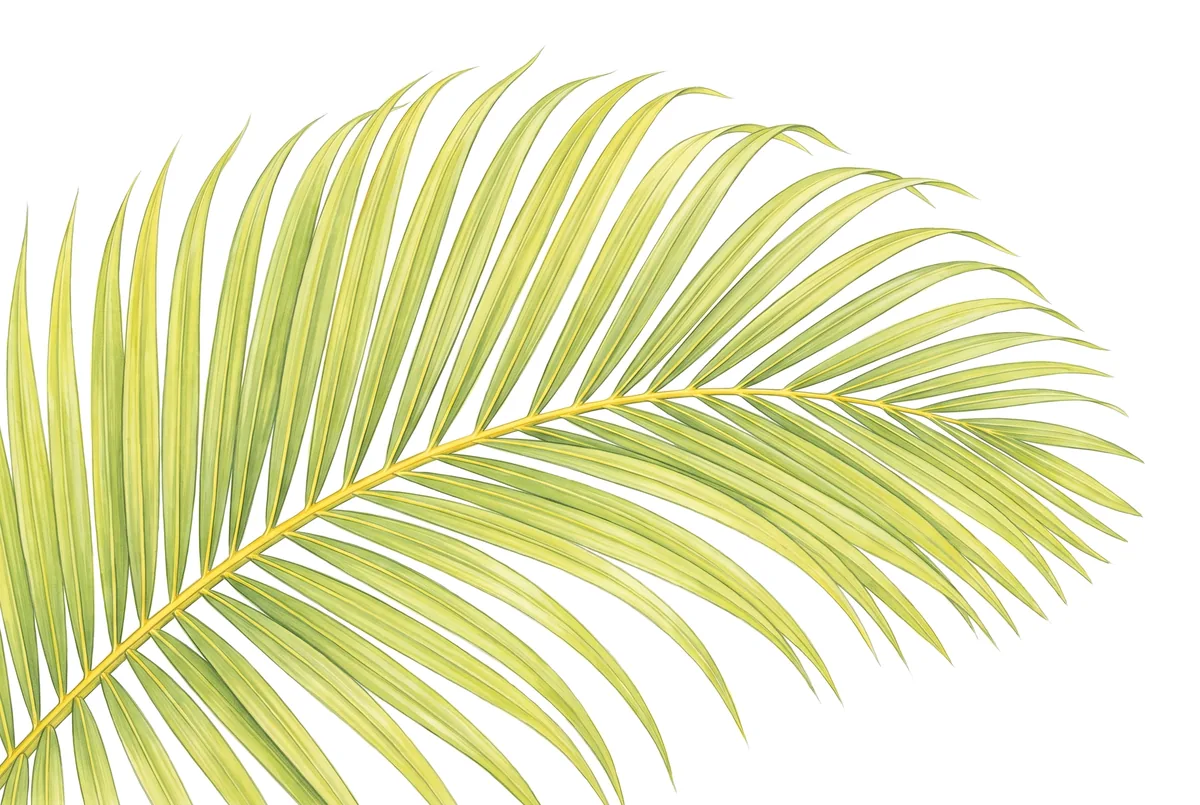
- For its yellow stems, by the Missouri Botanical Garden. The epithet lutescens means turning yellow, for the yellow flowers, stems and leaf midribs, and the name bamboo palm comes from stems that look like bamboo when the suckers are removed.
Sources
- GBIF species match API (Dypsis lutescens, and Chrysalidocarpus lutescens as its synonym)
- ASPCA Animal Poison Control, Toxic and Non-Toxic Plants: Areca Palm (Dypsis lutescens)
- HortFlora, the Horticultural Flora of South-eastern Australia (Royal Botanic Gardens Victoria): Dypsis lutescens
- North Carolina State Extension Gardener Plant Toolbox: Dypsis lutescens (filed there as Chrysalidocarpus lutescens)
- Missouri Botanical Garden Plant Finder: Dypsis lutescens
- Palm and Cycad Societies of Australia (PACSOA): Dypsis lutescens
- The HortOS catalogue (the names growers list it under, and the multi-planted and dwarf listings beside it) and the HortOS guide to judging nursery plant quality; the HortOS guides also linked: nursery pot sizes; the HortOS guide to reading a wholesale availability list
The growers, sizes and prices above are live and change as lists arrive. Cite this page: HortOS, Golden cane palm (Dypsis lutescens), https://au.hortosapp.com/plants/dypsis-lutescens.
Found a fact that is wrong? Tell us and it is checked against its source.