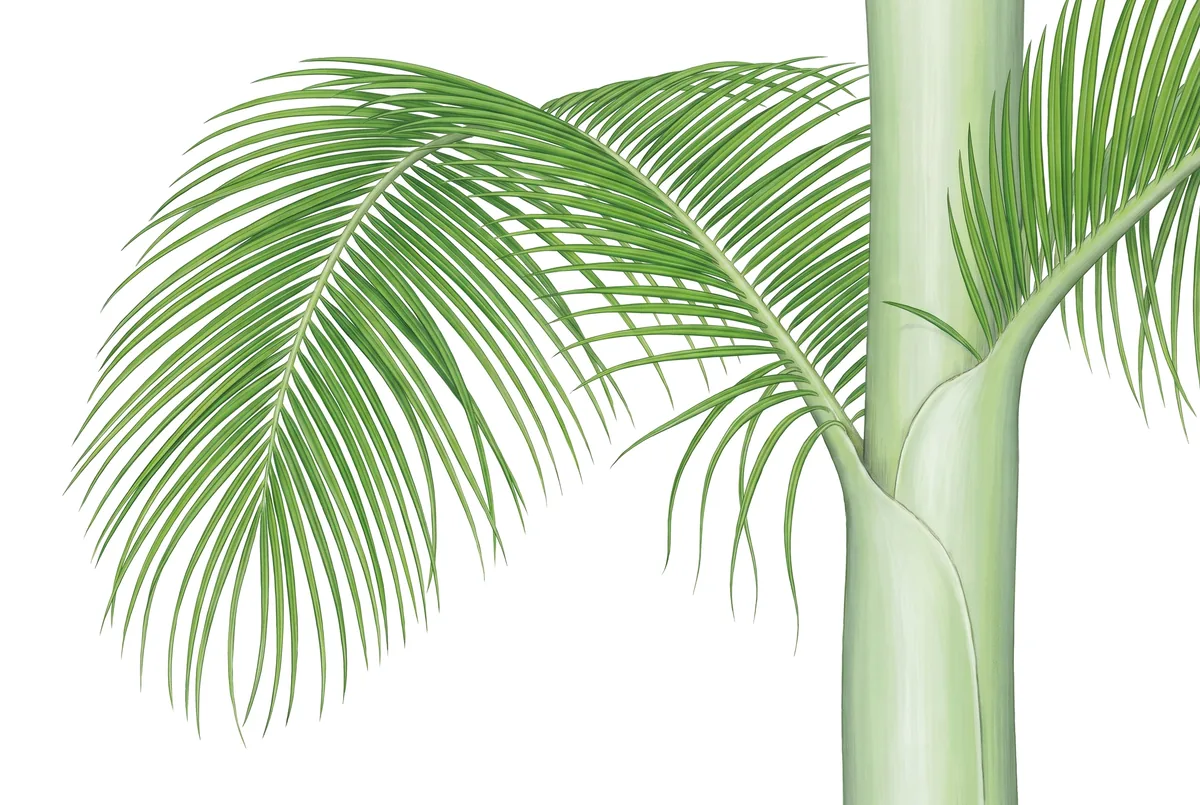
- Type
- Evergreen palm
- Height
- 3 m
- Spread
- 2 m
- Growth
- Slow
- Sun
- Full sun to part shade (Auckland Botanic Gardens)
- In Australia
- Not native
| Size | Grower | PricePrice ex GST | ||
|---|---|---|---|---|
| Tube | Troppo PropagationTube | $60.00 | ||
| 250mm | True Green Nursery250mm | $115.00 | ||
| 400mm | True Green Nursery400mm | $600.00 |
Also grown by 5 nurseries (no sizes or prices listed)
Enquire with them for sizes and prices.
- Greenpatch Organic Seeds & PlantsGlenthorne, NSW
- Premier Palms NurseryMariginiup, WA
- Sydney and Central Coast PalmsMartinsville, NSW
- The Jujube Tree NurseryGwynneville (Wollongong), NSW
- Wholesale Sleeper CoQueanbeyan, NSW
Growing sugar cane palm
In Australia. HortFlora, the Royal Botanic Gardens Victoria's flora of garden plants, says of the genus Dypsis that a few species are well entrenched in cultivation for their adaptability and that several have become popular in subtropical regions and been trialled with some success in warm temperate zones. No Australian reference read gives Dypsis baronii a climate zone, a frost figure or a drought rating.
Position, from New Zealand. Auckland Botanic Gardens gives full sun to part shade in a well-drained soil, says it tolerates only light frosts, and says it dislikes strong wind, which damages the fronds. It names mealybugs around the base of the fronds of young plants as a pest. Those are Auckland observations.
In the wild. PROTA finds it in moist montane forest and bamboo forest in Madagascar at 850 to 1500 m, usually on steep slopes.
Propagation. PROTA says it is raised from seed, which germinates in 1 to 3 months; HortFlora gives fresh Dypsis seed 2 to 6 months to germinate.
Using sugar cane palm
Auckland Botanic Gardens calls it a great palm for smaller gardens, or for an understorey beneath large palms, and says that because it grows so slowly it can be kept in a container; it adds that it is often grown indoors. PROTA calls it a very elegant palm with great potential as an ornamental in parks and gardens. No reference read gives planting centres.
Other dypsis palms growers list include Dypsis lutescens, listed as golden cane palm, and Dypsis decaryi, listed as triangle palm; the rest are on the Dypsis genus page.
What to check before you buy
Check the name. Growers on HortOS list it as Dypsis baronii and as Dypsis baronii Sugar Cane Palm. PROTA gives Chrysalidocarpus baronii and Neodypsis baronii as its synonyms. The catalogue gives the line the common name golden cane palm, a name growers put in their listings of Dypsis lutescens, a different palm; check the botanical name.
The table above shows the sizes growers list; the guide to nursery pot sizes explains what each step means, and the guide to judging nursery plant quality covers the root, pest and hardening off checks.
Prices are set by each grower and shown ex GST. Availability is confirmed by the grower at order.
Common questions
- Who grows Dypsis baronii wholesale in Australia?
- 2 wholesale growers list Dypsis baronii on HortOS right now, each with their own pot sizes and trade prices. They are in Queensland and Victoria. The growers are named on this page.
- What pot sizes does Dypsis baronii come in?
- Growers on HortOS list Dypsis baronii in Tube, 250mm and 400mm.
- How do I order Dypsis baronii from these growers?
- HortOS is for the trade. Add the lines you want to a list and send it: each grower gets their part of the order by email, confirms what they have and quotes freight, and nothing is bought until you approve it. Listing, searching and ordering are free.
- How big does sugar cane palm grow?
- Auckland Botanic Gardens says it grows slowly to around 3 m tall and 2 m wide in a garden. PROTA gives trunks 2 to 8 m tall in its native forest in Madagascar.
- Is sugar cane palm frost hardy?
- No Australian reference read gives a frost figure. Auckland Botanic Gardens says it tolerates only light frosts and dislikes strong wind.
- Can sugar cane palm grow in a pot or indoors?
- Auckland Botanic Gardens says it can be grown in a container because it is so slow growing, and that it is often grown indoors.
- Is sugar cane palm the same as golden cane palm?
- No. Sugar cane palm is Dypsis baronii, whose trunks PROTA likens to sugarcane. Growers list Dypsis lutescens as golden cane palm.
Sources
- GBIF species match API
- HortFlora, the Horticultural Flora of South-eastern Australia (Royal Botanic Gardens Victoria): Dypsis, the genus
- Australian Plant Census (APC), taxonomy searches for Dypsis baronii and Chrysalidocarpus baronii (no entry returned)
- Atlas of Living Australia: Dypsis baronii (species search; occurrence records by state)
- PROTA (Plant Resources of Tropical Africa), Dypsis baronii, on Pl@ntUse
- Auckland Botanic Gardens (Auckland Council), Plants for Auckland: Dypsis baronii
- The HortOS catalogue for Australia (the listings Dypsis baronii and Dypsis baronii Sugar Cane Palm on au.hortosapp.com)
- The HortOS guides for Australia (nursery pot sizes; judging nursery plant quality)
The growers, sizes and prices above are live and change as lists arrive. Cite this page: HortOS, Sugar cane palm (Dypsis baronii), https://au.hortosapp.com/plants/dypsis-baronii.
Found a fact that is wrong? Tell us and it is checked against its source.