- Type
- Palm
- Height
- 4 m to 12 m
- Growth
- Fast
- Sun
- Sun, in the tropics or subtropics (the Palm and Cycad Society of Australia)
- Frost
- Probably not frost tolerant
- In Australia
- Not native
| Size | Grower | PricePrice ex GST | ||
|---|---|---|---|---|
| 200mm | Plant Connections200mm | $15.00 | ||
| 45L | Plant Connections45L | $100.00 | ||
| 100L | Tango Trees100L | $250.00 |
Also grown by 1 nursery (no sizes or prices listed)
Enquire with them for sizes and prices.
- Sydney and Central Coast PalmsMartinsville, NSW
Growing pemba palm
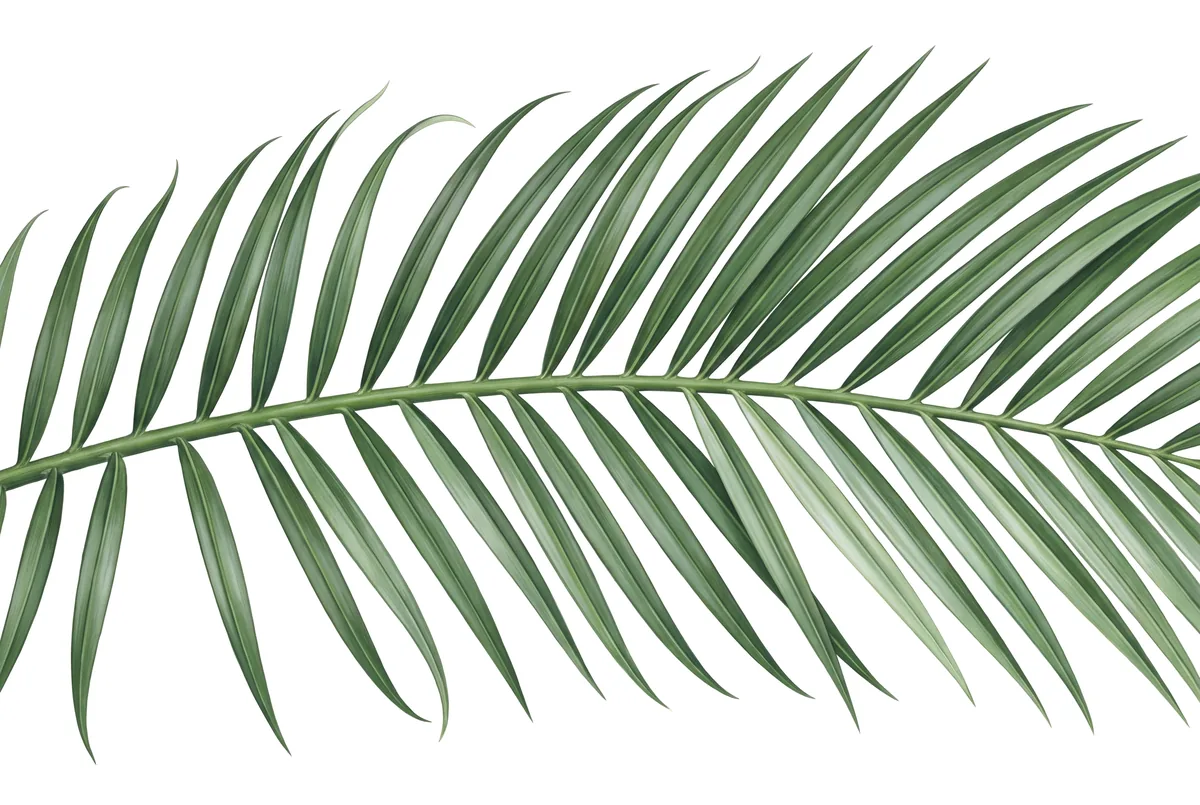
The palm. The botanical description quoted in the Hawaii-Pacific Weed Risk Assessment gives stems 4 to 12 m high and 6 to 15 cm across, pale brown to green and ringed, carrying about 10 arching leaves in roughly three ranks. Each leaf has 40 to 50 regular leaflets on each side, those on the two sides held at about 90 degrees to each other, dark green above and waxy beneath, the middle ones 46 to 74 cm long. The leaf sheaths are waxy green and 50 to 60 cm long. The fruit is dark red, oblong-ovoid, 12 to 15 mm long.
Site. The Palm and Cycad Society of Australia asks for sun and for soil that stays moist yet drains well, in tropical or subtropical gardens; it says the palm grows fast and is probably not frost tolerant. An Encyclopedia of Cultivated Palms, an American reference quoted in the weed risk assessment, says it does not tolerate cold, wants plenty of water almost all the time in rich soil that drains well, and rates it for USDA zones 10b and 11. No Australian reference read gives a minimum temperature.
In the wild. The account quoted in the assessment gives moist lowland and coastal forest at 1 to 50 m above sea level, on Pemba alone.
Using pemba palm
The Palm and Cycad Society of Australia calls it an attractive, medium sized palm, seldom grown though it deserves to be, and describes its slender, smooth, strongly ringed trunks and its dark green leaves with close, evenly set leaflets. Cultivated Palms, quoted in the Hawaii-Pacific Weed Risk Assessment, calls it a rare clustering species endemic to Pemba. The field guide to Tanzania's moist forest trees, quoted in the Hawaii-Pacific Weed Risk Assessment, says the tree is used for building as well as for ornament, and the Red List account quoted there says it is occasionally cut for poles. No reference read gives a planting distance. Other palms of the genus listed on HortOS, among them the golden cane palm, are on the Dypsis page.
What to check before you buy
Growers list this palm as Dypsis pembana, as Chrysalidocarpus pembanus and as Pemba palm; all three are the same species. The Hawaii-Pacific Weed Risk Assessment scored it 0, low risk, for Hawaii, and the Palm and Cycad Society of Australia lists it as vulnerable in the wild. The Society places it in the tropics or subtropics and calls it probably not frost tolerant. The table above shows the sizes growers list; the guide to nursery pot sizes explains the grades, and the guide to nursery plant quality covers what to look for. Stock crossing a state border moves under each state's biosecurity rules.
Prices are set by each grower and shown ex GST. Availability is confirmed by the grower at order.
Common questions
- Who grows Dypsis pembana wholesale in Australia?
- 2 wholesale growers list Dypsis pembana on HortOS right now, each with their own pot sizes and trade prices. They are in Queensland. The growers are named on this page.
- What pot sizes does Dypsis pembana come in?
- Growers on HortOS list Dypsis pembana in 200mm, 45L and 100L.
- How do I order Dypsis pembana from these growers?
- HortOS is for the trade. Add the lines you want to a list and send it: each grower gets their part of the order by email, confirms what they have and quotes freight, and nothing is bought until you approve it. Listing, searching and ordering are free.
- How tall does the Pemba palm grow?
- About 12 m by the Palm and Cycad Society of Australia. The botanical description quoted in the Hawaii-Pacific Weed Risk Assessment gives stems 4 to 12 m high and 6 to 15 cm across.
- Is Chrysalidocarpus pembanus a different palm?
- No. The Hawaii-Pacific Weed Risk Assessment gives Chrysalidocarpus pembanus as a synonym of Dypsis pembana, the name GBIF accepts.
- Does the Pemba palm form a clump?
- Yes. The Palm and Cycad Society of Australia and the botanical description quoted in the weed risk assessment both call it a clustering palm.
- Can it be grown in cooler parts of Australia?
- The Palm and Cycad Society of Australia places it in the tropics or subtropics and calls it probably not frost tolerant. Cultivated Palms, quoted in the weed risk assessment, says it does not tolerate cold.
- What colour is the fruit?
- Dark red, oblong-ovoid and 12 to 15 mm long, by the botanical description quoted in the Hawaii-Pacific Weed Risk Assessment.
Sources
- GBIF species match API
- Palm and Cycad Society of Australia (PACSOA) palm wiki: Dypsis pembana
- Hawaii-Pacific Weed Risk Assessment: Dypsis pembana (with the botanical description and cultivation notes it quotes)
- The HortOS listing's own name for this row, and the HortOS guides (nursery pot sizes; judging nursery plant quality)
The growers, sizes and prices above are live and change as lists arrive. Cite this page: HortOS, Pemba palm (Dypsis pembana), https://au.hortosapp.com/plants/dypsis-pembana.
Found a fact that is wrong? Tell us and it is checked against its source.