Citrus - Orange Washington Navel Citrus sinensis
Citrus
8 growers · 10 sizes · from $26.00 ex GST
- Type
- Evergreen tree
- Height
- 2.4 m to 9.1 m
- Spread
- 2.4 m to 4.6 m
- Growth
- Moderate
- Flowers
- Creamy white, winter and spring
- Sun
- Direct sun
- Drought
- Tolerant
- Frost
- Frost tender
- In Australia
- Not native
| Size | Grower | PricePrice ex GST | ||
|---|---|---|---|---|
| 200mm | Engalls Nursery200mm | $26.00 | ||
| 500mm | Engalls Nursery500mm | $260.00 | ||
| 240L | Engalls Nursery240L | $3,500.00 | ||
| 250mm | Plant Nest250mm | $71.95 | ||
| 300mm | Plant Nest300mm | $161.95 | ||
| 400mm | Andreasens Green Wholesale Nurseries400mm | $210.00 | ||
| 5L | Plant Nest5L | $73.95 | ||
| 5L | Swanes Nurseries Australia5L | $34.95 | ||
| 400mm | Tango Trees400mm | $125.00 | ||
| 300mm | Van Berkel Wholesale Nursery300mm | $60.00 | ||
| 400mm | Van Berkel Wholesale Nursery400mm | $125.00 | ||
| 500mm | Van Berkel Wholesale Nursery500mm | $250.00 | ||
| 250mm | Eumundi Roses250mm | $55.00 | ||
| 100L | Alpine Treemovals100L | Price on application. Sign in to ask the grower. | ||
| 400L | Alpine Treemovals400L | Price on application. Sign in to ask the grower. | ||
| 500L | Alpine Treemovals500L | Price on application. Sign in to ask the grower. |
Also grown by 2 nurseries (no sizes or prices listed)
Enquire with them for sizes and prices.
- BW Plants Pty Ltd. (BWP)Tintenbar, NSW
- Brunswick Wholesale PlantsBrunswick Heads, NSW
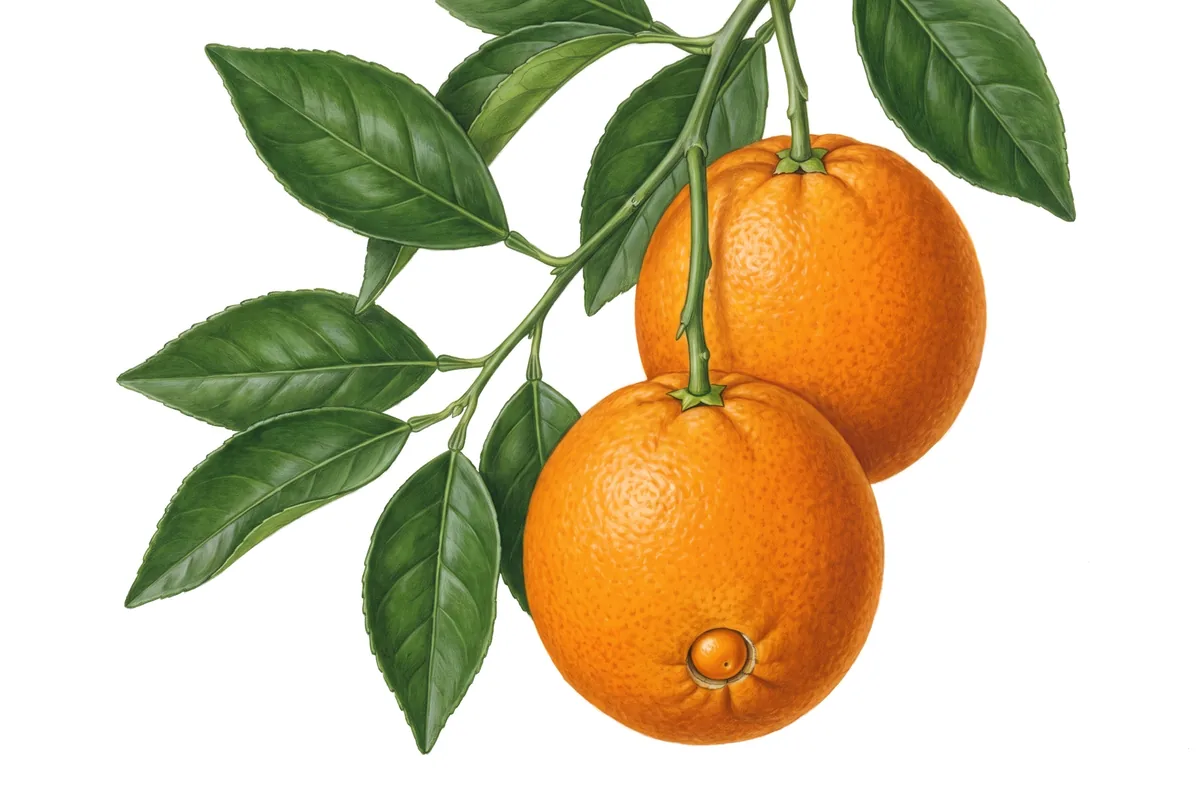
Growing washington Navel orange
The sweet orange's culture comes from the NC State toolbox, an American reference. It asks for direct sun and suggests a place with early morning sun in the growing season, so that new growth does not freeze: it calls the tree frost tender. The soil is a well-drained loam or sand, kept moist, at a pH of 5 to 6 for preference, with neutral or alkaline soil tolerated; the tree is drought tolerant, it says, but flourishes when kept moist and should not be overwatered. Its attributes table also ticks resistance to heavy shade and wet soil, where its text asks for direct sun and no overwatering; this page follows the text. Fruit comes on new wood, so pruning waits until the fruit has ripened. Its American list of problems: citrus rust mite, scales, mealybugs, whiteflies, aphids and fruit flies; greasy spot, stem-end rot, sweet orange scab, citrus canker and citrus greening.
The Riverside collection, a Californian reference, adds what is the navel's own: its notes call navel orange trees, and Washington in particular, not very vigorous. The description it quotes says the variety is sensitive to heat and aridity during bloom and fruit set, which restricts the climates it suits, and that in Florida it produces poorly, with coarse fruit of poor quality, and calls it clearly ill adapted to hot, semitropical climates. No Australian reference was read for its climate or frost: this page has no climate zones and no frost figure. The status of exotic rests on the quoted description's line that the variety was introduced into Australia in 1824; the Atlas holds a name entry for Citrus sinensis with no state records or status text.
Using washington Navel orange
The NC State toolbox lists the sweet orange for a container, a lawn or as a houseplant, for an edible garden, and as a flowering or small tree, and gives its bloom as winter and spring. The HortOS community garden cost guide lists the Washington Navel in its table of plants. The description the Riverside collection quotes says the fruit stores and ships relatively well but processes poorly, and in 1967 ranked Washington a major variety second only to Valencia.
What to check before you buy
The table above shows the sizes growers list; the community garden cost guide gives a 400 mm pot as the size the most growers price for this orange. No saved text says how the Australian trade propagates it or what size it reaches here, so ask the grower. For roots and pests see the HortOS guide to judging nursery plant quality. Stock that crosses a state border moves under the state and territory biosecurity rules; the HortOS guide to buying from a wholesale grower says nursery stock moving interstate may need a plant health certificate.
Cautions
The NC State toolbox says the sweet orange can cause contact dermatitis in some people and records thorns on the species; no reference read says whether the Washington Navel itself has thorns. The toolbox, a plant finder and not a poisons register, also lists the species as poisonous to humans at low severity and a problem for cats, dogs and horses.
Prices are set by each grower and shown ex GST. Availability is confirmed by the grower at order.
Common questions
- Who grows Citrus - Orange Washington Navel Citrus sinensis wholesale in Australia?
- 8 wholesale growers list Citrus - Orange Washington Navel Citrus sinensis on HortOS right now, each with their own pot sizes and trade prices. They are in New South Wales, Victoria and Queensland. The growers are named on this page.
- What pot sizes does Citrus - Orange Washington Navel Citrus sinensis come in?
- Growers on HortOS list Citrus - Orange Washington Navel Citrus sinensis in 200mm, 250mm, 300mm, 400mm, 500mm, 5L, 100L, 240L, 400L and 500L.
- What does Citrus - Orange Washington Navel Citrus sinensis cost wholesale?
- The median trade price in a 400 mm pot is $125.00 ex GST, across 3 growers who price it. Prices by pot size and state are on its trade price page.
- How do I order Citrus - Orange Washington Navel Citrus sinensis from these growers?
- HortOS is for the trade. Add the lines you want to a list and send it: each grower gets their part of the order by email, confirms what they have and quotes freight, and nothing is bought until you approve it. Listing, searching and ordering are free.
- Why are Washington Navel oranges seedless?
- By the Riverside collection the flowers lack functional pollen and viable ovules, so the fruit sets without seed, and the tree will not pollinate other citrus.
- When are Washington Navel oranges ripe?
- At Riverside in California the collection gives November to January, late autumn into winter there. Those are Californian months; no Australian reference was read for the season here.
- How big does a Washington Navel orange tree grow?
- The Riverside collection calls the tree moderate in size at maturity, without a figure; the NC State toolbox gives the sweet orange species 2.4 to 9.1 m high and 2.4 to 4.6 m wide.
- Does a navel orange tree need frost protection?
- The NC State toolbox, an American reference, calls the sweet orange frost tender and suggests early morning sun so that new growth does not freeze. No saved text gives a frost temperature.
Sources
- GBIF species match API (Citrus sinensis, which GBIF treats as a synonym under Citrus aurantium)
- Atlas of Living Australia species web service: the Australian Plant Census taxon concept for Citrus x aurantium, which holds Citrus x sinensis as a synonym
- Atlas of Living Australia (species search): Citrus sinensis, a name entry with no state records and no status text
- University of California Riverside, Givaudan Citrus Variety Collection: Parent Washington navel orange (CRC 1241A), with the 1967 description it quotes (a Californian reference; for the plant's names, size and looks)
- University of California Riverside, Givaudan Citrus Variety Collection: Parent Washington navel orange (CRC 1241A), with the 1967 description it quotes (a Californian reference; for how the plant grows and is used)
- North Carolina State Extension Gardener Plant Toolbox: Citrus x sinensis (the sweet orange species, not this variety), the description and the attributes table (an American reference; for the plant's names, size and looks)
- North Carolina State Extension Gardener Plant Toolbox: Citrus x sinensis (the sweet orange species, not this variety), the description and the attributes table (an American reference; for how the plant grows and is used)
- The HortOS guides: community-garden-planting-cost (which lists the Washington Navel orange and the size the most growers price), judging-nursery-plant-quality and buying-from-a-wholesale-grower
The growers, sizes and prices above are live and change as lists arrive. Cite this page: HortOS, Washington Navel orange (Citrus × sinensis 'Washington Navel'), https://au.hortosapp.com/plants/citrus-orange-washington-navel-citrus-sinensis.
Found a fact that is wrong? Tell us and it is checked against its source.