Citrus - Mandarin Imperial Citrus reticulata Grafted
Citrus
5 growers · 7 sizes · from $22.00 ex GST
- Type
- Tree
- Height
- 2 m to 4 m
- In Australia
- Not native
| Size | Grower | PricePrice ex GST | ||
|---|---|---|---|---|
| 200mm | Plant Nest200mm | $43.95 | ||
| 300mm | Plant Nest300mm | $133.95 | ||
| 400mm | Plant Nest400mm | $274.95 | ||
| 500mm | Plant Nest500mm | $529.95 | ||
| 5L | Plant Nest5L | $74.95 | ||
| 200mm | Monbulk Jindabyne Nursery200mm | $22.00 | ||
| 250mm | Monbulk Jindabyne Nursery250mm | $28.50 | ||
| 300mm | Van Berkel Wholesale Nursery300mm | $60.00 | ||
| 400mm | Van Berkel Wholesale Nursery400mm | $125.00 | ||
| 500mm | Van Berkel Wholesale Nursery500mm | $250.00 | ||
| 100L | Van Berkel Wholesale Nursery100L | $400.00 | ||
| 250mm | Eumundi Roses250mm | $55.00 | ||
| 100L | Alpine Treemovals100L | Price on application. Sign in to ask the grower. |
Also grown by 1 nursery (no sizes or prices listed)
Enquire with them for sizes and prices.
- PlantbizNSW
Growing imperial mandarin
What the Riverside collection records for Imperial is its fruit, its season and its orchard habits, not its culture. It is an extremely early maturing mandarin, equal in that to the Owari satsuma: in the collection's notes on Australia the sugar to acid ratio reaches seven to one around mid-March in the earliest regions and early June in later ones, and the fruit can be harvested up to July or August, depending on the region.
The tree is vigorous and upright, by the collection, with a tendency towards alternate bearing that is sometimes managed by thinning, and cross-pollinators may help with set, yield and size. Granulation of the flesh is sometimes a problem because of the low juice content.
For the plant itself the only other reference read is the CSIRO rainforest key's account of the mandarin species: usually a shrub of 2 to 4 m that occasionally grows into a small tree, with very aromatic leaves and pleasantly perfumed flowers, an introduced plant occasionally found naturalised in north-east Queensland. That height is the species' and is the one on the facts card. No reference read gives Imperial a height of its own, or a sun, soil, water or frost note.
Using imperial mandarin
Imperial is a fruit variety, and what the collection gives is how its crop is handled. The fruit generally has to be clipped from the tree, not plucked, and fruit harvested early needs de-greening. The collection adds that Imperial responds poorly to the heat and cold treatments used for pest disinfestation, which makes it unsuitable for export from Australia. The 1967 description the collection quotes says its early maturity, appearance and flavour earned it a premium in the markets of that time, and that it loses quality if left on the tree after maturity. The collection names Emperor as a possible parent. The HortOS community garden cost guide lists Imperial among the plants it prices. No reference read gives a spread or a planting centre.
What to check before you buy
The HortOS listing names Imperial as a grafted tree, and the table above shows the sizes growers list. What to look for in the roots, stem and canopy of nursery stock is in the HortOS nursery plant quality guide. Stock crossing a state border travels under the state and territory biosecurity rules on moving plants and soil. The drawbacks are the collection's: a life after harvest of only two to four weeks, de-greening for early fruit, granulation at times and a lean towards bearing in alternate years.
Used forfruit and orchardedible
Prices are set by each grower and shown ex GST. Availability is confirmed by the grower at order.
Common questions
- Who grows Citrus - Mandarin Imperial Citrus reticulata Grafted wholesale in Australia?
- 5 wholesale growers list Citrus - Mandarin Imperial Citrus reticulata Grafted on HortOS right now, each with their own pot sizes and trade prices. They are in Victoria, Queensland and New South Wales. The growers are named on this page.
- What pot sizes does Citrus - Mandarin Imperial Citrus reticulata Grafted come in?
- Growers on HortOS list Citrus - Mandarin Imperial Citrus reticulata Grafted in 200mm, 250mm, 300mm, 400mm, 500mm, 5L and 100L.
- How do I order Citrus - Mandarin Imperial Citrus reticulata Grafted from these growers?
- HortOS is for the trade. Add the lines you want to a list and send it: each grower gets their part of the order by email, confirms what they have and quotes freight, and nothing is bought until you approve it. Listing, searching and ordering are free.
- When is Imperial mandarin ready to pick?
- Early. The Riverside collection calls it extremely early maturing: in its notes on Australia the sugar to acid ratio reaches seven to one around mid-March in the earliest regions and early June in later ones, and harvest can run to July or August, depending on the region.
- Does Imperial mandarin have seeds?
- Usually four or fewer in each fruit, by the collection, in both solid and mixed plantings. The skin is thin and soft and peels easily although it clings, and the fruit is firm when peeled.
- Where did Imperial mandarin come from?
- Australia. The 1967 description the collection quotes says it originated about 1890 at Emu Plains, west of Sydney, and is believed to be a chance hybrid of the Mediterranean or Willowleaf mandarin and another mandarin, possibly Emperor.
- How big does an Imperial mandarin tree grow?
- No reference read gives Imperial a height of its own; the collection calls the tree vigorous, upright and medium in size. The CSIRO rainforest key gives the mandarin species as usually a shrub of 2 to 4 m, occasionally a small tree.
- Does an Imperial mandarin tree have thorns?
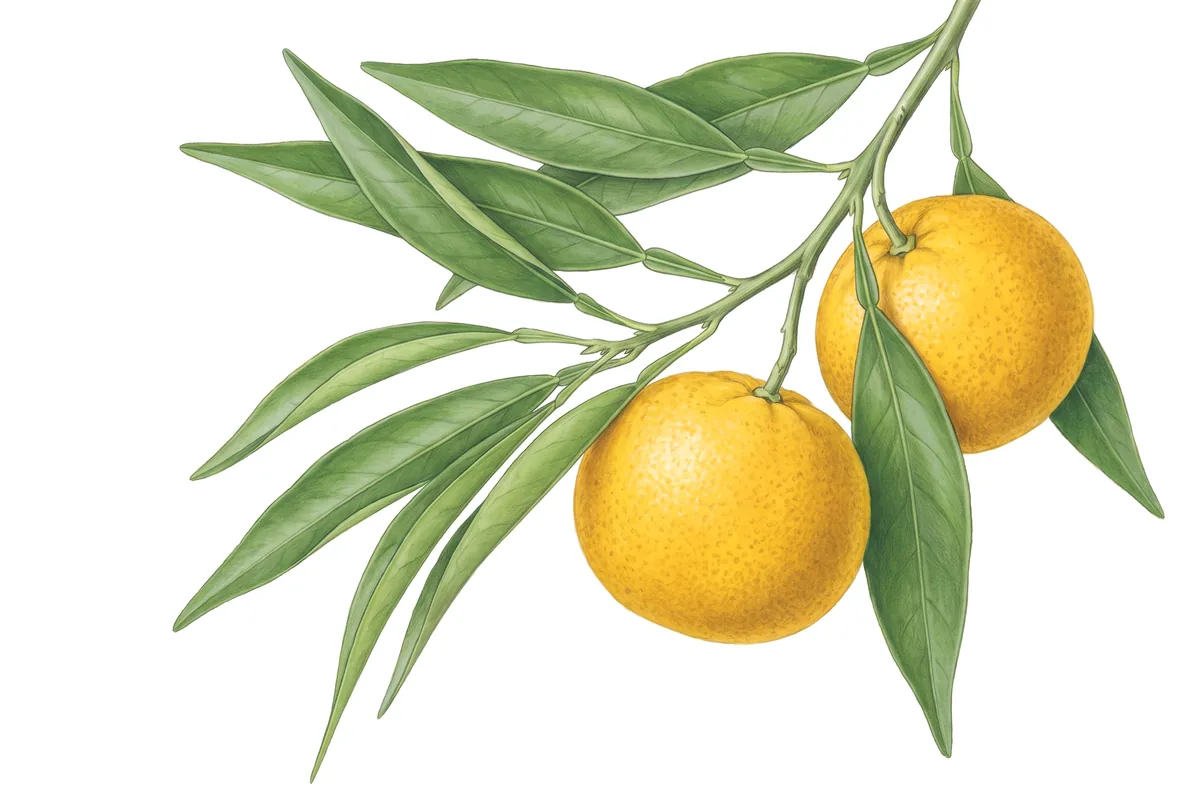
- The description the collection quotes calls the tree virtually thornless, with long, slender, taper-pointed leaves. No other reference read mentions thorns on Imperial.
Sources
- GBIF species match API (the species name and family)
- Australian Tropical Rainforest Plants, online edition (CSIRO): Citrus reticulata (the species)
- University of California Riverside, Givaudan Citrus Variety Collection: Imperial mandarin (CRC 4160), with its quoted 1967 description (for the plant's names, size and looks)
- University of California Riverside, Givaudan Citrus Variety Collection: Imperial mandarin (CRC 4160), with its quoted 1967 description (a Californian reference, for how the plant grows and is used)
- The HortOS guides (community-garden-planting-cost, which lists the Imperial mandarin; judging-nursery-plant-quality)
The growers, sizes and prices above are live and change as lists arrive. Cite this page: HortOS, Imperial mandarin (Citrus reticulata 'Imperial'), https://au.hortosapp.com/plants/citrus-mandarin-imperial-citrus-reticulata.
Found a fact that is wrong? Tell us and it is checked against its source.