Araucaria bidwillii
Bunya Pine
Part of Araucaria: see them all
21 growers · 14 sizes · from $3.00 ex GST
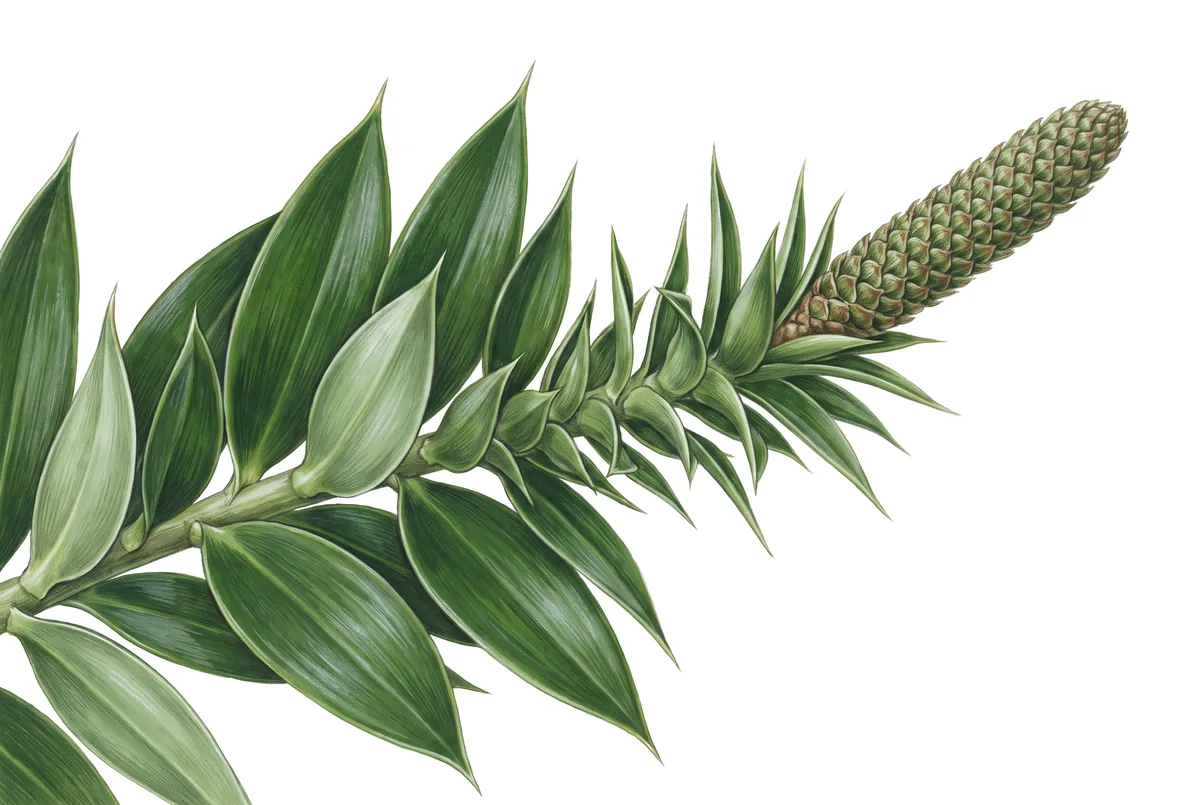
- Type
- Evergreen conifer
- Height
- 20 m to 30 m
- Spread
- 10 m to 20 m
- Growth
- Slow
- Sun
- Full sun to full shade
- Drought
- Tolerant
- Salt wind
- Tolerant
- Frost
- Tolerates heavy frost by the SA Plant Selector
- In Australia
- Native
Also grown by 7 nurseries (no sizes or prices listed)
Enquire with them for sizes and prices.
- Burringbar Rainforest NurseryBurringbar, NSW
- Carl's Rainforest NurseryKiama Downs, NSW
- Edible Jungle NurseryBrisbane, QLD
- Firewheel NurseryDorroughby, NSW
- Kuranda Envirocare IncKuranda, QLD
- Sydney Wildflower NurseryHeathcote, NSW
- Tallegalla Fruit TreesTallegalla, QLD
Growing bunya pine
Climate. In the wild it is an emergent above tall rainforest in two parts of Queensland: the south-east, mainly between Nambour and Gympie and west to the Bunya Mountains, and a small area of the north-east on Mount Lewis and at Cunnabullen Falls. The ACT Government sheet adds northern New South Wales to its origin, out of line with the Flora of Australia and CSIRO, which call it endemic to Queensland. The Australian Native Plants Society calls it hardy in colder districts, with trees growing and fruiting at Bright in the Victorian Alps and at Mount Martha on the Mornington Peninsula. HortFlora says it survives the occasional frosts of Melbourne, Canberra and Tasmania.
Frost and drought. South Australia's Plant Selector ticks drought, salt spray and heavy frost as tolerated. The ACT Government sheet gives frost tolerance to minus 10 C and good drought tolerance, and suits it to all areas of the ACT.
Position, soil and water. The Plant Selector gives full sun to full shade; clay, loam or sand; acid to alkaline soil; moderate supplementary watering. The ACT sheet says it grows well in most Canberra soils. The Australian Native Plants Society says it adapts to a range of soils but will not succeed in ground that stays waterlogged for long periods.
Growth. Slow growing and long lived, by the ACT Government. No reference read gives a growth rate in figures or a pest or disease to watch.
Propagation. From seed, which the Australian Native Plants Society says germinates readily when fresh; CSIRO gives a germination time of about 100 days. The society says cuttings must come from upright shoots, as cuttings from side shoots will not grow erect.
Using bunya pine
The ACT Government sheet rates bunya pine as suitable only for wide open spaces and parks, sets a minimum available soil volume for it, and rates it not suitable for wildlife corridors; it says the tree attracts seed-eating birds, cockatoos above all, and mammals, and rates its flammability as low. South Australia's Plant Selector calls it a large, distinctive evergreen tree not suited to smaller gardens, grown in plantations for timber, and lists the seed as a bush food. The Flora of Australia says it is planted in parks and botanic gardens, often as a feature or educational tree. The Australian Native Plants Society adds that a young tree makes an attractive container plant, indoors or out. The HortOS guide to climate ready trees lists bunya pine among the trees named in both the City of Sydney's tree species list and the City of Melbourne's report on its trees. No reference read gives a planting distance.
What to check before you buy
Bunya Pine on a grower's list is Araucaria bidwillii. The Australian Native Plants Society names its two Australian relatives, hoop pine and Norfolk Island pine, so read the botanical name when comparing lines. Plan for the full tree: 20 to 30 m high and 10 to 20 m wide by the Plant Selector, with heavy cones falling from the crown. The ACT Government sheet says it is not readily available and may need ordering ahead; the guide to lead times and contract growing covers how that works. For a park or street order, the guide to specifying and procuring trees covers the stock standard, grading and inspection. The table above shows the sizes growers list. Stock moving between states travels under the state and territory biosecurity rules like any other plant.
Cautions
Falling cones are the hazard. The Australian Native Plants Society says both male and female cones are shed and can injure anyone underneath, the female cones above all, and advises an exclusion zone around the base of any tree carrying cones. The Flora of Australia says many park and avenue trees have been removed for this reason. CSIRO notes that the leaf tip is hard and sharp enough to pierce the skin.
Prices are set by each grower and shown ex GST. Availability is confirmed by the grower at order.
Common questions
- Who grows Araucaria bidwillii wholesale in Australia?
- 21 wholesale growers list Araucaria bidwillii on HortOS right now, each with their own pot sizes and trade prices. They are in Queensland, New South Wales, Victoria and Western Australia. The growers are named on this page.
- What pot sizes does Araucaria bidwillii come in?
- Growers on HortOS list Araucaria bidwillii in Super tube, Tube, 70mm, 75mm, 90mm, 100mm, 150mm, 200mm, 250mm, 300mm and 4 more sizes.
- What does Araucaria bidwillii cost wholesale?
- The median trade price in a 200 mm pot is $17.50 ex GST, across 4 growers who price it. Prices by pot size and state are on its trade price page.
- How do I order Araucaria bidwillii from these growers?
- HortOS is for the trade. Add the lines you want to a list and send it: each grower gets their part of the order by email, confirms what they have and quotes freight, and nothing is bought until you approve it. Listing, searching and ordering are free.
- Is Bunya Pine the same as Araucaria bidwillii?
- Yes. Bunya pine is the common name of Araucaria bidwillii in the Atlas of Living Australia, the Australian Native Plants Society and South Australia's Plant Selector, and a list that says Bunya Pine without a cultivar name names the species.
- How tall does a bunya pine grow?
- In a planting, 20 to 30 m high and 10 to 20 m wide by South Australia's Plant Selector, and 20 to 25 m by 15 m by the ACT Government. In the wild the Australian Native Plants Society gives 30 to 45 m and the Flora of Australia up to 50 m; HortFlora gives 45 m, much smaller in cultivation.
- Are bunya nuts edible?
- Yes. South Australia's Plant Selector lists the seed as a bush food, eaten raw or cooked or ground into a powder, and the Flora of Australia says the seeds were a highly valued food of Aboriginal people of southern Queensland and northern New South Wales. Each female cone holds about 50 to 100 nuts, by the Australian Native Plants Society.
- How often does a bunya pine bear cones?
- Not every year: generally about once every three years, by the Australian Native Plants Society, and every few years by HortFlora. The society says the female cones generally mature from summer to early autumn and the male cones usually appear in autumn; HortFlora says the male cones hang from the upper branches mostly in September and October and the female cones are shed usually from February to May.
- How big and heavy are bunya pine cones?
- The ACT Government gives the female cones as 30 cm by 20 cm and up to 4 to 5 kg. The Flora of Australia gives 20 to 30 cm long, rarely to 35 cm, and 15 to 20 cm across; HortFlora records a cone of 5 kilos collected at the Royal Botanic Gardens Melbourne.
- Will bunya pine grow in a cold climate?
- The references read say yes. The ACT Government gives frost tolerance to minus 10 C and suits it to all areas of the ACT, South Australia's Plant Selector ticks heavy frost, and the Australian Native Plants Society reports old trees growing and fruiting at Bright in the Victorian Alps.
- Can a bunya pine be grown in a pot?
- While young, yes: the Australian Native Plants Society says it makes an attractive container plant, indoors and outdoors. Planted out, the ACT Government suits it only to wide open spaces and parks.
- Where does the name bunya come from?
- HortFlora says the common name comes from the Aboriginal name for the tree. The species name honours John Carne Bidwill, a botanical collector, by the Australian Native Plants Society.
Sources
- GBIF species match API
- Australian Plant Census (APC): Araucaria bidwillii Hook.
- Flora of Australia (Australian Biological Resources Study): Araucaria bidwillii
- Plant Selector+, Botanic Gardens and State Herbarium of South Australia: Araucaria bidwillii
- Australian Tropical Rainforest Plants, online edition (CSIRO): Araucaria bidwillii
- Atlas of Living Australia: Araucaria bidwillii
- Australian Native Plants Society (Australia), plant profile: Araucaria bidwillii
- ACT Government, Plant Species for Urban Landscape Projects in Canberra: Araucaria bidwillii
- HortFlora, Royal Botanic Gardens Victoria: Araucaria bidwillii
- The HortOS catalogue
- The HortOS guides (climate ready trees; lead times, pre-orders and contract growing; specifying and procuring trees)
The growers, sizes and prices above are live and change as lists arrive. Cite this page: HortOS, Bunya pine (Araucaria bidwillii), https://au.hortosapp.com/plants/araucaria-bidwillii.
Found a fact that is wrong? Tell us and it is checked against its source.