Ulmus parvifolia
Chinese Elm
Every Ulmus parvifolia on HortOS in one place: the plain species and 7 varieties. Pick a size to see it across all of them.
Part of Ulmus: see them all
21 growers · 18 sizes · from $4.50 ex GST
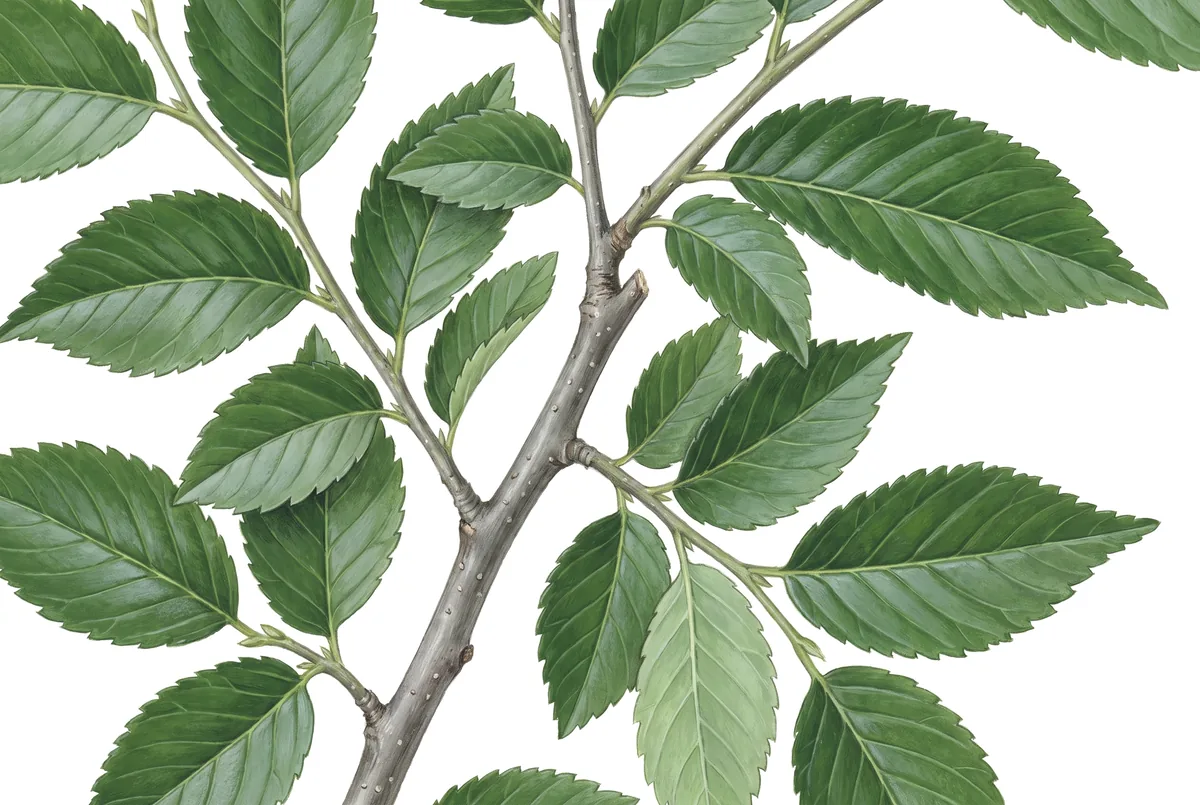
- Type
- Deciduous tree
- Height
- 6 m to 15 m
- Spread
- 7.6 m to 15 m
- Flowers
- Reddish green, late summer to autumn by most references; the North Carolina toolbox gives late spring to autumn
- Sun
- Full sun, tolerating light shade
- Drought
- High
- Frost
- High frost tolerance
- In Australia
- Naturalised
Also grown by 6 nurseries (no sizes or prices listed)
Enquire with them for sizes and prices.
- Bell River NurserySpring Creek, NSW
- Botanica NurseriesNSW
- Ellenby Tree FarmGnangara, WA
- Feature Trees Ballarat / Feature Trees Nursery BallaratNerrina, Ballarat, VIC
- Treekeepers NurseryNSW
- Wimmera Native Nursery Pty LtdDimboola, VIC
Growing chinese elm
Position and soil. Full sun, tolerating light shade, by the Missouri Plant Finder. South Australia's Plant Selector gives clay, loam or sand, acid, neutral or alkaline, with moderate supplementary watering. Wyndham City Council in Victoria adds that it copes with compacted ground and limited root space, and the Selector that it can be grown in roof gardens, where confined roots hold its size down.
Climate. Wyndham's sheet rates its drought and frost tolerance high. In warmer areas the leaves can stay on almost all winter, the Selector notes; in cooler districts they turn yellow to bronze-orange before they fall, and Merri-bek City Council describes the foliage as usually held over winter.
Pests and problems. Wyndham's sheet says elm leaf beetle does not affect it. The American references report good resistance to Dutch elm disease, occasional leaf spots, cankers, rots and wilts, and warn that the branches can break in wind, snow or ice.
Spread. The Australian Plant Census records it as naturalised in Western Australia, South Australia, Queensland, New South Wales, the ACT and Victoria. Victoria's advisory list of environmental weeds, which is not a statutory list, classes it as casual or ruderal in that state, its term for a plant that can grow and now and then reproduce in the wild without yet forming lasting populations, and rates it lower risk. The North Carolina toolbox notes it can be weedy through self-seeding.
Using chinese elm
South Australia's Plant Selector describes it as often used as a street tree in urban areas, and the Missouri Plant Finder gives it as a shade and street tree. Merri-bek City Council's tree finder marks it suitable for front and back gardens, narrow spaces, courtyards and irrigated planter boxes and for canopy shade, though not for driveways or screening, and notes that an unmanaged crown can spread very wide. The North Carolina toolbox adds bonsai. The HortOS guide to climate-ready trees lists Chinese elm among the trees named in both the City of Sydney's Tree Species List and the City of Melbourne's urban forest report. Growers also list named selections, each with its own page, among them Todd, Burnley Select and Murray's Form.
What to check before you buy
Chinese elm and Ulmus parvifolia are one plant, and the named selections are listed apart from them, so check which one a listing is for; the North Carolina toolbox notes that seedlings vary a great deal. Check the botanical name too: two other trees share the common name. Weeds Australia notes that Chinese celtis (Celtis sinensis) is also called Chinese elm and may be confused with it; of the two, Chinese elm has the narrower, finely toothed leaves and a dry, winged fruit. In the United States, the Missouri Plant Finder warns, Siberian elm (Ulmus pumila), a much inferior tree, is often referred to as Chinese elm. The ACT Government's sheets for three named Chinese elms, Todd, 'Emer II' Alee and the Yarralumla Clone, say not to plant them close to creeks, watercourses or nature reserves. The HortOS guide to specifying and procuring trees covers what a tree order names and how the trees are inspected. Stock moving between states travels under the state and territory biosecurity rules.
Cautions
South Australia's Plant Selector says it generally does not sucker but asks for care when the roots are disturbed; the ACT Government's sheets for the Todd and Emer II forms note suckering where roots are damaged.
Victoria's Advisory list of environmental weeds (2022), a non-statutory advisory list, classes it as casual or ruderal in Victoria and rates it lower risk. (Advisory list of environmental weeds in Victoria 2022 (Department of Environment, Land, Water and Planning, Victoria))
Prices are set by each grower and shown ex GST. Availability is confirmed by the grower at order.
Common questions
- Who grows Ulmus parvifolia wholesale in Australia?
- 21 wholesale growers list Ulmus parvifolia on HortOS right now, each with their own pot sizes and trade prices. They are in Victoria, New South Wales, Queensland, Western Australia, the ACT and South Australia. The growers are named on this page.
- What pot sizes does Ulmus parvifolia come in?
- Growers on HortOS list Ulmus parvifolia in Tube, 150mm, 200mm, 300mm, 330mm, 400mm, 25L, 35L, 45L, 75L and 8 more sizes.
- What does Ulmus parvifolia cost wholesale?
- The median trade price in a 400 mm pot is $135.00 ex GST, across 3 growers who price it. Prices by pot size and state are on its trade price page.
- How do I order Ulmus parvifolia from these growers?
- HortOS is for the trade. Add the lines you want to a list and send it: each grower gets their part of the order by email, confirms what they have and quotes freight, and nothing is bought until you approve it. Listing, searching and ordering are free.
- Is Chinese elm a cultivar?
- No. Chinese elm is the common name of the species Ulmus parvifolia, used by the Atlas of Living Australia, South Australia's Plant Selector and council tree sheets. Named selections such as Todd, Burnley Select and Murray's Form are sold under their own names.
- How big does a Chinese elm grow?
- In cultivation, 6 to 15 m tall. Australian council and Selector sheets give 6 to 12 m tall and 8 to 11 m wide, and the American references 12 to 15 m tall, less often to about 21 m by the Missouri Plant Finder. The floras record trees to 25 m.
- Is Chinese elm deciduous or evergreen?
- Deciduous, though not always fully. South Australia's Plant Selector says the leaves can stay on almost all winter in warmer areas, Merri-bek City Council that the foliage is usually held over winter, and the North Carolina toolbox lists it as deciduous to semi-evergreen. In cooler districts the leaves turn yellow to bronze-orange before they fall.
- Is Chinese elm a weed?
- The Australian Plant Census records it as naturalised in six states and territories. Victoria's advisory list of environmental weeds, which is not a statutory list, classes it as casual or ruderal in that state and rates it lower risk. Chinese celtis (Celtis sinensis), a different tree that is also called Chinese elm, is recorded by Weeds Australia as a declared weed in New South Wales, Queensland and Western Australia.
- Is Chinese elm the same as Siberian elm?
- No. The Missouri Plant Finder warns that in the United States Siberian elm, Ulmus pumila, which it calls much inferior, is often referred to as Chinese elm. Look for Ulmus parvifolia on the label.
- Does Chinese elm get elm leaf beetle or Dutch elm disease?
- Wyndham City Council's sheet says elm leaf beetle does not affect it. The American references report good resistance to Dutch elm disease, elm leaf beetle and Japanese beetle.
Sources
- GBIF species match API
- Australian Plant Census (APC), the National Species List: Ulmus parvifolia, with its distribution
- Atlas of Living Australia
- PlantNET, the New South Wales flora online (Royal Botanic Garden Sydney)
- Flora of China (eFloras): Ulmus parvifolia
- Plant Selector+ (Botanic Gardens and State Herbarium of South Australia, the Green Infrastructure Project), entry 17960
- Advisory list of environmental weeds in Victoria 2022 (Arthur Rylah Institute for Environmental Research, Department of Environment, Land, Water and Planning, Victoria), a non-statutory advisory list
- Wyndham City Council (Victoria), street tree species sheet: Ulmus parvifolia, Chinese Elm
- City of Unley (South Australia), tree information sheet: Chinese Elm, Ulmus parvifolia
- Merri-bek City Council (Victoria), tree finder: Ulmus parvifolia, Chinese Elm
- North Carolina State Extension Gardener Plant Toolbox
- Missouri Botanical Garden Plant Finder
- Weeds Australia weed profile: Chinese Celtis, Celtis sinensis (Centre for Invasive Species Solutions), a different tree also called Chinese elm; read for what it says of Ulmus parvifolia as a similar species
- The HortOS catalogue (the names growers list it under; the name growers list it under) and guides (climate-ready-trees; specifying-and-procuring-trees)
- ACT Government, Transport Canberra and City Services: Design Standards for Urban Infrastructure, Plant Species for Urban Landscape Projects in Canberra: the sheets for the named forms 'Todd', 'Emer II' Alee and 'Yarralumla Clone' (not for the straight species)
The growers, sizes and prices above are live and change as lists arrive. Cite this page: HortOS, Chinese elm (Ulmus parvifolia), https://au.hortosapp.com/plants/ulmus-parvifolia.
Found a fact that is wrong? Tell us and it is checked against its source.