Melissa Officinalis
5 growers · 5 sizes · from $4.75 ex GST
- Type
- Deciduous perennial
- Height
- 0.46 m to 1 m
- Spread
- 0.1 m to 1 m
- Growth
- Fast
- Flowers
- White, late spring to summer
- Sun
- Full sun to partial shade, by the RHS and the NC State toolbox
- In Australia
- Naturalised
| Size | Grower | PricePrice ex GST | ||
|---|---|---|---|---|
| 50mm | Daleys Fruit Tree Nursery50mm | $7.75 | ||
| 75mm | Greenpatch Organic Seeds & Plants75mm | $6.50 | ||
| 100mm | Lumpys Nursery & Landscape Yard100mm | $5.95 | ||
| 100mm | Heritage Nursery100mm | $8.99 | ||
| 125mm | Girraween Nursery (Wholesale)125mm | $4.75 | ||
| 180mm | Girraween Nursery (Wholesale)180mm | $9.95 |
Also grown by 7 nurseries (no sizes or prices listed)
Enquire with them for sizes and prices.
- All Rare HerbsQLD
- Coolart NurserySomerville, VIC
- Country HerbalsWoodchester, SA
- Jackpot NurseryBiarra (Toogoolawah / Esk District), QLD
- Quality Plants and SeedlingsWerribee South, VIC
- Royston Petrie SeedsMudgee, NSW
- Scotts TubesNSW
Growing lemon balm
Position. The RHS and the NC State toolbox give full sun to partial shade, and the RHS a sheltered position.
Soil and water. The RHS says it grows in any moist soil, lists chalk, clay, loam and sand, acid to alkaline, and says to protect it from excessive winter wet. The toolbox gives well-drained soil, moist to dry, and calls it tolerant of poor soil and of drought once established; those tolerances are the American reference's alone. In New South Wales the state flora finds it in moist places, above all along creeks and drainage lines, and notes that it often grows vigorously in gardens.
Climate. The RHS rates it H7, hardy in the severest European continental climates, and the toolbox gives USDA zones 3 to 7. No Australian reference read gives a frost figure or climate zones; the New South Wales flora records it south from the Orange district.
Pruning. The RHS says to cut it back hard after flowering, both for fresh leaves and to stop it self-seeding; the toolbox says to remove spent flower stalks and that unpruned plants tend to get weedy.
Pests and problems. The RHS, a British reference, reports sage leafhopper and, rarely, verticillium wilt. The toolbox, an American reference, names no significant pests but says to watch for aphids and spider mites, with powdery mildew, leaf spot, leaf blight and grey mould possible.
Using lemon balm
Lemon balm is grown as a herb. The NC State toolbox says the leaves are used to flavour tea, soups and salads, that new leaves have more flavour than mature ones, and that dried leaves go into sachets and potpourri; the RHS lists it among culinary herbs. Both say the flowers are rich in nectar and draw bees and other pollinators. The toolbox suits it to a herb garden, a border or a container, and says it may be used as a groundcover; the RHS adds cottage and informal gardens, wildlife gardens and flower beds. Because it self-seeds and spreads by rhizomes, the toolbox advises growing it in a container on a patio or deck where it is unlikely to escape. For spacing, the toolbox gives 30 cm to 0.9 m as the space to plant it in.
What to check before you buy
The table above shows the sizes growers list. The NC State toolbox names cultivars with yellow leaves, 'All Gold' or 'Gold Leaf', and a variegated 'Aurea', so read the name on the list if the leaf colour matters. The plant spreads: the Australian Plant Census lists it as naturalised in three states, and VicFlora records it naturalised mostly near watercourses, at places such as Gorae West, Creswick, the LaTrobe Valley and the Wonnangatta River valley; the New South Wales flora finds it in moist places along creeks and drainage lines. Plants crossing a state border moves under that state's biosecurity rules, as the guide to buying from a wholesale grower explains.
Cautions
The Victorian advisory list of environmental weeds, a non-statutory list, rates lemon balm an environmental weed of moderately high risk in Victoria. The NC State toolbox says it self-seeds and spreads aggressively by rhizomes.
Used forpots and courtyards
Prices are set by each grower and shown ex GST. Availability is confirmed by the grower at order.
Common questions
- Who grows Melissa Officinalis wholesale in Australia?
- 5 wholesale growers list Melissa Officinalis on HortOS right now, each with their own pot sizes and trade prices. They are in New South Wales, the ACT and the Northern Territory. The growers are named on this page.
- What pot sizes does Melissa Officinalis come in?
- Growers on HortOS list Melissa Officinalis in 50mm, 75mm, 100mm, 125mm and 180mm.
- How do I order Melissa Officinalis from these growers?
- HortOS is for the trade. Add the lines you want to a list and send it: each grower gets their part of the order by email, confirms what they have and quotes freight, and nothing is bought until you approve it. Listing, searching and ordering are free.
- Is lemon balm a weed in Australia?
- It has gone wild here. The Australian Plant Census lists it as naturalised in New South Wales, Victoria and Tasmania, and doubtfully naturalised in South Australia and Queensland, and the Victorian advisory list of environmental weeds rates it moderately high risk in Victoria.
- How tall does lemon balm grow?
- The New South Wales flora gives up to 1 m, the RHS 0.5 to 1 m, VicFlora about 60 cm and the NC State toolbox 0.46 to 0.61 m. For spread the RHS gives 0.1 to 0.5 m in its table and up to 1 m in its description, and the toolbox 0.46 to 0.91 m.
- What does lemon balm look like?
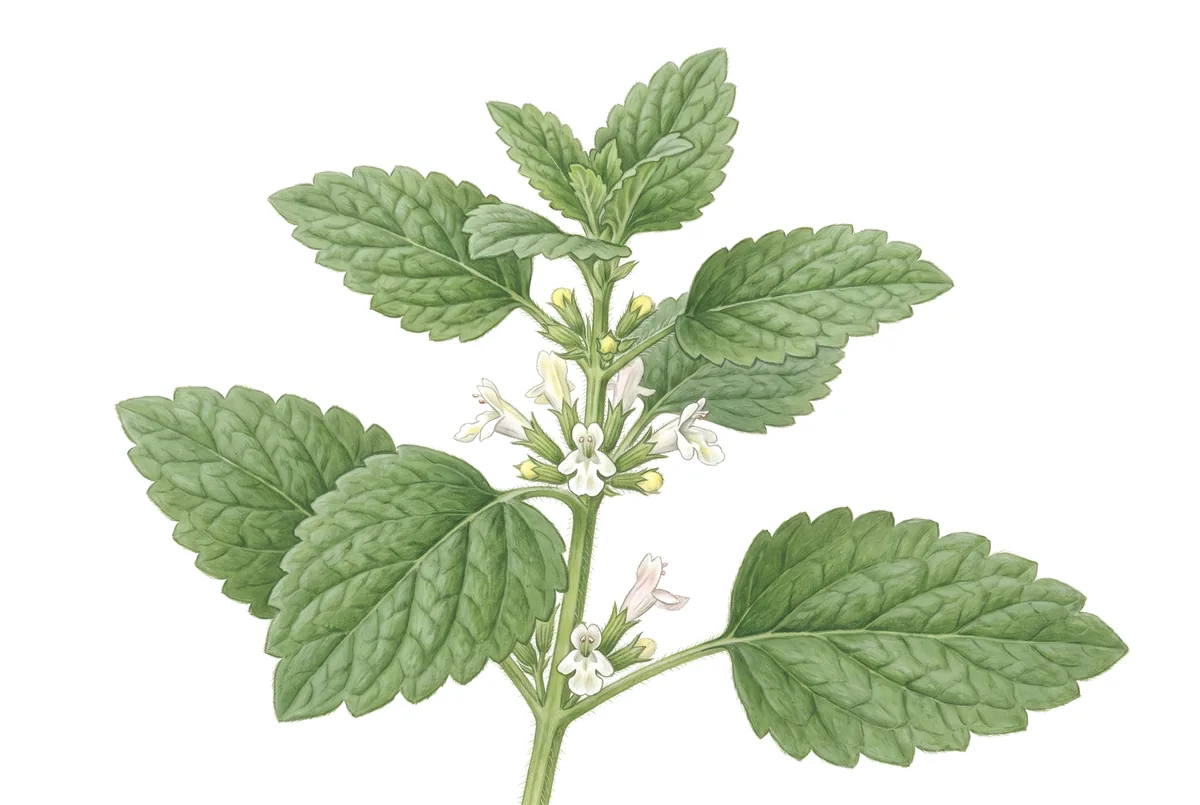
- Opposite, ovate to heart-shaped leaves 1.5 to 8 cm long with scalloped or bluntly toothed edges, wrinkled and hairy and lemon-scented when crushed, by VicFlora, the RHS and the NC State toolbox. Small two-lipped flowers sit in whorls in the upper leaf axils, 2 to 12 to a whorl across the references.
- When does lemon balm flower?
- In late spring and summer: the New South Wales flora gives December to March and VicFlora November to February. VicFlora gives white flowers, yellowish in bud and sometimes ageing to pink; the New South Wales flora pale yellow to pinkish blue; the RHS creamy white or pale purple. The corolla is 8 to 15 mm long.
- How do I stop lemon balm spreading?
- The RHS says to cut it back hard after flowering, which also stops it self-seeding, and the NC State toolbox advises growing it in a container where it is unlikely to escape, since it also spreads by rhizomes.
- Is lemon balm related to mint?
- Yes. GBIF places Melissa officinalis in the mint family, Lamiaceae, and the NC State toolbox describes it as a member of the mint family. Its genus name is Greek for a honeybee, by the toolbox.
Sources
- GBIF species match API
- Australian Plant Census (Council of Heads of Australasian Herbaria): Melissa officinalis
- PlantNET, the New South Wales flora online (Royal Botanic Garden Sydney): Melissa officinalis
- VicFlora, the Flora of Victoria (Royal Botanic Gardens Victoria): Melissa officinalis
- Atlas of Living Australia
- Advisory list of environmental weeds in Victoria 2022 (Arthur Rylah Institute, Victorian Department of Environment, Land, Water and Planning), a non-statutory list: the row for Melissa officinalis
- Royal Horticultural Society (RHS) plant profile: Melissa officinalis, lemon balm (for the plant's size and looks)
- Royal Horticultural Society (RHS) plant profile: Melissa officinalis, lemon balm (for how the plant grows and is used)
- North Carolina State Extension Gardener Plant Toolbox: Melissa officinalis, an American reference (for the plant's size and looks)
- North Carolina State Extension Gardener Plant Toolbox: Melissa officinalis, an American reference (for how the plant grows and is used)
- The HortOS guides (buying from a wholesale grower)
The growers, sizes and prices above are live and change as lists arrive. Cite this page: HortOS, Lemon balm (Melissa officinalis), https://au.hortosapp.com/plants/melissa-officinalis.
Found a fact that is wrong? Tell us and it is checked against its source.