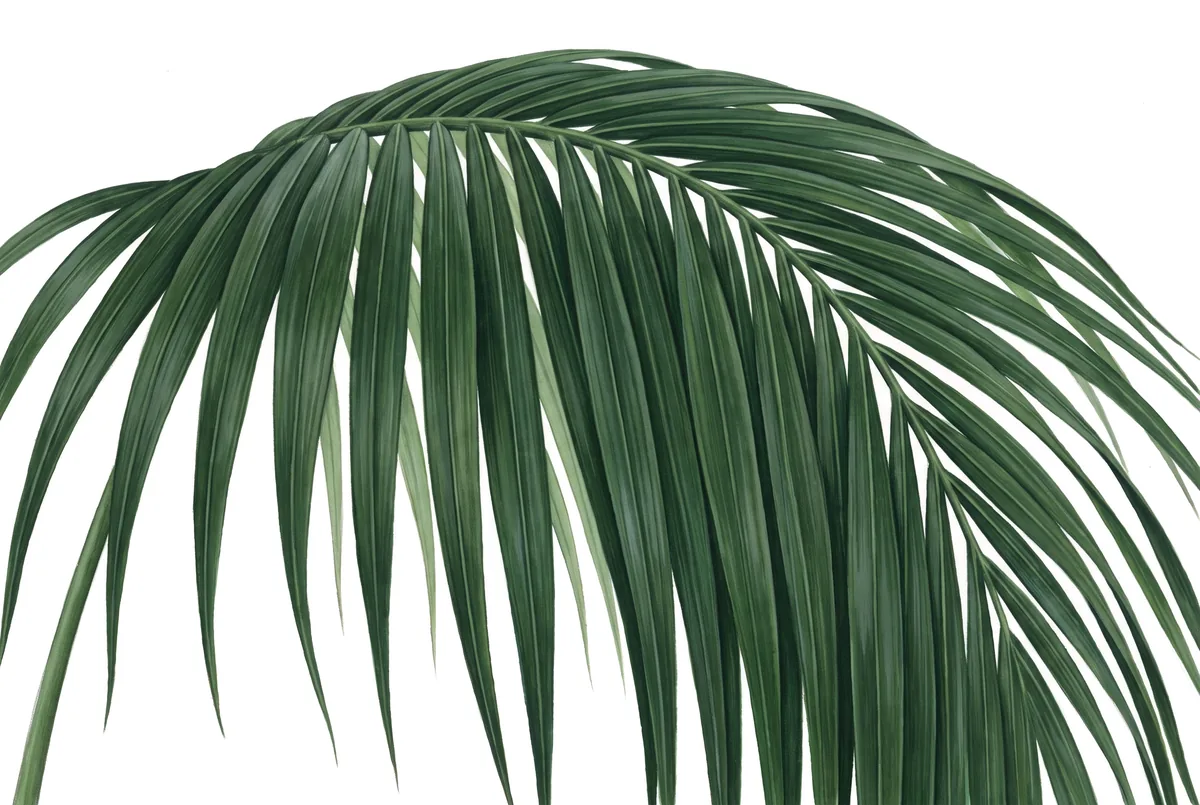
- Type
- Evergreen palm
- Height
- 12 m to 20 m
- Spread
- 1.8 m to 3 m
- Growth
- Slow
- Flowers
- Creamy brown, late winter to mid spring in the wild, by the Australian floras; late autumn into winter in the American references
- Sun
- Shade to part shade, adapting to full sun outdoors, by the American references
- Frost
- Cold to about -4 C (25 F) by an American reference
- In Australia
- Native
Some growers show prices to verified trade buyers. Sign in or sign up with your ABN to see them and order.
Showing 50 of 108 offers (the smallest sizes first). Show all 108 or pick a size or state above.
Also grown by 18 nurseries (no sizes or prices listed)
Enquire with them for sizes and prices.
- Arborglen Wholesale NurseryGlenorie, NSW
- Bamboo ParkValdora, QLD
- Burringbar Rainforest NurseryBurringbar, NSW
- Ellison Horticultural 2.0 Pty LtdAlstonville, NSW
- Florafolia (Alstonville Plants)Alstonville, NSW
- ForsterianaDarawank, NSW
- HC Plants (Hooper Cottage Plants)Sydney, NSW
- Harvest Seeds and Native PlantsTerrey Hills, NSW
- Mullumbimby Palms NurseryMullumbimby, NSW
- Natures Colours NurseryNSW
- Plants MelbourneReservoir, VIC
- Premier Palms NurseryMariginiup, WA
- Prestige Palm SolutionsQLD
- Sunshine Coast PlantsQLD
- Sydney Wildflower NurseryHeathcote, NSW
- The Beach Willow Nursery & CafeMount Duneed, VIC
- The Ruby Plants - Affordable Nursery BrisbaneHolland Park West, QLD
- Touch Of Eden NurseryCaboolture, QLD
Growing kentia palm
Climate. It grows wild on Lord Howe Island, part of New South Wales, from sea level to about 300 m. No Australian reference read gives it a frost or climate rating. The University of Florida's sheet, an American reference, gives a cold limit of about -4 C, USDA zones 9b to 11. The American references differ on heat: the Florida sheet finds high heat, humidity and rainfall poorly tolerated, while North Carolina State Extension calls it tolerant of all three, though likelier to succeed where the extremes are not reached.
Light. The American references give shade to part shade, adapting to full sun outdoors; indoors North Carolina State Extension asks for moderate light, and the Florida sheet says it needs some sun to flower.
Soil and water. The Florida sheet finds it adaptable to clay, sand or loam, acid to slightly alkaline and well drained, and moderately tolerant of drought and salt spray, but not of severe dryness or constant overwatering, especially in winter. In a pot North Carolina State Extension wants a free-draining mix rich in humus, kept moist, and occasional slow-release feeding.
Problems. The American references put potassium deficiency first, then manganese deficiency, which the Florida sheet records in alkaline soil in southern Florida, boron deficiency, fungal leaf spots in nursery production, and spider mites, mealybugs and scale insects, especially indoors. No Australian reference read names a pest. Old leaf bases come away with a gentle pull; the Florida sheet warns that tearing them scars the trunk and can let in trunk rot.
Using kentia palm
The Flora of Australia counts it a favourite for growing indoors in pots. HortFlora records it widely planted in New South Wales and Queensland, says it is valued for how well it bears indoor conditions, calls it excellent in the open garden too, especially where the climate is coastal, and finds it especially attractive planted in groups. The University of Florida's sheet ranks it among the best interior palms for its durability and looks, and adds containers on a shaded deck or patio; North Carolina State Extension notes its record of coping with neglect, low light and central heating. The Flora of Australia also records the island's kentia industry: seed gathered from its forests since 1870, plantations there since 1984, and an island nursery that raises seedlings from the seed for sale. Growers also list multi-planted kentia palm, the same palm grown several to a pot.
What to check before you buy
Kentia palm on a grower's list is the straight species. North Carolina State Extension notes that kentias are sometimes sold as a group in one large pot but are not suckering palms, and that a palm grown on its own grows faster than one in a group. Some growers list grouped pots separately, as multi-planted; the grower's note can say which, and the guide to reading an availability list explains that column. The table above shows the sizes on growers' current lists, and the guide to nursery pot sizes explains what a pot size does and does not promise. What healthy stock looks like, roots and pests included, is set out in the guide to judging nursery plant quality. Stock crossing a state border travels under the state and territory biosecurity rules on moving plants and soil.
Prices are set by each grower and shown ex GST. Availability is confirmed by the grower at order.
Common questions
- Who grows Howea forsteriana wholesale in Australia?
- 42 wholesale growers list Howea forsteriana on HortOS right now, each with their own pot sizes and trade prices. They are in New South Wales, Queensland, Victoria, Western Australia and the ACT. The growers are named on this page.
- What pot sizes does Howea forsteriana come in?
- Growers on HortOS list Howea forsteriana in Tube, 75mm, 90mm, 125mm, 140mm, 150mm, 175mm, 200mm, 250mm, 300mm and 16 more sizes.
- What does Howea forsteriana cost wholesale?
- The median trade price in a 300 mm pot is $92.00 ex GST, across 14 growers who price it. Prices by pot size and state are on its trade price page.
- How do I order Howea forsteriana from these growers?
- HortOS is for the trade. Add the lines you want to a list and send it: each grower gets their part of the order by email, confirms what they have and quotes freight, and nothing is bought until you approve it. Listing, searching and ordering are free.
- Is kentia palm the same as Howea forsteriana?
- Yes. Kentia palm is the common name the Flora of Australia gives as the one used internationally, beside thatch palm and sentry palm. The Australian Plant Census lists Kentia forsteriana among the plant's earlier botanical names.
- Where does the kentia palm come from?
- It is native only to Lord Howe Island, part of New South Wales; the Australian Plant Census lists it as doubtfully naturalised on Norfolk Island. The Flora of Australia finds it widespread in the island's lowlands, on flat sandy sites in dense stands, and records commercial plantations of it abroad, Norfolk Island and the Canary Islands among them.
- How tall does a kentia palm grow?
- The Flora of Australia, the New South Wales flora and HortFlora give a slender palm to 20 m; the University of Florida's sheet gives about 12 m tall and 1.8 to 3 m wide. Its leaves run 3 to 5 m long by the Flora of Australia, and about 2 m by the Florida sheet.
- How is a kentia palm different from the Belmore sentry palm?
- North Carolina State Extension, an American reference, says the two Lord Howe Island palms are often confused. It finds the kentia much faster and easier to grow, with leaves that are not recurved, and says the kentia favours coastal habitats while the Belmore sentry palm, Howea belmoreana, grows at higher elevations.
- Why do kentia palm leaflet tips die back?
- The American references name potassium deficiency as the most serious problem: on the oldest leaves the leaflets die at the tips and margins. The University of Florida's sheet records manganese deficiency in alkaline soil in southern Florida, killing the tips of the lowest leaflets on the youngest leaves, and finds controlled-release potassium much more effective than water-soluble forms.
- How are kentia palms raised?
- From seed, by the University of Florida's sheet: the fruit ripens slowly, sometimes over 3 to 4 years, the seed seems to keep its viability best for 8 to 16 weeks after ripening, and germination takes from three months to several years.
Sources
- GBIF species match API
- Australian Plant Census: Howea forsteriana (the authority, the synonyms, the common names and the distribution)
- PlantNET, the New South Wales flora online (Royal Botanic Garden Sydney): Howea forsteriana
- Flora of Australia (Australian Biological Resources Study): Howea forsteriana
- Atlas of Living Australia: Howea forsteriana
- HortFlora, the Horticultural Flora of South-eastern Australia (Royal Botanic Gardens Victoria): Howea forsteriana
- University of Florida IFAS Extension, ENH456 Howea forsteriana: Kentia Palm (an American reference)
- North Carolina State Extension Gardener Plant Toolbox (an American reference): Howea forsteriana
- The HortOS catalogue (the name growers list it under)
The growers, sizes and prices above are live and change as lists arrive. Cite this page: HortOS, Kentia palm (Howea forsteriana), https://au.hortosapp.com/plants/howea-forsteriana.
Found a fact that is wrong? Tell us and it is checked against its source.