Gleditsia triacanthos
Honey Locust
Every Gleditsia triacanthos on HortOS in one place: the plain species and 6 varieties. Pick a size to see it across all of them.
8 growers · 10 sizes · from $55.00 ex GST
- Type
- Deciduous tree
- Height
- 10 m to 25 m
- Growth
- Fast
- Flowers
- Yellowish-green, spring to summer
- Sun
- Full sun; growth is slow in shade
- Drought
- High
- In Australia
- Naturalised
Some growers show prices to verified trade buyers. Sign in or sign up with your ABN to see them and order.
Growing honey locust
NSW WeedWise says it grows best in subtropical and warm temperate climates but tolerates cold, prefers full sun, takes most soils and does best on alluvial flood plains along rivers. It and the Queensland fact sheet call it extremely drought tolerant.
The New South Wales flora says it grows readily from seed or cuttings and suckers freely, often forming dense thickets. The weed pages say the pods float and stock that eat them pass the seed. The NC State toolbox, an American reference, lists borers, webworms, leafminers and several diseases in the United States; the Queensland fact sheet says that, for now, it is free of the insects and diseases that might affect its growth.
Using honey locust
NSW WeedWise says it came to Australia in the 1900s for cattle fodder and as a shade and ornamental tree, HortFlora calls it a tree grown widely around the world whose cultivars, formal in shape and colourful, won it favour as a city tree through the 1970s and 1980s, and says farms have grown it for pods to feed stock. The Queensland fact sheet names Sunburst and Shademaster among the ornamental varieties, and HortFlora describes the compact Elegantissima; each has its own page.
What to check before you buy
Check the state first. In Queensland it is category 3 restricted matter: it may not be sold, given away or released into the environment. Six New South Wales regions list it as a priority weed whose recommended measures say a person should not buy or sell it; only the Central Tablelands entry excludes garden varieties derived from var. inermis cultivars. Western Australia's Organism List gives it as permitted. No other state's or territory's register was read for this page.
Cautions
Wild trees carry spines 2 to 10 cm long in the New South Wales flora and to about 18 cm in VicFlora; the Queensland pages say they injure people, stock and wildlife and stay dangerous after the tree dies. VicFlora records it as a serious weed in New South Wales and Queensland.
Queensland: honey locust (Gleditsia triacanthos) is category 3 restricted matter under the Biosecurity Act 2014 and must not be given away, sold or released into the environment; every other Gleditsia species is prohibited matter there. New South Wales: a regional priority weed in the Central Tablelands, Central West, Hunter, North Coast, North West and Northern Tablelands regions, whose recommended measures say a person should not buy or sell it (the Central Tablelands entry excludes garden varieties derived from var. inermis cultivars). Western Australia: permitted for the whole state on the Western Australian Organism List. (Queensland Biosecurity Regulation 2016, Schedules 1 and 1A, with Business Queensland's page on the listing; NSW WeedWise (NSW Department of Primary Industries and Regional Development); Western Australian Organism List (DPIRD))
Prices are set by each grower and shown ex GST. Availability is confirmed by the grower at order.
Common questions
- Who grows Gleditsia triacanthos wholesale in Australia?
- 8 wholesale growers list Gleditsia triacanthos on HortOS right now, each with their own pot sizes and trade prices. They are in Victoria, New South Wales, Queensland, Tasmania, South Australia and Western Australia. The growers are named on this page.
- What pot sizes does Gleditsia triacanthos come in?
- Growers on HortOS list Gleditsia triacanthos in 330mm, 400mm, 25L, 45L, 75L, 100L, 200L, 400L, 1000L and Bare root.
- How do I order Gleditsia triacanthos from these growers?
- HortOS is for the trade. Add the lines you want to a list and send it: each grower gets their part of the order by email, confirms what they have and quotes freight, and nothing is bought until you approve it. Listing, searching and ordering are free.
- Is honey locust a weed in Australia?
- It has naturalised. The Australian Plant Census gives it as naturalised in South Australia, Queensland, New South Wales and the ACT and doubtfully so in Victoria. Queensland lists it as a restricted invasive plant, and six New South Wales regions list it as a priority weed.
- Can honey locust be sold in Queensland?
- No. It is category 3 restricted matter under the Biosecurity Act 2014. The Queensland fact sheet says the so-called thornless varieties, Sunburst and Shademaster among them, fall under the same controls, and that no variety may be sold anywhere in the state.
- How do you recognise honey locust?
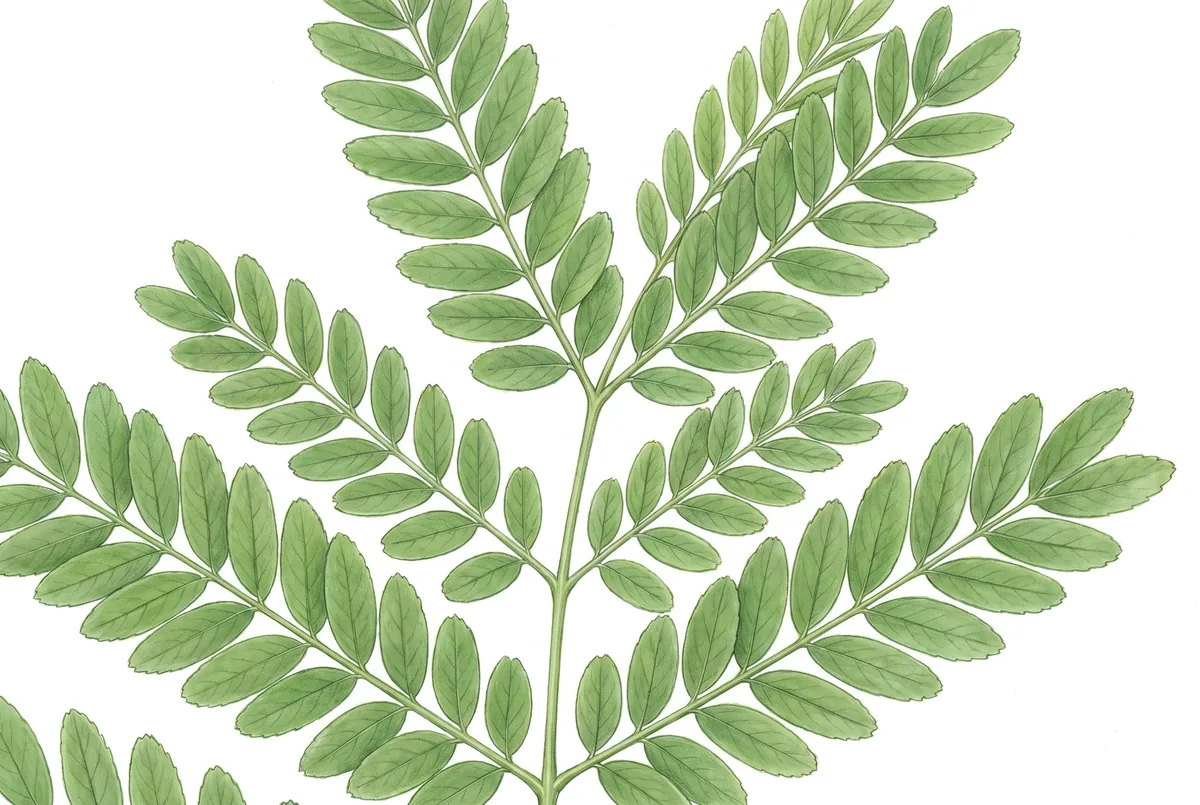
- By its feathery divided leaves, the spines on wild trees and its flat brown pods, 15 to 40 cm long in the Australian floras and to about 46 cm in the NC State toolbox, with the seeds in a sweet pulp. NSW WeedWise says mysore thorn looks similar but has pods only up to 10 cm long.
- Why is it called honey locust?
- For the sweet, sticky substance inside the pods, which the NC State toolbox, an American reference, says gives the tree its common name. The Queensland fact sheet adds that stock relish the pods.
Sources
- GBIF species match API
- Australian Plant Census (Council of Heads of Australasian Herbaria): Gleditsia triacanthos L.
- Atlas of Living Australia (species search: occurrence records by state)
- PlantNET, the New South Wales flora online (Royal Botanic Garden Sydney): Gleditsia triacanthos
- VicFlora, the Flora of Victoria (Royal Botanic Gardens Victoria): Gleditsia triacanthos
- NSW WeedWise (NSW Department of Primary Industries and Regional Development): Honey locust, the weed profile and the biosecurity duty by region
- Queensland Biosecurity Regulation 2016 (Queensland Legislation): Schedule 1, prohibited matter, and Schedule 1A, restricted matter and categories, the honey locust lines
- Business Queensland (Queensland Government): Honey locust, restricted invasive plant under the Biosecurity Act 2014
- Queensland Government invasive plant fact sheet (Department of Primary Industries): Honey locust, Gleditsia triacanthos, restricted category 3
- Western Australian Organism List (DPIRD), legal status under the Biosecurity and Agriculture Management Act 2007: Gleditsia triacanthos L.
- HortFlora, the Horticultural Flora of South-eastern Australia (Royal Botanic Gardens Victoria): Gleditsia triacanthos, with its cultivars
- North Carolina State Extension Gardener Plant Toolbox: Gleditsia triacanthos (an American reference)
The growers, sizes and prices above are live and change as lists arrive. Cite this page: HortOS, Honey locust (Gleditsia triacanthos), https://au.hortosapp.com/plants/gleditsia-triacanthos.
Found a fact that is wrong? Tell us and it is checked against its source.