Gleditsia triacanthos var. Inermis Shademaster
Honey Locust
1 grower · 1 size · from $110.00 ex GST
- Type
- Deciduous tree
- Height
- 11 m to 20 m
- Spread
- 7 m to 12 m
- Growth
- Fast
- Flowers
- Yellowish-green, spring
- Sun
- Full sun
- Drought
- High
- Frost
- High frost tolerance by the ACT Government sheet; light frost by the South Australian Plant Selector
- In Australia
- Naturalised
| Size | Grower | PricePrice ex GST | ||
|---|---|---|---|---|
| 330mm | Eumundi Roses330mm | $110.00 |
Growing shademaster honey locust
The ACT Government sheet puts it in full sun, rates its frost and drought tolerance high, calls it fast growing with medium longevity, and accepts any soil, limestone and heavy clay among them. The South Australian Plant Selector also gives full sun and drought tolerance, lists sand, loam or clay, alkaline to acid, with minimal supplementary watering, lists light frost tolerance, and suggests an autumn prune to keep the shape; no other reference read gives pruning advice for Shademaster. The Sunburst page carries honey locust's climate from NSW WeedWise; no reference read gives a climate zone for Shademaster itself.
The Queensland fact sheet says that, for now, honey locust is free of the insects and diseases that might affect its growth; the NC State toolbox, an American reference, reports rust, mildew, leaf spot, cankers, borers and webworms on honey locust.
Using shademaster honey locust
The ACT Government sheet lists it as shade for streets, parks and shopping precincts, and as fit for towns because it carries no thorns and almost no fruit, with an example on London Circuit in Canberra, where HortFlora also records it. The sheet wants an available soil volume of at least 45 cubic metres, and notes that several cultivars of the thornless form have been declared weeds around watercourses elsewhere in Australia. HortFlora says a New Jersey nursery introduced it in 1956. Beside Sunburst, the golden form, Shademaster keeps dark green leaves and is the larger tree on these figures: 11 to 20 m tall against 9 to 10 m.
What to check before you buy
Queensland lists honey locust as category 3 restricted matter, which may not be sold, given away or released into the environment, and every other Gleditsia species as prohibited matter; its fact sheet names Shademaster among the so-called thornless varieties that fall under the same controls as the wild tree. Six New South Wales regions list honey locust as a priority weed whose recommended measures say a person should not buy or sell it; the Central Tablelands entry alone excludes garden varieties derived from var. inermis cultivars, without naming any. Western Australia's Organism List gives the species as permitted; no other state's register was read. The HortOS guide on specifying and procuring trees covers the standard, clause and inspection.
Cautions
The Queensland fact sheet says the so-called thornless varieties, Shademaster among them, either grow thorns later in life or give thorny seedlings. The ACT Government sheet says Shademaster suckers if its roots are disturbed, and not to plant it near nature reserves, creeks or watercourses.
Queensland: honey locust (Gleditsia triacanthos) is category 3 restricted matter under the Biosecurity Act 2014 and must not be given away, sold or released into the environment; every other Gleditsia species is prohibited matter there. New South Wales: a regional priority weed in the Central Tablelands, Central West, Hunter, North Coast, North West and Northern Tablelands regions, whose recommended measures say a person should not buy or sell it (the Central Tablelands entry excludes garden varieties derived from var. inermis cultivars). Western Australia: permitted for the whole state on the Western Australian Organism List. (Queensland Biosecurity Regulation 2016, Schedules 1 and 1A, with Business Queensland's page on the listing; NSW WeedWise (NSW Department of Primary Industries and Regional Development); Western Australian Organism List (DPIRD))
Prices are set by each grower and shown ex GST. Availability is confirmed by the grower at order.
Common questions
- Who grows Gleditsia triacanthos var. Inermis Shademaster wholesale in Australia?
- 1 wholesale grower lists Gleditsia triacanthos var. Inermis Shademaster on HortOS right now, each with their own pot sizes and trade prices. They are in Queensland. The growers are named on this page.
- What pot sizes does Gleditsia triacanthos var. Inermis Shademaster come in?
- Growers on HortOS list Gleditsia triacanthos var. Inermis Shademaster in 330mm.
- How do I order Gleditsia triacanthos var. Inermis Shademaster from these growers?
- HortOS is for the trade. Add the lines you want to a list and send it: each grower gets their part of the order by email, confirms what they have and quotes freight, and nothing is bought until you approve it. Listing, searching and ordering are free.
- Does Shademaster produce seed pods?
- The ACT Government sheet calls it almost fruitless but says brown legume-like pods appear in some seasons; the South Australian Plant Selector says large black seed pods hang on the tree in winter. No reference read says Shademaster is sterile.
- What colour are the leaves of Shademaster?
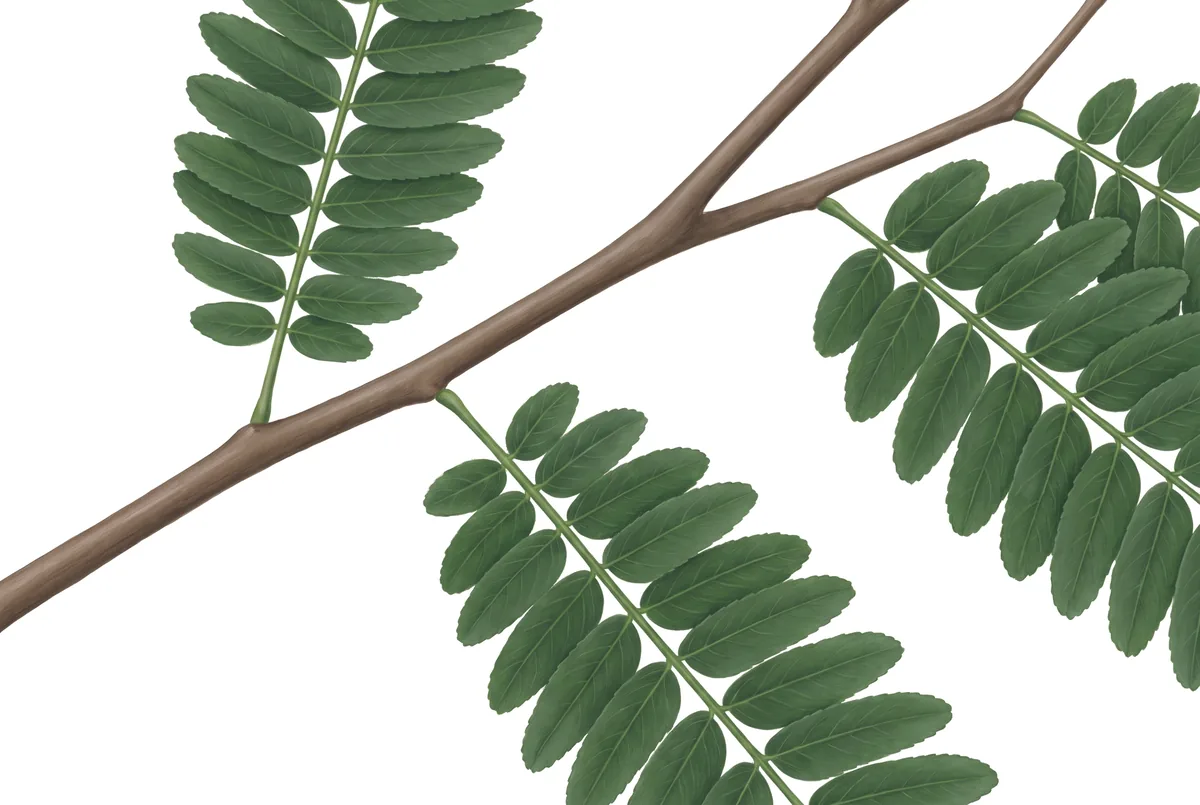
- HortFlora and the ACT Government sheet both give dark green leaves; HortFlora says they last into autumn, the ACT sheet that they turn yellow then. The South Australian Plant Selector describes bright yellow to lime green leaves and grey-green foliage, out of line with both.
- When does Shademaster flower?
- The ACT Government sheet gives inconspicuous flowers in spring. The South Australian Plant Selector gives autumn, out of line with the ACT sheet and with NSW WeedWise's late spring to early summer for the species.
- Can Shademaster honey locust be sold in Queensland?
- No. Honey locust is category 3 restricted matter under Queensland's Biosecurity Act 2014, and the Queensland fact sheet names Shademaster among the varieties that fall under the same controls as the wild tree, none of which may be sold anywhere in the state.
- Why is it written var. inermis in some places and not in others?
- HortFlora places Shademaster directly under the species and writes the thornless honey locust as f. inermis DC.; the South Australian Plant Selector and the HortOS catalogue write var. inermis 'Shademaster'. Both mean the thornless form.
Sources
- GBIF species match API (the species name and family)
- VicFlora, the Flora of Victoria (Royal Botanic Gardens Victoria): Gleditsia triacanthos, the species
- Plant Selector+ (Botanic Gardens and State Herbarium of South Australia, the Green Infrastructure Project), entry 17884, Gleditsia triacanthos var. inermis 'Shademaster'
- Queensland Government invasive plant fact sheet (Department of Primary Industries): Honey locust, Gleditsia triacanthos, restricted category 3
- NSW WeedWise (NSW Department of Primary Industries and Regional Development): Honey locust, the weed profile and the biosecurity duty by region
- Business Queensland (Queensland Government): Honey locust, restricted invasive plant under the Biosecurity Act 2014
- Queensland Biosecurity Regulation 2016 (Queensland Legislation): Schedule 1A, restricted matter and categories, the honey locust line
- Western Australian Organism List (DPIRD), legal status under the Biosecurity and Agriculture Management Act 2007: Gleditsia triacanthos L.
- HortFlora, the Horticultural Flora of South-eastern Australia (Royal Botanic Gardens Victoria): Gleditsia triacanthos, the species treatment with 'Shademaster' and 'Sunburst'
- ACT Government, Design Standards for Urban Infrastructure, Plant Species for Urban Landscape Projects in Canberra: Gleditsia triacanthos 'Shademaster'
- ACT Government, Design Standards for Urban Infrastructure, Plant Species for Urban Landscape Projects in Canberra: Gleditsia triacanthos 'Sunburst'
- North Carolina State Extension Gardener Plant Toolbox: Gleditsia triacanthos (an American reference)
The growers, sizes and prices above are live and change as lists arrive. Cite this page: HortOS, Shademaster honey locust (Gleditsia triacanthos 'Shademaster'), https://au.hortosapp.com/plants/gleditsia-triacanthos-inermis-shademaster.
Found a fact that is wrong? Tell us and it is checked against its source.