Deschampsia caespitosa
No grower lists this plant right now
- Type
- Semi-evergreen grass
- Height
- 0.15 m to 1.5 m
- Spread
- 0.3 m to 0.6 m
- Flowers
- Green, spring to early autumn by the Flora of Australia, spring to late summer by VicFlora; summer by PlantNET
- Sun
- Exposed to shady sites (the Understorey Network, Tasmania); light to moderate shade preferred (NC State Extension, American)
- Frost
- Hardy (the Understorey Network)
- In Australia
- Native
Growing tufted hair-grass
Position and climate. In the wild in Australia it grows from sea level to high altitude in wet places, by the Flora of Australia: creek banks, the edges of saltmarshes and tarns, seepages, peaty sites, alpine grassland and wet meadows. VicFlora calls it an uncommon grass of damp to wet alpine and subalpine grassland in Victoria, with outlying stands near Woodend, Colac and Dartmoor. The Understorey Network in Tasmania lists exposed, moist, rocky, shady, waterlogged and windy sites among those it tolerates, and rates it frost hardy. NC State Extension, an American reference, prefers light to moderate shade and says full sun lowers the quality of the leaves and flowers.
Soil and water. The Understorey Network lists clay, loam and sand, fertile or nutrient-poor, poorly drained or well drained. The floras place it in damp to wet ground, in fresh or brackish water by the Flora of Australia; NC State Extension asks for moist to soggy soil rich in humus. No reference read gives a drought rating for Australian conditions.
Pruning. NC State Extension advises cutting the old foliage to the ground in late winter, before new growth starts, and notes that it self-seeds.
Propagation. By division, best in early spring, or from fresh seed sown in spring or autumn, by the Understorey Network, which says it is not suited to direct seeding.
Using tufted hair-grass
NC State Extension, an American reference, calls tufted hair-grass an ornamental grass, good as a cut flower, for borders, meadows, containers and native gardens, and says the flower heads turn tan as the seed ripens and can last into winter. In Tasmania the Understorey Network lists it in alpine and subalpine vegetation, coastal vegetation, grassland, and sedgeland and wetland. The species is variable: the Flora of Australia calls it a complex species with several subspecific taxa recognised in Europe, and NC State Extension names the cultivars 'Goldschleier' and 'Schottland'. NC State Extension, an American reference, gives a spread of 0.3 to 0.6 m; no Australian reference read gives one.
What to check before you buy
Growers list the plant as Deschampsia caespitosa, a spelling the Australian Plant Census records as an orthographic variant of Deschampsia cespitosa, the name it and GBIF accept; the two names are one plant. Named selections are listed under their own names, so check whether a line is the straight species or a cultivar. The table above shows the sizes growers list. What to check in the roots and leaves is in the guide to nursery plant quality. The guide to buying from a wholesale grower says nursery stock sent interstate must meet the receiving state's quarantine entry conditions and may need a plant health certificate.
Used forcut flower
Prices are set by each grower and shown ex GST. Availability is confirmed by the grower at order.
Common questions
- Is tufted hair-grass native to Australia?
- Yes. The Australian Plant Census records Deschampsia cespitosa as native in New South Wales, Victoria, Tasmania and on Macquarie Island, and as naturalised in South Australia. The Flora of Australia gives it a native range in south-eastern Australia from the Southern Tablelands and the Australian Alps to Tasmania and west to the Adelaide region, and says it also grows in Europe, eastern Asia, Africa, North America and New Zealand.
- Is Deschampsia caespitosa the same as Deschampsia cespitosa?
- Yes. The Australian Plant Census lists Deschampsia caespitosa as an orthographic variant, a spelling of the same name, and accepts Deschampsia cespitosa; GBIF matches the caespitosa spelling as a synonym of it.
- How tall does tufted hair-grass grow?
- PlantNET gives tussocks to about 1 m tall, the Understorey Network 0.15 to 1.2 m, and VicFlora flowering stems to 150 cm. The Flora of Australia gives stems of 20 to 95 cm, occasionally to 200 cm. NC State Extension, an American reference, gives 0.5 to 0.9 m high and 0.3 to 0.6 m wide.
- Does tufted hair-grass tolerate wet ground?
- Yes. The Understorey Network lists waterlogged and poorly drained sites among those it tolerates, and the Flora of Australia records it in fresh or brackish water and wet places from sea level to high altitude.
- When does it flower?
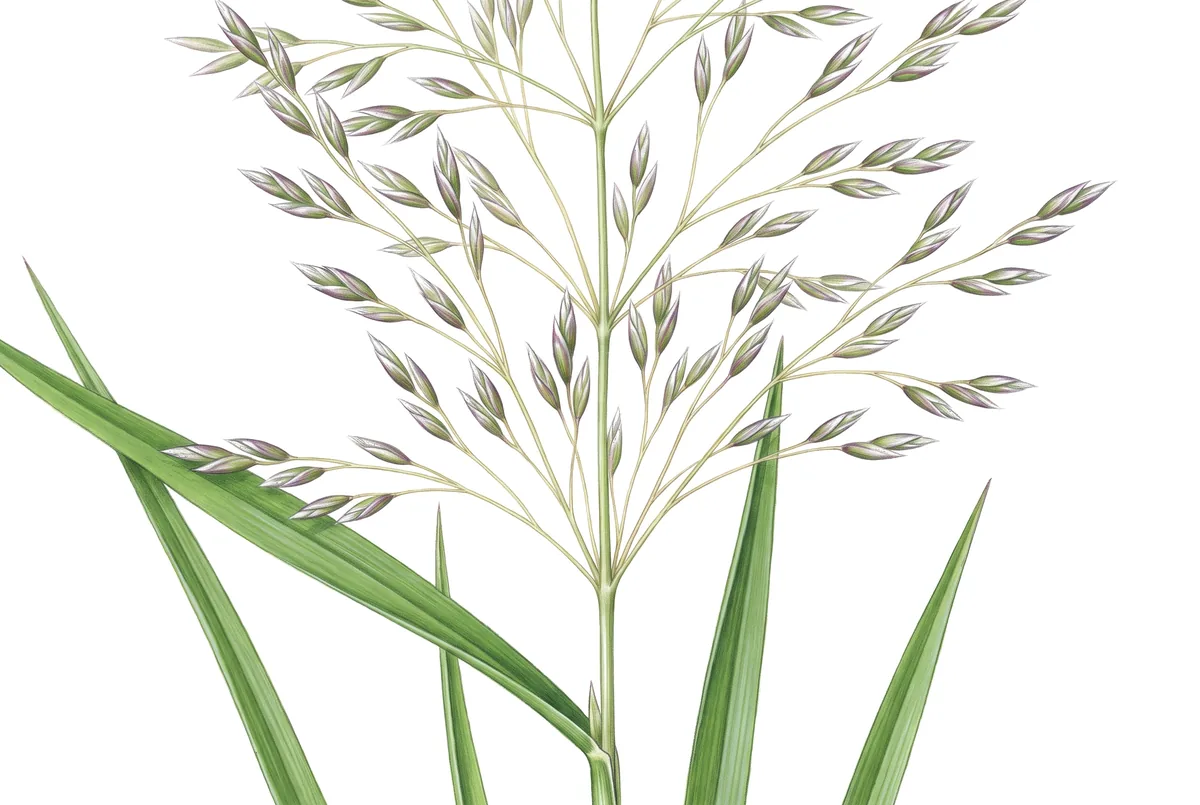
- From September to March by the Flora of Australia, and September to February by VicFlora; PlantNET gives summer. The flower heads are open panicles of small shining spikelets.
- How is tufted hair-grass propagated?
- By division, best done in early spring, or from fresh seed in spring or autumn, by the Understorey Network, which says it is not suited to direct seeding.
- Is tufted hair-grass threatened?
- In Victoria it is listed as Endangered under the Flora and Fauna Guarantee Act, as VicFlora displays it, where it is an uncommon grass of damp to wet alpine and subalpine grassland.
Sources
- GBIF species match API (Deschampsia cespitosa accepted; Deschampsia caespitosa matched as a synonym)
- Australian Plant Census (APC): Deschampsia cespitosa
- PlantNET, the New South Wales flora online (Royal Botanic Garden Sydney): Deschampsia cespitosa
- VicFlora, the Flora of Victoria (Royal Botanic Gardens Victoria): Deschampsia cespitosa
- Flora of Australia online (Australian Biological Resources Study): Deschampsia cespitosa
- Atlas of Living Australia
- Understorey Network (Tasmania), plant database: Deschampsia cespitosa
- North Carolina State Extension Gardener Plant Toolbox: Deschampsia cespitosa
- The HortOS catalogue (the names growers list it under)
- The HortOS guides (judging nursery plant quality; buying from a wholesale grower)
The growers, sizes and prices above are live and change as lists arrive. Cite this page: HortOS, Tufted hair-grass (Deschampsia cespitosa), https://au.hortosapp.com/plants/deschampsia-caespitosa.
Found a fact that is wrong? Tell us and it is checked against its source.