Citrus - Calamondin Citrus x. microcarpa (syn. Fortunella)
Citrus
2 growers · 3 sizes · from $26.00 ex GST
- Type
- Evergreen tree
- Height
- 3 m to 6.1 m
- Spread
- 1.8 m to 3 m
- Growth
- Moderate
- Flowers
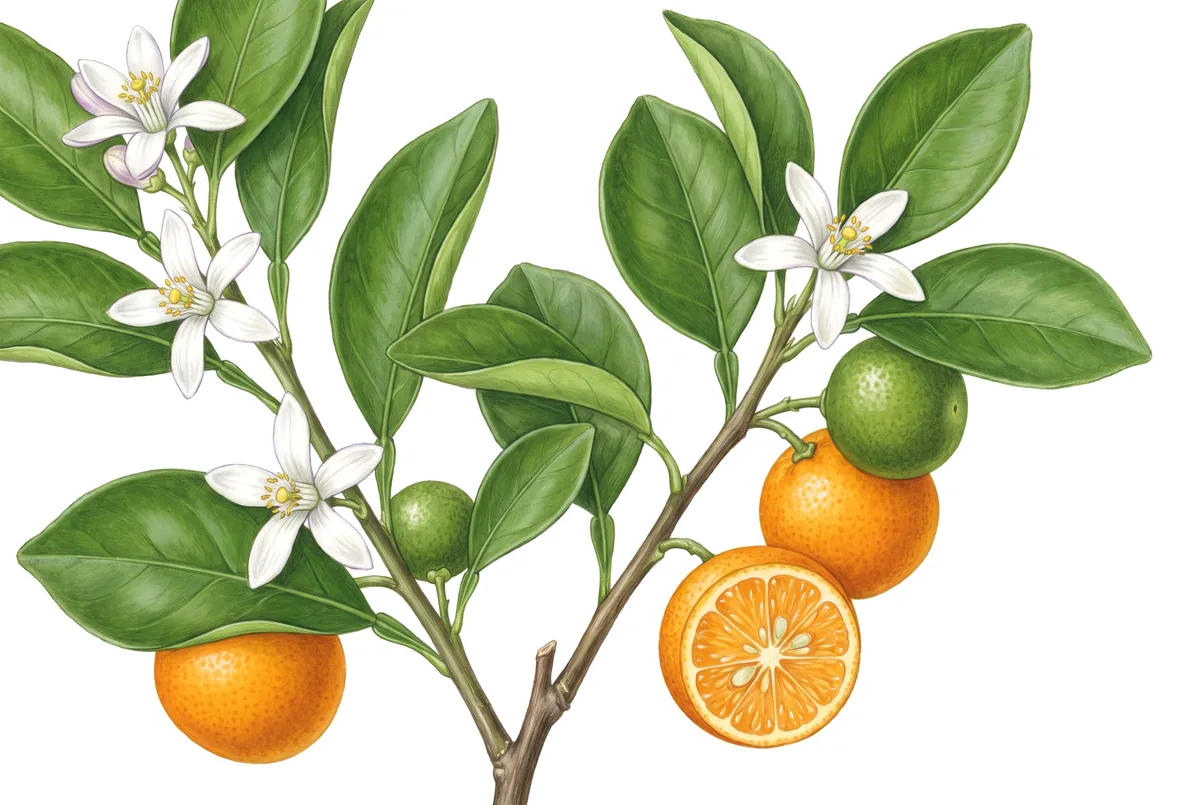
- White, spring, then intermittently through summer
- Sun
- Full sun
- Frost
- Cold-resistant
- In Australia
- Not native
| Size | Grower | PricePrice ex GST | ||
|---|---|---|---|---|
| 200mm | Engalls Nursery200mm | $26.00 | ||
| 400mm | Engalls Nursery400mm | $130.00 | ||
| 100L | Alpine Treemovals100L | Price on application. Sign in to ask the grower. |
Growing calamondin
Every growing note here comes from two American references, the NC State toolbox and the University of California Riverside citrus collection; no Australian reference read gives climate zones, a frost figure or a pruning note.
Position and soil, by the toolbox: full sun and high humidity for the best flowering and fruit, in fertile, moist, well-drained soil high in organic matter, acid to neutral.
Cold: the collection calls calamondin cold-resistant, and the 1967 description it quotes says strongly so; the toolbox says sources vary on its growing zones, and for colder winter areas it advises growing it in a container and bringing it indoors for the winter.
Flowering and fruit: the toolbox has it blooming in spring and repeating four or five times in the season, so that flowers and fruit can be seen together, and says a fruit can take up to a year to mature. The collection says the tree flowers and sets fruit intermittently throughout the year, and the description it quotes says the fruit holds on the tree remarkably well.
The toolbox gives stem cuttings for propagation and describes the stems as nearly thornless. Its pests are spider mites, scale insects, citrus leafminer and aphids, and its diseases citrus canker, sooty mould, citrus greening and root rot; that is an American list, not a record of what the plant meets in Australia.
No Australian reference was read for its status in Australia. The Atlas of Living Australia search holds records only from Christmas Island and New Ireland and says nothing of status, so the exotic status on the facts card rests on the native range the toolbox and the Riverside collection give, which is Asia.
Using calamondin
The uses on record are American too. The Riverside collection says calamondin is planted there primarily as an ornamental, in the ground or in a container, and the toolbox lists it for containers and patios, for an Asian or a winter garden and for its edible fruit, which adds a tangy flavour to drinks and to foods such as noodles. The collection quotes a note that the Philippines has a growing industry in calamansi juice. The toolbox records, for the United States, that the flowers attract pollinators and birds eat the fruit. A variegated form with marbled leaves and faintly striped fruit is sometimes marketed in the United States as Peters, by the collection. The description the collection quotes adds that calamondin makes an excellent rootstock for the Nagami kumquat when that is grown for the same purposes, as a potted or tubbed plant. No reference read gives a planting centre.
What to check before you buy
The names vary. GBIF and the NC State toolbox use Citrus × microcarpa; the Riverside collection heads its page × Citrofortunella microcarpa and also writes Citrus madurensis; the HortOS listing adds Fortunella as a synonym, a name none of the references read uses for this plant. The table above shows the sizes growers list. What to look for in the roots, stem and canopy of nursery stock is in the HortOS nursery plant quality guide. Stock crossing a state border travels under the state and territory biosecurity rules on moving plants and soil. The drawbacks the references give: acid fruit that can take up to a year to mature, and the pests and diseases on the toolbox's American list.
Prices are set by each grower and shown ex GST. Availability is confirmed by the grower at order.
Common questions
- Who grows Citrus - Calamondin Citrus x. microcarpa (syn. Fortunella) wholesale in Australia?
- 2 wholesale growers list Citrus - Calamondin Citrus x. microcarpa (syn. Fortunella) on HortOS right now, each with their own pot sizes and trade prices. They are in New South Wales. The growers are named on this page.
- What pot sizes does Citrus - Calamondin Citrus x. microcarpa (syn. Fortunella) come in?
- Growers on HortOS list Citrus - Calamondin Citrus x. microcarpa (syn. Fortunella) in 200mm, 400mm and 100L.
- How do I order Citrus - Calamondin Citrus x. microcarpa (syn. Fortunella) from these growers?
- HortOS is for the trade. Add the lines you want to a list and send it: each grower gets their part of the order by email, confirms what they have and quotes freight, and nothing is bought until you approve it. Listing, searching and ordering are free.
- Is calamondin edible?
- Yes. The NC State toolbox says the fruit is edible, with a thin, fragrant peel and an acid pulp that adds a tangy flavour to drinks and foods. The description the Riverside collection quotes calls the rind sweet and edible as well.
- How big does a calamondin tree grow?
- The NC State toolbox gives 3 to 6.1 m high and 1.8 to 3 m wide, dense and erect, with a medium growth rate; the Riverside collection calls the tree upright and columnar. Both are American accounts.
- When does calamondin flower and fruit?
- The NC State toolbox has it blooming in spring and repeating four or five times in the season, with flowers and fruit sometimes on the tree together; the Riverside collection says it flowers and sets fruit intermittently throughout the year. Both describe it in the United States.
- Is calamondin frost hardy?
- The Riverside collection in California calls it cold-resistant, while the NC State toolbox says sources vary on its zones and advises a container, kept indoors through winter, where winters are colder. No Australian reference read gives a frost figure.
- What is calamondin a cross of?
- The references agree on a kumquat and differ on the rest. The NC State toolbox says it is thought to be a cross between a mandarin orange and a kumquat; the Riverside collection lists the parents as unknown and believes it a natural hybrid with kumquat in the parentage, and the description it quotes reports one botanist's view that the other parent was a sour mandarin.
Sources
- GBIF species match API
- Atlas of Living Australia (species search: Citrus x microcarpa)
- North Carolina State Extension Gardener Plant Toolbox: Citrus x microcarpa (calamondin), the description and the attributes table (for the plant's names, size and looks)
- North Carolina State Extension Gardener Plant Toolbox: Citrus x microcarpa (calamondin), the description and the attributes table (an American reference, for how the plant grows and is used)
- University of California Riverside, Givaudan Citrus Variety Collection: Calamondin (CRC 2592), with its quoted 1967 description (for the plant's names, size and looks)
- University of California Riverside, Givaudan Citrus Variety Collection: Calamondin (CRC 2592), with its quoted 1967 description (a Californian reference, for how the plant grows and is used)
- The HortOS guides (judging-nursery-plant-quality)
The growers, sizes and prices above are live and change as lists arrive. Cite this page: HortOS, Calamondin (Citrus × microcarpa), https://au.hortosapp.com/plants/citrus-calamondin-citrus-x-microcarpa-syn-fortunella.
Found a fact that is wrong? Tell us and it is checked against its source.