Brachychiton rupestris
Queensland Bottle Tree
Part of Brachychiton: see them all
41 growers · 22 sizes · from $1.00 ex GST
- Type
- Deciduous tree
- Height
- 4 m to 8 m
- Spread
- 2 m to 12 m
- Flowers
- Cream, spring to summer
- Sun
- Full sun
- Drought
- Tolerant
- Frost
- Tolerates moderate to heavy frost
- In Australia
- Native
Some growers show prices to verified trade buyers. Sign in or sign up with your ABN to see them and order.
Also grown by 21 nurseries (no sizes or prices listed)
Enquire with them for sizes and prices.
- AllNatives NurseryHogarth Range, NSW
- Blerick Tree FarmNeerim Junction, VIC
- Bushland Flora Pty LtdMt Evelyn, VIC
- Dalpura FarmGherang, VIC
- Designer TreesDural, NSW
- Edible Jungle NurseryBrisbane, QLD
- Faceys NurseryVIC
- Florafolia (Alstonville Plants)Alstonville, NSW
- ForsterianaDarawank, NSW
- Isabella 'S Hydroponic Nursery & Garden CentreWanneroo, WA
- Linwood Tree Nursery (Linwood Trees)Burren Junction (Narrabri/Walgett District), NSW
- Miti Trees ProductionWaroona, WA
- Newcastle Wildflower NurseryGlendale, NSW
- Nightingale's Nest and NurseryKojonup, WA
- Peek GardenMoorooduc, VIC
- Prince PropagationCurrumbin Valley, QLD
- Sydney Wildflower NurseryHeathcote, NSW
- Tamworth Regional LandcareWest Tamworth, NSW
- The Beach Willow Nursery & CafeMount Duneed, VIC
- Two Green MenNorth Perth, WA
- Yuruga Nursery (Arakai Pty Ltd)QLD
Growing queensland bottle tree
Range. CSIRO's key to tropical rainforest plants and the Australian Plant Census give it as a Queensland plant. CSIRO places it in the vine thickets of central east Queensland, as an emergent tree, inland as far as the Mitchell and Warrego pastoral districts and no higher than 600 m. The Australian National Botanic Gardens extends its range into northern New South Wales, and South Australia's Plant Selector gives its origin as Queensland and New South Wales. The Gardens say it has been grown in southern Australia for many decades.
Position, soil and water. The Plant Selector gives full sun and well-drained clay, loam or sand, acid to neutral, with minimal supplementary watering; it rates the tree very adaptable and drought tolerant, and says extra water speeds its growth. The Gardens describe the soils it grows in as medium to heavy clay, silt, sand and volcanic rock, and say the canopy thins in a drought and that a good deal of water is stored between the inner bark and the trunk.
Frost. The Plant Selector lists moderate and heavy frost among its tolerances. No reference read gives Australian climate zones.
Leaf fall. CSIRO calls it deciduous or semi-deciduous, and the Plant Selector says a slightly cooler climate can leave it semi-deciduous. The Gardens say it drops its leaves before it flowers, from October to December; the Plant Selector gives spring and summer.
Transplanting. The Gardens say trees stand up to heavy-handed transplanting even when decades old, and that plants have survived three months between lifting and replanting.
Using queensland bottle tree
South Australia's Plant Selector notes that the Queensland bottle tree is often planted in parks and larger gardens, and rates it highly as an ornamental; the Australian National Botanic Gardens adds wind protection and shade to its use as a feature. The HortOS guide to street trees and canopy puts it among the trees the trade grows for streets and parks, and the guide to climate ready trees among the trees named in both the City of Sydney's Tree Species List and the City of Melbourne's report on future temperatures. The Gardens give a canopy 5 to 12 m across; no reference read gives planting centres. The Plant Selector and the Gardens also record its use by Aboriginal people for food and materials.
What to check before you buy
By the HortOS guide to the most grown native plants, the 400 mm pot is the size the most growers price the Queensland bottle tree in, and the street trees guide's table has it among the advanced trees growers list at 45, 100 and 200 litres. The Gardens say the bottle shape takes about five to eight years to develop, so a younger tree may not show it yet. The Australian Plant Census notes that hybrids between this species and Brachychiton populneus subsp. trilobus have been cultivated and possibly occur naturally. For trees bought for a street or park, the HortOS guide to specifying and procuring trees for a street or park planting covers the nursery stock standard, grading and inspection at the nursery and on delivery. Stock that crosses a state border moves under the state and territory biosecurity rules on moving plants and soil.
Cautions
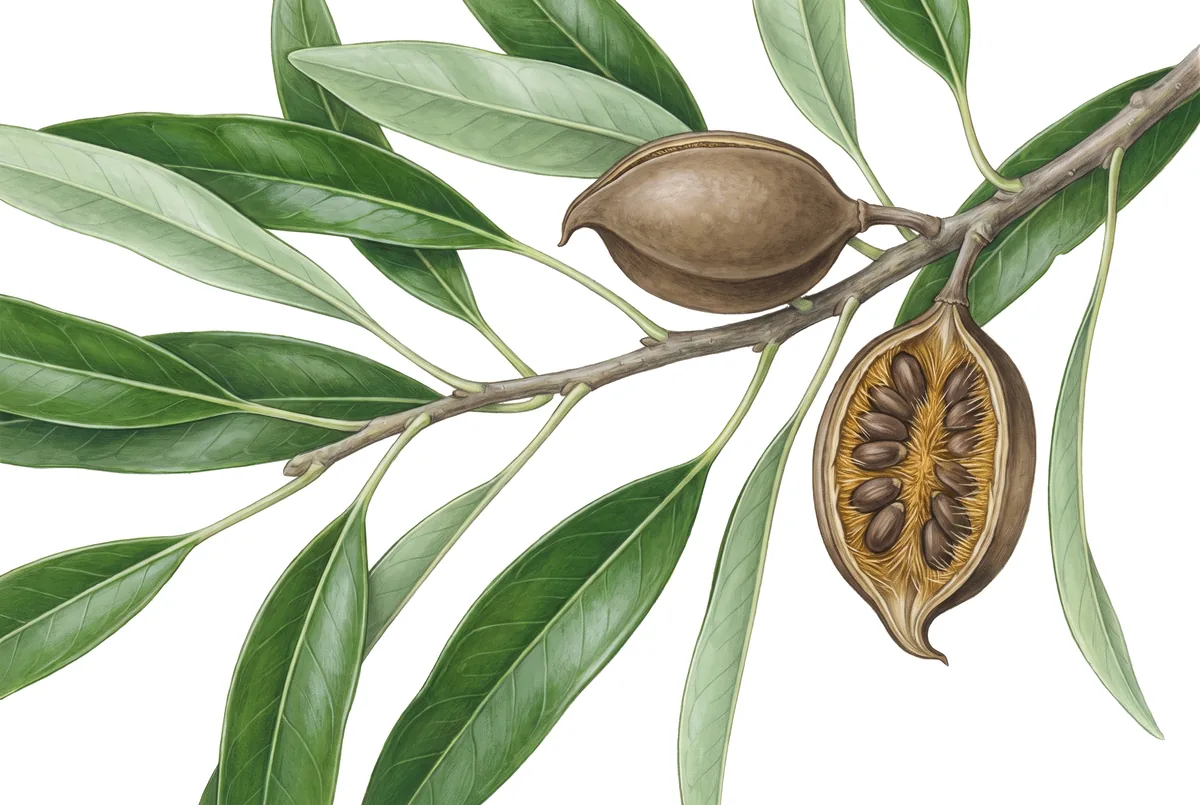
South Australia's Plant Selector says the fine hairs around the seed can be an irritant, and the Australian National Botanic Gardens that the outside of the seeds carries irritating hairs; both advise gloves when collecting seed. CSIRO describes the pods as hairy to bristly inside.
Prices are set by each grower and shown ex GST. Availability is confirmed by the grower at order.
Common questions
- Who grows Brachychiton rupestris wholesale in Australia?
- 41 wholesale growers list Brachychiton rupestris on HortOS right now, each with their own pot sizes and trade prices. They are in Victoria, Queensland, New South Wales, Western Australia and South Australia. The growers are named on this page.
- What pot sizes does Brachychiton rupestris come in?
- Growers on HortOS list Brachychiton rupestris in Tube, 50mm, 140mm, 150mm, 200mm, 300mm, 330mm, 400mm, 500mm, 20L and 12 more sizes.
- What does Brachychiton rupestris cost wholesale?
- The median trade price in a 45 litre pot is $126.00 ex GST, across 6 growers who price it. Prices by pot size and state are on its trade price page.
- How do I order Brachychiton rupestris from these growers?
- HortOS is for the trade. Add the lines you want to a list and send it: each grower gets their part of the order by email, confirms what they have and quotes freight, and nothing is bought until you approve it. Listing, searching and ordering are free.
- How big does a Queensland bottle tree grow?
- South Australia's Plant Selector gives 4 to 8 m high and 2 to 4 m wide. The Australian National Botanic Gardens gives a maximum of 18 to 20 m, smaller in cultivation, with a canopy 5 to 12 m across, and CSIRO gives trees 10 to 25 m tall. The trunk can reach 2 m across.
- How long does a bottle tree take to get its bottle shape?
- About five to eight years, by the Australian National Botanic Gardens, which puts the trunk of a grown tree at up to 2 m across.
- Is the Queensland bottle tree frost hardy?
- South Australia's Plant Selector lists moderate and heavy frost among its tolerances, and the Australian National Botanic Gardens says it has been grown in southern Australia for many decades. No reference read gives Australian climate zones.
- Can you transplant a bottle tree?
- Yes, by the Australian National Botanic Gardens, which says trees stand up to heavy-handed transplanting even when decades old, and that plants have survived three months between lifting and replanting.
- Does the Queensland bottle tree lose its leaves?
- CSIRO calls it deciduous or semi-deciduous. The Australian National Botanic Gardens says it drops its leaves before it flowers, and South Australia's Plant Selector says a slightly cooler climate can leave it semi-deciduous.
- Is the bottle tree native to Australia?
- Yes. The Australian Plant Census and CSIRO give it as a Queensland plant. The Australian National Botanic Gardens extends its range into northern New South Wales, and South Australia's Plant Selector gives its origin as Queensland and New South Wales.
- Are bottle tree seeds an irritant?
- They can be. South Australia's Plant Selector says the fine hairs around the seed can be an irritant, and the Australian National Botanic Gardens that the outside of the seeds carries irritating hairs; both advise gloves when collecting seed.
- What do bottle tree flowers look like?
- CSIRO describes five-lobed flowers 13 to 18 mm across, cream with pink to red markings inside, in open sprays of 10 to 30 after the leaves fall. South Australia's Plant Selector gives yellow, bell-shaped flowers in spring and summer.
Sources
- GBIF species match API
- Australian Plant Census (APC), the taxon entry (settles the authority, which GBIF gives as (Lindl.) Schum.)
- Australian Tropical Rainforest Plants, online edition (CSIRO)
- Plant Selector+ (Botanic Gardens and State Herbarium of South Australia, the Green Infrastructure Project), Brachychiton rupestris
- Atlas of Living Australia
- Australian National Botanic Gardens, Growing Native Plants: Brachychiton rupestris
- The HortOS guides (street-trees-and-canopy, which lists it among the advanced trees growers list; climate-ready-trees)
- The HortOS catalogue and guides (street-trees-and-canopy; climate-ready-trees; most-grown-native-plants, for the size the most growers price)
The growers, sizes and prices above are live and change as lists arrive. Cite this page: HortOS, Queensland bottle tree (Brachychiton rupestris), https://au.hortosapp.com/plants/brachychiton-rupestris.
Found a fact that is wrong? Tell us and it is checked against its source.