Wisteria sinensis
Chinese Wisteria
Every Wisteria sinensis on HortOS in one place: the plain species and 5 varieties. Pick a size to see it across all of them.
Part of Wisteria: see them all
16 growers · 8 sizes · from $15.00 ex GST
- Type
- Deciduous climber
- Height
- 3 m to 12 m
- Spread
- 1.2 m to 9.1 m
- Flowers
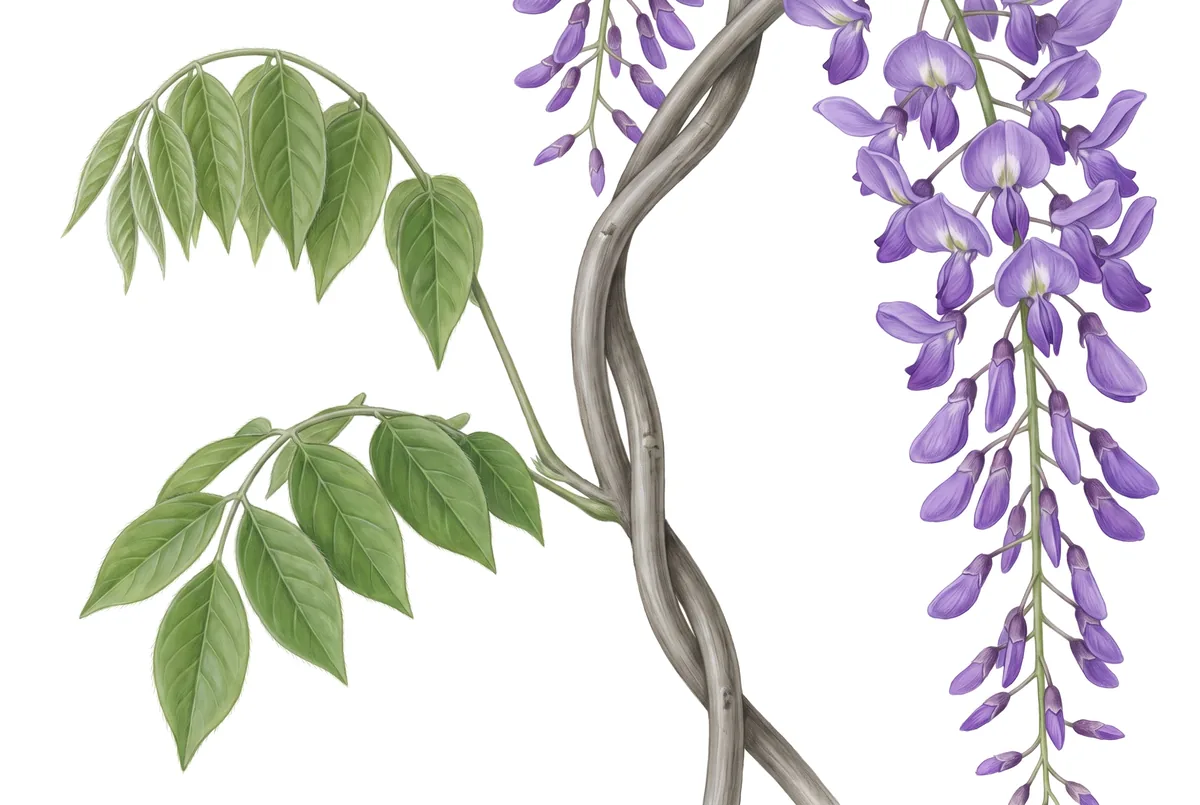
- Purple, spring
- Sun
- Full sun to part shade
- In Australia
- Naturalised
Some growers show prices to verified trade buyers. Sign in or sign up with your ABN to see them and order.
Also grown by 8 nurseries (no sizes or prices listed)
Enquire with them for sizes and prices.
- Affordable Plants MelbourneGlenburn, VIC
- Blerick Tree FarmNeerim Junction, VIC
- Cabbage Tree NurseryDural, NSW
- Ellenby Tree FarmGnangara, WA
- Feature Trees Ballarat / Feature Trees Nursery BallaratNerrina, Ballarat, VIC
- Mountain View NurseryMoruya, NSW
- Overland NurseriesArcadia, NSW
- Small Tree FarmBalingup, WA
Growing chinese wisteria
Position. Full sun to part shade, by the RHS and the NC State Extension Plant Toolbox. The RHS calls it a large, long-lived climber, so the site matters, and gives south or west facing aspects.
Soil and water. The RHS says it grows in most soils that are moist but well-drained, chalk, clay, loam or sand, acid, neutral or alkaline. The toolbox says it prefers slightly acid soil and can grow on wet or dry sites.
Climate. The toolbox gives USDA zones 5a to 8b and says a late spring frost can damage it; the RHS rates it H6 in Britain. No Australian reference read gives a frost figure or a climate zone. In Australia the Census records it naturalised in South Australia and doubtfully so in Queensland, and the New South Wales flora in a few places around Sydney and Armidale.
Pruning and flowering. The RHS advises pruning twice a year. The toolbox says regular pruning shapes the plant and checks its growth, that it can be slow to establish, and that it may not flower until the second or third year after planting, sometimes much later; it adds that it does not take well to being moved once planted.
Pests. In Britain the RHS reports aphids, glasshouse red spider mite and scale insects including wisteria scale, and Phytophthora root rot, coral spot, fungal leaf spot, viruses, powdery mildews and, rarely, honey fungus. The toolbox, which calls it an invasive plant, says it has no significant insect or disease problems.
Using chinese wisteria
The RHS lists three ways to grow it: informally through a large tree, more formally against a house wall, or trained as a free-standing half standard in a container. It suggests cottage and informal gardens and climber and wall-shrub plantings. The NC State Extension Plant Toolbox says it needs space and sturdy supports, and that its stems become twisted, trunk-like and massive with time. The toolbox also says it can grow on wet or dry sites, forming very dense thickets, and calls it an invasive weed in the United States. The NC State Extension Plant Toolbox allows 0.3 to 0.9 m of space for each plant. HortFlora describes the cultivars 'Alba', with white flowers in clusters 20 to 35 cm long, 'Amethyst', with bronze young growth and reddish violet flowers, and 'Consequa', the soft blue-violet clone whose name, it says, has been proposed for most plants of the species in cultivation outside China. The genus is on HortOS under wisterias.
What to check before you buy
A line listed as Chinese wisteria names the species, not a cultivar. HortFlora notes that most selections are grafted, and that plants sold as some named forms of Wisteria sinensis may be other species: 'Plena' is probably a double Japanese wisteria, and 'Caroline', often listed under this species, shows the characters of Wisteria floribunda. HortFlora tells the two apart by twining direction: anticlockwise for this species, clockwise for the Japanese. The table above shows the sizes growers list. What to look for in the roots, the stem and canopy and for pests is in the guide to nursery plant quality. Stock moving between states travels under the state and territory biosecurity rules like any other plant.
Cautions
The ASPCA lists wisterias as toxic to dogs, cats and horses. HortFlora says the leaves, fruit and especially the seeds of wisterias are poisonous, and the RHS calls Chinese wisteria harmful if eaten and suggests gloves when handling it. In Australia it is naturalised in places, by the Census and the New South Wales flora.
Prices are set by each grower and shown ex GST. Availability is confirmed by the grower at order.
Common questions
- Who grows Wisteria sinensis wholesale in Australia?
- 16 wholesale growers list Wisteria sinensis on HortOS right now, each with their own pot sizes and trade prices. They are in Victoria, New South Wales, Queensland and South Australia. The growers are named on this page.
- What pot sizes does Wisteria sinensis come in?
- Growers on HortOS list Wisteria sinensis in 90mm, 140mm, 200mm, 250mm, 300mm, 400mm, 6000mm and 200L.
- What does Wisteria sinensis cost wholesale?
- The median trade price in a 140 mm pot is $16.90 ex GST, across 3 growers who price it. Prices by pot size and state are on its trade price page.
- How do I order Wisteria sinensis from these growers?
- HortOS is for the trade. Add the lines you want to a list and send it: each grower gets their part of the order by email, confirms what they have and quotes freight, and nothing is bought until you approve it. Listing, searching and ordering are free.
- How do you tell Chinese wisteria from Japanese wisteria?
- By the way it twines: HortFlora gives Wisteria sinensis twining anticlockwise and Wisteria floribunda clockwise. HortFlora also says the Chinese species' flowers open more or less together before the leaves are fully out.
- How big does Chinese wisteria grow?
- The RHS gives higher than 12 m and wider than 8 m, reached over 10 to 20 years. The NC State Extension Plant Toolbox gives 3 to 6.1 m high and 1.2 to 9.1 m wide in its text, and 3 to 7.6 m high in its dimensions.
- How long does Chinese wisteria take to flower?
- The NC State Extension Plant Toolbox says flowers may not come until the second or third year after planting, sometimes much longer, and that the plant can be slow to establish.
- When does Chinese wisteria flower?
- In spring, by the New South Wales flora, and in late spring by HortFlora, the flowers opening more or less all together before the leaves are fully expanded. The RHS gives clusters to 30 cm long of fragrant mauve or lilac flowers.
- Is Chinese wisteria a weed in Australia?
- The Australian Plant Census records it as naturalised in South Australia and doubtfully naturalised in Queensland, and the New South Wales flora as naturalised in a few places around Sydney and Armidale. The NC State Extension Plant Toolbox calls it an invasive weed in the United States.
Sources
- GBIF species match API
- Australian Plant Census (APC), the National Species List
- PlantNET, the New South Wales flora online (Royal Botanic Garden Sydney), Flora of NSW
- Atlas of Living Australia
- ASPCA Toxic and Non-Toxic Plant List: Wisteria
- HortFlora, the Horticultural Flora of South-eastern Australia (Royal Botanic Gardens Victoria): Wisteria sinensis and the genus Wisteria
- Royal Horticultural Society, plant finder: Wisteria sinensis
- NC State Extension Gardener Plant Toolbox: Wisteria sinensis
The growers, sizes and prices above are live and change as lists arrive. Cite this page: HortOS, Chinese wisteria (Wisteria sinensis), https://au.hortosapp.com/plants/wisteria-sinensis.
Found a fact that is wrong? Tell us and it is checked against its source.