Viburnum opulus
Viburnum
Every Viburnum opulus on HortOS in one place: the plain species and 6 varieties. Pick a size to see it across all of them.
11 growers · 7 sizes · from $3.50 ex GST
- Type
- Deciduous shrub
- Height
- 2.4 m to 5 m
- Spread
- 2.4 m to 4.6 m
- Flowers
- White, late spring and early summer by the RHS; summer by HortFlora
- Sun
- Full sun to part shade
- In Australia
- Not native
Some growers show prices to verified trade buyers. Sign in or sign up with your ABN to see them and order.
Growing guelder rose
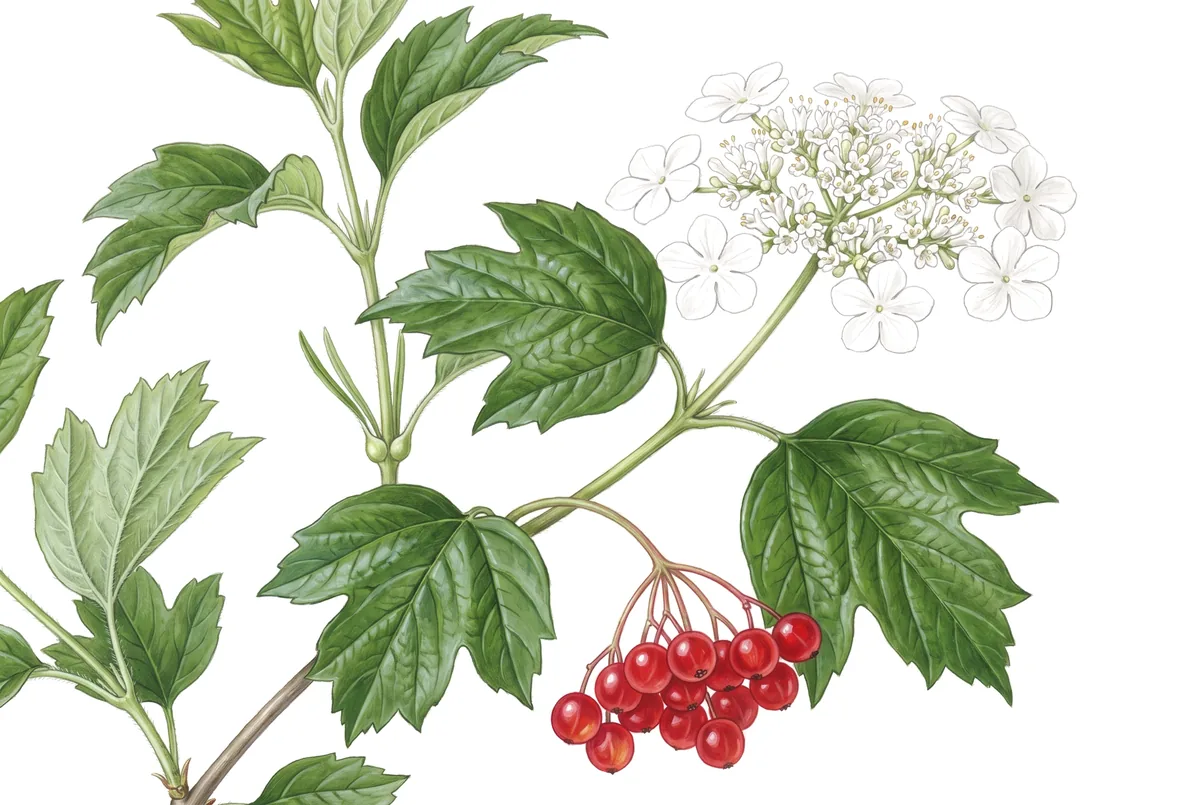
No Australian reference read gives this species a frost, heat or drought rating. HortFlora, the horticultural flora of south-eastern Australia, describes it among its garden and cultivated plants as a deciduous shrub to about 4 m, flowering in summer, its leaves red in autumn. The RHS describes it as a shrub to 5 m, though its height band runs to 8 m, above every other figure read. The RHS gives full sun or part shade and a moderately fertile, humus-rich soil that is moist but well-drained, on chalk, clay, loam or sand, acid to alkaline; the Missouri Botanical Garden says it prefers loams with consistent moisture but tolerates a wide range of soils. The RHS rates it H6, and the American references give USDA zones 2a to 8b (North Carolina State Extension) and 3 to 8 (the Missouri Botanical Garden). Both American references call it weedy in North America: North Carolina State Extension says it is now found in the wild from Newfoundland to Virginia and west to Washington state, and the Missouri Botanical Garden that it has naturalised in parts of the northeastern and Midwestern United States north into Canada. The Atlas of Living Australia holds records of it from New South Wales, Victoria, Tasmania, South Australia and the Australian Capital Territory.
What to check before you buy
Growers list the species under its own name and as named forms: the sterile snowball tree, 'Roseum', with 'Notcutt's Variety', 'Compactum' and 'Aureum'. HortFlora describes 'Notcutt's Variety' as a robust shrub to 4 m or so with exceptionally large fruit and stronger autumn colour, 'Nanum' as a dwarf to 1 m that rarely flowers, and 'Xanthocarpum' as yellow-fruited. The RHS says the fruit is ornamental and not to be eaten and advises gloves when handling the plant; the Missouri Botanical Garden calls the berries technically edible but very bitter, and North Carolina State Extension says they can be eaten off the bush or used in jams. Stock that crosses a state border moves under the state and territory biosecurity rules on moving plants and soil.
Prices are set by each grower and shown ex GST. Availability is confirmed by the grower at order.
Common questions
- Who grows Viburnum opulus wholesale in Australia?
- 11 wholesale growers list Viburnum opulus on HortOS right now, each with their own pot sizes and trade prices. They are in Victoria, New South Wales and Queensland. The growers are named on this page.
- What pot sizes does Viburnum opulus come in?
- Growers on HortOS list Viburnum opulus in Tube, 70mm, 140mm, 180mm, 200mm, 300mm and 400mm.
- How do I order Viburnum opulus from these growers?
- HortOS is for the trade. Add the lines you want to a list and send it: each grower gets their part of the order by email, confirms what they have and quotes freight, and nothing is bought until you approve it. Listing, searching and ordering are free.
Sources
- GBIF species match API
- Atlas of Living Australia
- HortFlora, the Horticultural Flora of South-eastern Australia (Royal Botanic Gardens Victoria): Viburnum opulus
- Royal Horticultural Society plant profile: Viburnum opulus
- Missouri Botanical Garden Plant Finder: Viburnum opulus
- North Carolina State Extension Gardener Plant Toolbox: Viburnum opulus
The growers, sizes and prices above are live and change as lists arrive. Cite this page: HortOS, Guelder rose (Viburnum opulus), https://au.hortosapp.com/plants/viburnum-opulus.
Found a fact that is wrong? Tell us and it is checked against its source.