Tulbaghia violacea
Society Garlic
Every Tulbaghia violacea on HortOS in one place: the plain species and 12 varieties. Pick a size to see it across all of them.
Part of Tulbaghia: see them all
45 growers · 15 sizes · from $1.40 ex GST
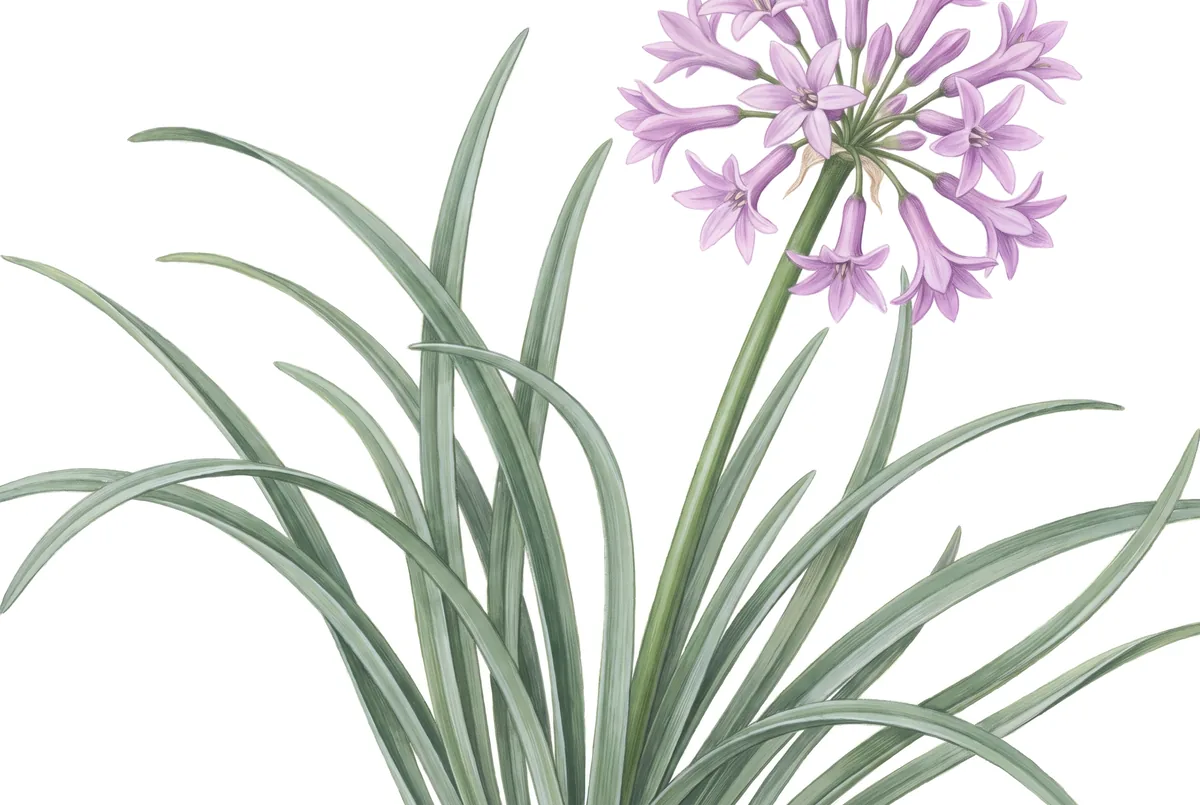
- Type
- Perennial
- Height
- 0.3 m to 0.6 m
- Spread
- 0.2 m to 0.6 m
- Flowers
- Lilac-pink, early summer to autumn, on and off
- Sun
- Full sun to part shade (fewer flowers in shade)
- Drought
- Tolerant
- Salt wind
- Moderate
- Frost
- A tender perennial by the American references; no Australian reference read gives a frost figure
- In Australia
- Naturalised
Some growers show prices to verified trade buyers. Sign in or sign up with your ABN to see them and order.
Also grown by 15 nurseries (no sizes or prices listed)
Enquire with them for sizes and prices.
- Bell River NurserySpring Creek, NSW
- Country HerbalsWoodchester, SA
- Farmer Phil Seedlings & Wicking BedsMoruya, NSW
- Jackpot NurseryBiarra (Toogoolawah / Esk District), QLD
- Lakewood PropagationPalmwoods, QLD
- Mackay Tree Farm Pty LtdRural View, QLD
- Main Neerim NurseryDrouin, VIC
- Natural Green NurseryPimpama, QLD
- No Mow AustraliaNorth Maclean, QLD
- Plants WhitsundayQLD
- RareplantsNambour, QLD
- Scotts TubesNSW
- The Food ForestGawler, SA
- The Plant Supply CoWA
- True Green NurseryMelton, VIC
Growing society garlic
Position. Full sun gives the most flowers; the Missouri Botanical Garden's Plant Finder notes that it grows in part shade but flowers less.
Soil and water. Both American references want good drainage: the Missouri Plant Finder a light soil, average to rich in organic matter, and the North Carolina toolbox clay, sand or soil high in organic matter. They rate it tolerant of heat and drought, and both say it does best with steady moisture through the growing season. The North Carolina toolbox also lists it as moderately salt tolerant, and South Australia's Plant Selector rates the variegated cultivar 'Silver Lace' as drought tolerant.
Climate. It comes from grassland in southern Africa. The American references class it as a tender perennial, grown as an annual or brought indoors over winter in their cooler regions. No Australian source read gives a frost figure for the species; South Australia's Plant Selector rates 'Silver Lace', a variegated cultivar, for moderate frost.
Pests and care. The American references report no serious insect or disease problems, though slugs and snails may damage the leaves. The clump widens with time as its tuberous roots spread, and the Missouri Plant Finder rates its upkeep as low.
Status. The Australian Plant Census lists it as naturalised in South Australia; it is not an Australian native.
Using society garlic
The American references list society garlic for edging, sunny borders, rock gardens, herb gardens and containers, and the North Carolina toolbox adds walkways and patios. Worked from its spread, plant at about 0.3 m centres for a continuous edge. Its flowers and leaves are edible: the Missouri Plant Finder gives them a mild garlic flavour and suggests soups and salads, and the North Carolina toolbox gives the flowers an oniony to peppery taste, raw or cooked. The Missouri Plant Finder credits the garlic smell with part of its resistance to deer and rabbits. For pale foliage, South Australia's Plant Selector suggests the variegated cultivar 'Silver Lace' in groups, where its leaves set off darker green plants; growers list a variegated form as variegated society garlic.
What to check before you buy
Under this name growers list the species itself, Tulbaghia violacea, with no form named; the table above shows the sizes growers list today. The variegated form and several named forms are listed under the same botanical name, sometimes with only a word to tell them apart, so check the label against your order. For the roots, pests and hardening off to check in nursery stock, see the HortOS guide to nursery plant quality. The drawback to weigh is the smell: every part of the plant gives off a strong garlic odour, and the Missouri Plant Finder warns that some people find it objectionable near paths and other busy places or in a patio pot. Stock moving between states travels under the state and territory biosecurity rules.
Prices are set by each grower and shown ex GST. Availability is confirmed by the grower at order.
Common questions
- Who grows Tulbaghia violacea wholesale in Australia?
- 45 wholesale growers list Tulbaghia violacea on HortOS right now, each with their own pot sizes and trade prices. They are in Queensland, Victoria, New South Wales, the ACT, Western Australia and South Australia. The growers are named on this page.
- What pot sizes does Tulbaghia violacea come in?
- Growers on HortOS list Tulbaghia violacea in Tube, 40mm, 70mm, 90mm, 95mm, 125mm, 130mm, 140mm, 175mm, 300mm and 5 more sizes.
- What does Tulbaghia violacea cost wholesale?
- The median trade price in a 140 mm pot is $6.63 ex GST, across 20 growers who price it. Prices by pot size and state are on its trade price page.
- How do I order Tulbaghia violacea from these growers?
- HortOS is for the trade. Add the lines you want to a list and send it: each grower gets their part of the order by email, confirms what they have and quotes freight, and nothing is bought until you approve it. Listing, searching and ordering are free.
- Is society garlic a cultivar of Tulbaghia violacea?
- No. Society garlic is the common name of the species itself, Tulbaghia violacea, by the Atlas of Living Australia and the American references. Growers also list a variegated form, which has its own page.
- Does society garlic smell of garlic?
- Yes. The leaves and rootstock give off a strong garlic smell when bruised, which the American references give as the reason for the common name. The flowers themselves are sweetly fragrant, by the Missouri Plant Finder.
- How tall does society garlic grow?
- About 0.3 to 0.6 m high: a clump of leaves to about 30 cm, with flower stems to about 50 cm. The Missouri Plant Finder gives a spread of about 0.2 to 0.3 m and the North Carolina toolbox 0.3 to 0.6 m.
- When does Tulbaghia violacea flower?
- On and off from early summer into autumn, by the American references, with heads of small lilac-pink, star-shaped flowers on stems to about 50 cm, above the leaves.
- Is society garlic edible?
- The American references list its flowers and leaves as edible. The Missouri Plant Finder gives them a mild garlic flavour for soups and salads; the North Carolina toolbox calls the flowers oniony to peppery, raw or cooked.
- Is society garlic drought tolerant?
- The American references rate it tolerant of heat and drought, but both say it does best with steady moisture through the growing season. South Australia's Plant Selector lists the variegated cultivar 'Silver Lace' as drought tolerant.
- Is Tulbaghia violacea native to Australia?
- No. It is native to grassland in southern Africa, by the American references. The Australian Plant Census lists it as naturalised in South Australia.
- Does society garlic take frost?
- The American references class it as a tender perennial, grown as an annual or brought indoors over winter in their cooler regions. No Australian source read gives a frost figure for the species; South Australia's Plant Selector rates the variegated cultivar 'Silver Lace' for moderate frost.
Sources
- GBIF species match API
- Australian Plant Census (APC), the National Species List
- Atlas of Living Australia
- Plant Selector+ (Botanic Gardens and State Herbarium of South Australia): its entry for the variegated cultivar 'Silver Lace', not the species
- North Carolina State Extension Gardener Plant Toolbox
- Missouri Botanical Garden Plant Finder
- The HortOS catalogue (the forms growers list under Tulbaghia violacea; the name growers list it under, and the forms listed beside it)
The growers, sizes and prices above are live and change as lists arrive. Cite this page: HortOS, Society garlic (Tulbaghia violacea), https://au.hortosapp.com/plants/tulbaghia-violacea.
Found a fact that is wrong? Tell us and it is checked against its source.