Syringa vulgaris Sensation
One of 8 Lilac - Mrs Edward Harding Syringa vulgaris varieties: see them all
1 grower · 1 size · from $29.50 ex GST
- Type
- Deciduous shrub
- Height
- 2.4 m to 4.6 m
- Spread
- 1.8 m to 3.7 m
- Flowers
- Dark purple, spring, mid-season by North Carolina State Extension; mid-summer by the RHS
- Sun
- Full sun (Missouri Botanical Garden, RHS); light shade tolerated, but the best bloom in full sun (Missouri Botanical Garden)
- In Australia
- Not native
| Size | Grower | PricePrice ex GST | ||
|---|---|---|---|---|
| 250mm | Yackandandah Valley Nursery250mm | $29.50 |
Growing lilac Sensation
Climate. No Australian reference read gives the climates the common lilac suits or a climate zone for Sensation. The Missouri Botanical Garden does not recommend the common lilac for hot, humid climates, where its chilling needs are hard to meet and flowering is unreliable, and gives USDA zones 3 to 7, an American scale. The RHS rates Sensation H6 for Britain.
Position and soil. Full sun, by the RHS and Missouri; Missouri says it tolerates light shade but flowers best in full sun, and wants an average, medium-moisture, well-drained soil, never soggy. The RHS finds it easy in most fertile, humus-rich soils that drain well, alkaline to neutral, and says it dislikes strongly acid soils.
Pruning. The RHS puts it in pruning group 1 and says it tolerates hard renovation pruning. Missouri advises pruning as needed straight after flowering and taking off faded clusters before they set seed.
Pests and diseases. The RHS lists the lilac leaf-mining moth, willow scale and thrips, and lilac blight, honey fungus, Phytophthora, powdery mildews and bacterial canker, among what it may suffer. Missouri reports that powdery mildew often marks the leaves of common lilac in American summers but does little lasting harm. No Australian reference read covers pests.
Using lilac Sensation
HortFlora says lilacs are grown for their fragrant spring flowers, often as hedges. The Missouri Botanical Garden suggests the common lilac as a cut flower, a hedge or screen, and a specimen. HortFlora names the collection at Mount Lofty Botanic Garden in Adelaide as the most extensive, and notes another large one at Blackwood in Victoria. No reference read gives planting centres for a hedge.
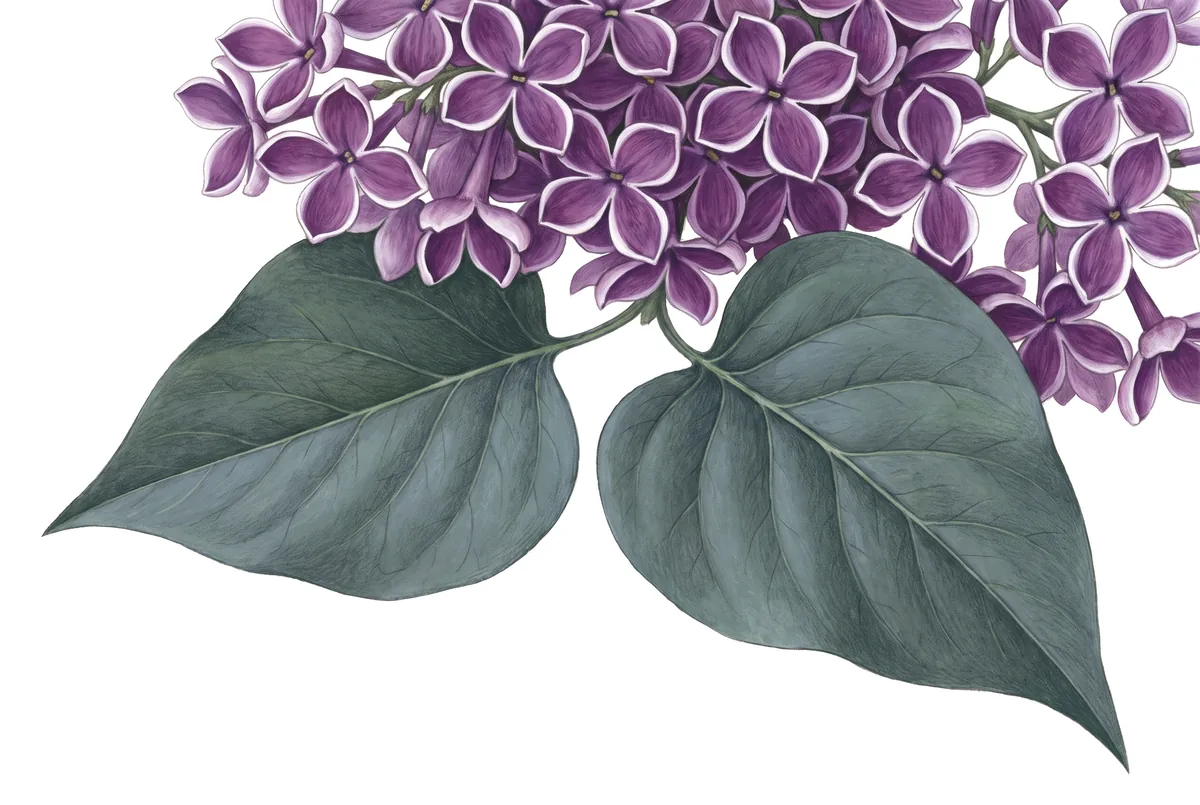
What sets Sensation apart is the flower: the pale edge on each purplish red floret, by HortFlora. Another lilac with its own page is Mrs Edward Harding.
What to check before you buy
Growers on HortOS list it as Syringa vulgaris Sensation and as Lilac Sensation Syringa vulgaris; both are this cultivar. HortFlora says lilac cultivars are propagated by grafting onto privet or lilac seedling stocks, or by budding, and warns that the rootstock can overtake the grafted cultivar; ask how a line was propagated. The guides to nursery pot sizes and judging nursery plant quality cover the size ladder and what to check in the pot.
Cautions
The common lilac suckers. The Missouri Botanical Garden advises removing root suckers promptly, particularly on grafted plants, and VicFlora says the common lilac sometimes persists around old gardens in Victoria by suckering.
Prices are set by each grower and shown ex GST. Availability is confirmed by the grower at order.
Common questions
- Who grows Syringa vulgaris Sensation wholesale in Australia?
- 1 wholesale grower lists Syringa vulgaris Sensation on HortOS right now, each with their own pot sizes and trade prices. They are in Victoria. The growers are named on this page.
- What pot sizes does Syringa vulgaris Sensation come in?
- Growers on HortOS list Syringa vulgaris Sensation in 250mm.
- How do I order Syringa vulgaris Sensation from these growers?
- HortOS is for the trade. Add the lines you want to a list and send it: each grower gets their part of the order by email, confirms what they have and quotes freight, and nothing is bought until you approve it. Listing, searching and ordering are free.
- What do Sensation's flowers look like?
- HortFlora describes long clusters of purplish red flowers with broad, pale margins. The University of Saskatchewan, in Canada, calls each floret dark purple with a distinct white edge and richly scented.
- How big does lilac Sensation grow?
- The Missouri Botanical Garden gives an upright shrub 2.4 to 4.6 m tall and 1.8 to 3.7 m wide. No Australian reference read gives a size for this cultivar.
- Will lilac Sensation flower in a warm climate?
- No Australian reference read gives the climates it suits. The Missouri Botanical Garden does not recommend the common lilac where summers are hot and humid, because its chilling needs are hard to meet and flowering is unreliable there.
- Where did Sensation come from?
- HortFlora says it was raised at Aalsmeer in the Netherlands in 1938, as a sport of the lilac 'Hugo de Vries'.
- Has the common lilac gone wild in Australia?
- FloraBase records it as alien to Western Australia, from the Jarrah Forest region. VicFlora says it sometimes persists around old gardens by suckering but is apparently not yet truly naturalised in Victoria.
Sources
- GBIF species match API (Syringa vulgaris)
- HortFlora, the Horticultural Flora of South-eastern Australia (Royal Botanic Gardens Victoria): Syringa vulgaris 'Sensation', and the genus Syringa
- VicFlora, Flora of Victoria (Royal Botanic Gardens Victoria): the family Oleaceae, its note on the common lilac
- FloraBase, the Western Australian Flora (Western Australian Herbarium): Syringa vulgaris
- HortFlora, Horticultural Flora of South-eastern Australia (Royal Botanic Gardens Victoria): Syringa vulgaris 'Sensation'
- Missouri Botanical Garden Plant Finder: Syringa vulgaris 'Sensation'
- RHS (Royal Horticultural Society) plant page: Syringa vulgaris 'Sensation'
- University of Connecticut Plant Database: Syringa vulgaris, with its cultivars
- North Carolina State Extension Gardener Plant Toolbox: Syringa vulgaris, its cultivar list
- Missouri Botanical Garden Plant Finder: Syringa vulgaris (common lilac)
- HortFlora, Horticultural Flora of South-eastern Australia (Royal Botanic Gardens Victoria): Syringa vulgaris
- University of Saskatchewan, Gardening at USask: Lilacs
- The HortOS catalogue for Australia (the listings Syringa vulgaris Sensation and Lilac Sensation Syringa vulgaris on au.hortosapp.com)
- The HortOS guides for Australia (nursery pot sizes; judging nursery plant quality)
The growers, sizes and prices above are live and change as lists arrive. Cite this page: HortOS, Lilac Sensation (Syringa vulgaris 'Sensation'), https://au.hortosapp.com/plants/syringa-vulgaris-sensation.
Found a fact that is wrong? Tell us and it is checked against its source.