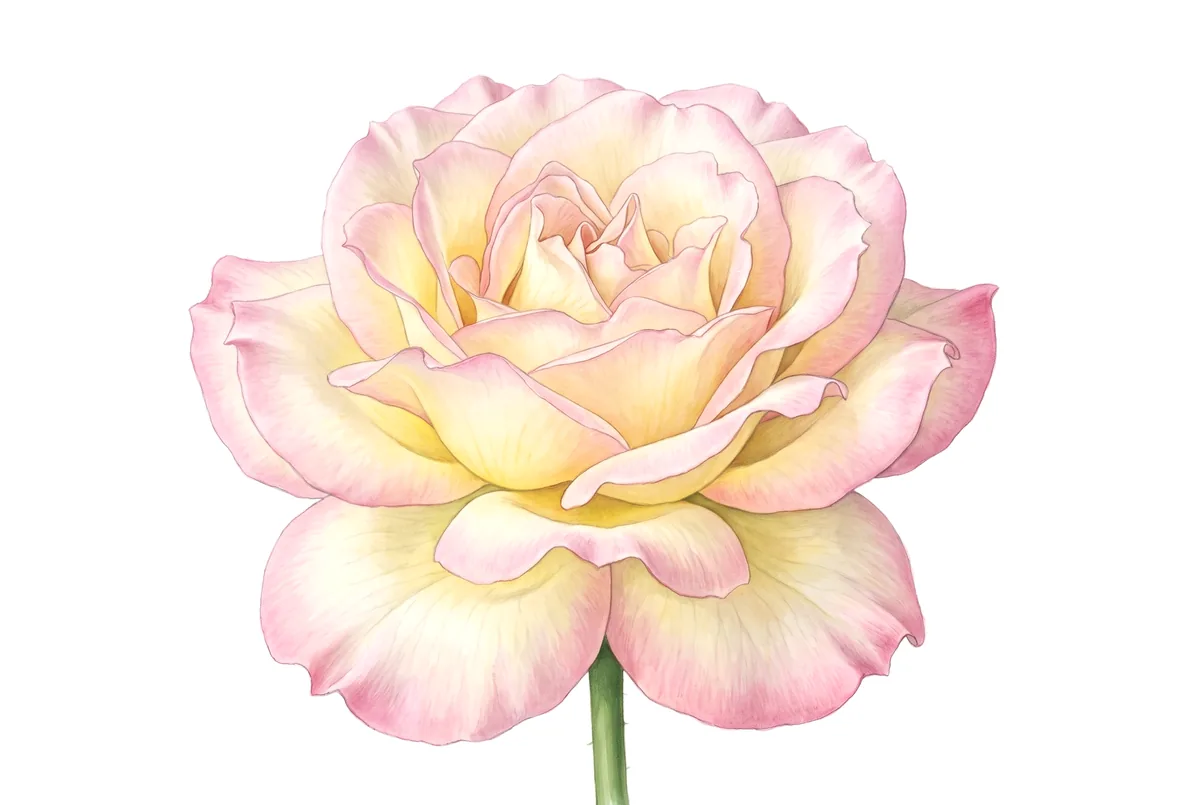
- Type
- Deciduous shrub
- Height
- 1 m to 1.8 m
- Spread
- 0.5 m to 1 m
- Flowers
- Creamy yellow, summer and autumn, almost continuously, by the RHS
- Sun
- Full sun (the RHS; Chicago Botanic Garden)
- In Australia
- Not native
| Size | Grower | PricePrice ex GST | ||
|---|---|---|---|---|
| 125mm | Lumpys Nursery & Landscape Yard125mm | $13.98 | ||
| 140mm | Kingscliff Nursery140mm | $10.00 | ||
| 200mm | Kingscliff Nursery200mm | $20.00 | ||
| 200mm2 ft Standards | Eumundi Roses200mm · 2 ft Standards | $32.00 | ||
| 200mm | Plant Nest200mm | $39.95 | ||
| 200mm | Eumundi Roses200mm | $40.00 | ||
| 230mm | Eumundi Roses230mm | $52.00 | ||
| 250mm | Kingscliff Nursery250mm | $40.00 | ||
| 250mm3ft Std | Lumpys Nursery & Landscape Yard250mm · 3ft Std | $55.00 | ||
| 250mm | Eumundi Roses250mm | $62.00 | ||
| 250mm | Heritage Nursery250mm | $64.99 | ||
| 250mm | Plant Nest250mm | $69.95 | ||
| 250mm | Botanicah Nursery250mm | $135.00 | ||
| 300mm | The Growing Trend300mm | Price on application. Sign in to ask the grower. | ||
| 500mm | Designer Plants500mm | $29.95 | ||
| 530mm | The Plants Project530mm | $229.00 | ||
| Bareroot Bag | Plant NestBareroot Bag | $29.95 |
Also grown by 19 nurseries (no sizes or prices listed)
Enquire with them for sizes and prices.
- Bamboo WhitsundaySugarloaf, QLD
- Bibra Lake NurseryBibra Lake, WA
- Chandlers NurserySandy Bay, TAS
- Coolart NurserySomerville, VIC
- Drouin NurseryDrouin, VIC
- Forbidden Fruits NurseryMyocum, NSW
- Natures Colours NurseryNSW
- Penfield Gardens Rose NurseryPenfield Gardens, SA
- Princess Fancy-PlantsChandler, QLD
- Proptec Pty LtdRedland Bay, QLD
- RareplantsNambour, QLD
- Robin Godfrey BonsaiOxley, QLD
- Rockbank NurseryRockbank, VIC
- Rose Sales OnlineClonbinane, VIC
- Snowy River LavenderAvonside, NSW
- The Green Vine PlantsBraddon, ACT
- The Swiss Rose Garden NurseryBaldivis, WA
- Two Green MenNorth Perth, WA
- Wagner's Rose NurseryKalangadoo, SA
Growing peace rose
Position and soil. The RHS gives Peace full sun and a fertile, humus-rich soil that is moist but well drained, in chalk, clay, loam or sand of any pH, and says it tolerates poor soil. For the best flowering it asks for a balanced fertiliser and mulch in late winter or early spring and fertiliser again in early summer. Chicago Botanic Garden gives full sun and moderate moisture.
Size and climate. The RHS puts it in its 1 to 1.5 m height class and 0.5 to 1 m spread class, and rates it H6, hardy in all of the United Kingdom and northern Europe; Chicago Botanic Garden gives it up to 1.8 m high and USDA zones 5 to 9. These are overseas references, and no Australian reference read gives a climate zone or a frost figure for Peace.
Problems. The RHS lists aphids, rose leafhopper, glasshouse red spider mite, scale insects, caterpillars and two sawflies, and black spot, rose rust, replant disease, dieback, powdery mildews, rose blindness, flower balling and honey fungus as problems it may have in the United Kingdom. The RHS gives hardwood cuttings in autumn or chip budding in summer for propagation.
Using peace rose
The RHS suggests Peace for cottage and informal gardens, city and courtyard gardens, flower borders and beds, hedging and screens, and calls it excellent for cut flowers. Chicago Botanic Garden gives it for a bed or border or as a specimen, says its size suits the back of a flower border, and says the blooms attract butterflies. HortFlora says most of the Australian rose trade is built around Hybrid Teas, the group Peace belongs to. A climbing form, Peace Climbing, is a sport of the bush raised in 1950, by HortFlora.
What to check before you buy
Check that a line listed as Peace is the bush rose and not the climbing sport, which HortFlora describes as taller and more spreading than the bush. HortFlora says Peace is a commercial name and that the true cultivar name appears to be 'Madame A. Meilland'; Chicago Botanic Garden adds that it is sold as Gioia in Italy and Gloria Dei in Germany. What to check on roots and pests is in the guide to judging nursery plant quality.
Cautions
The RHS describes the Hybrid Teas as thorny shrubs, advises gloves and other protection when handling Peace, and says its fruit are ornamental and not to be eaten.
Prices are set by each grower and shown ex GST. Availability is confirmed by the grower at order.
Common questions
- Who grows Rosa Peace wholesale in Australia?
- 9 wholesale growers list Rosa Peace on HortOS right now, each with their own pot sizes and trade prices. They are in Victoria, New South Wales, Queensland and the ACT. The growers are named on this page.
- What pot sizes does Rosa Peace come in?
- Growers on HortOS list Rosa Peace in 125mm, 140mm, 200mm, 230mm, 250mm, 300mm, 500mm, 530mm and Bareroot Bag.
- What does Rosa Peace cost wholesale?
- The median trade price in a 250 mm pot is $67.47 ex GST, across 4 growers who price it. Prices by pot size and state are on its trade price page.
- How do I order Rosa Peace from these growers?
- HortOS is for the trade. Add the lines you want to a list and send it: each grower gets their part of the order by email, confirms what they have and quotes freight, and nothing is bought until you approve it. Listing, searching and ordering are free.
- Is Peace the same rose as Madame A. Meilland?
- Yes. The RHS lists Peace as the trade name with 'Madame A. Meilland' as the cultivar name, and HortFlora says Peace is a commercial name used for its introduction in the United States in 1945, the name given on its release in France in 1942 being the true one.
- What colour is the Peace rose?
- Light, creamy yellow tinted with pink, the pink deepening to red as the bloom ages, by the RHS. HortFlora, in an entry that sits among its climbing roses, describes the petals as edged with pink, turning paler yellow and deeper red with age, and Chicago Botanic Garden gives pink, yellow and white blooms.
- How big does a Peace rose grow?
- The RHS describes it as about 1.2 m tall, in its 1 to 1.5 m height class, and 0.5 to 1 m wide; Chicago Botanic Garden gives up to 1.8 m high. No Australian reference read gives it a size of its own.
- Is the Peace rose fragrant?
- The RHS and Chicago Botanic Garden call the blooms fragrant; HortFlora, the Australian reference, calls them slightly fragrant in an entry that sits among its climbing roses.
- Where does the Peace rose come from?
- It was raised in France, from a pollination made in June 1935 and budded in 1936, by HortFlora, which says its true ancestry is debated. It was released in France in 1942 and introduced in the United States as Peace in 1945, at the end of World War II.
Sources
- GBIF species match API (the genus Rosa)
- HortFlora, the Horticultural Flora of South-eastern Australia (Royal Botanic Gardens Victoria): Rosa 'Peace'
- HortFlora, the Horticultural Flora of South-eastern Australia (Royal Botanic Gardens Victoria): the genus Rosa, with its account of the Hybrid Teas and the climbing roses
- Royal Horticultural Society plant profile: Rosa Peace ('Madame A. Meilland') (HT), a British reference (for the plant's names, size and looks)
- Royal Horticultural Society plant profile: Rosa Peace ('Madame A. Meilland') (HT), a British reference (for how the plant grows and is used)
- Chicago Botanic Garden plant finder: Rosa 'Peace', an American reference
- The HortOS catalogue (the listing name Peace)
- The HortOS guides (judging nursery plant quality)
The growers, sizes and prices above are live and change as lists arrive. Cite this page: HortOS, Peace rose (Rosa), https://au.hortosapp.com/plants/rosa-peace.
Found a fact that is wrong? Tell us and it is checked against its source.