Pyrus Chastity
Pyrus triploida 'JFS-NCPX2'
Pear
Part of Pyrus: see them all
No grower lists this plant right now
- Type
- Deciduous tree
- Height
- 7.6 m to 10.7 m
- Spread
- 4.6 m to 7.6 m
- Flowers
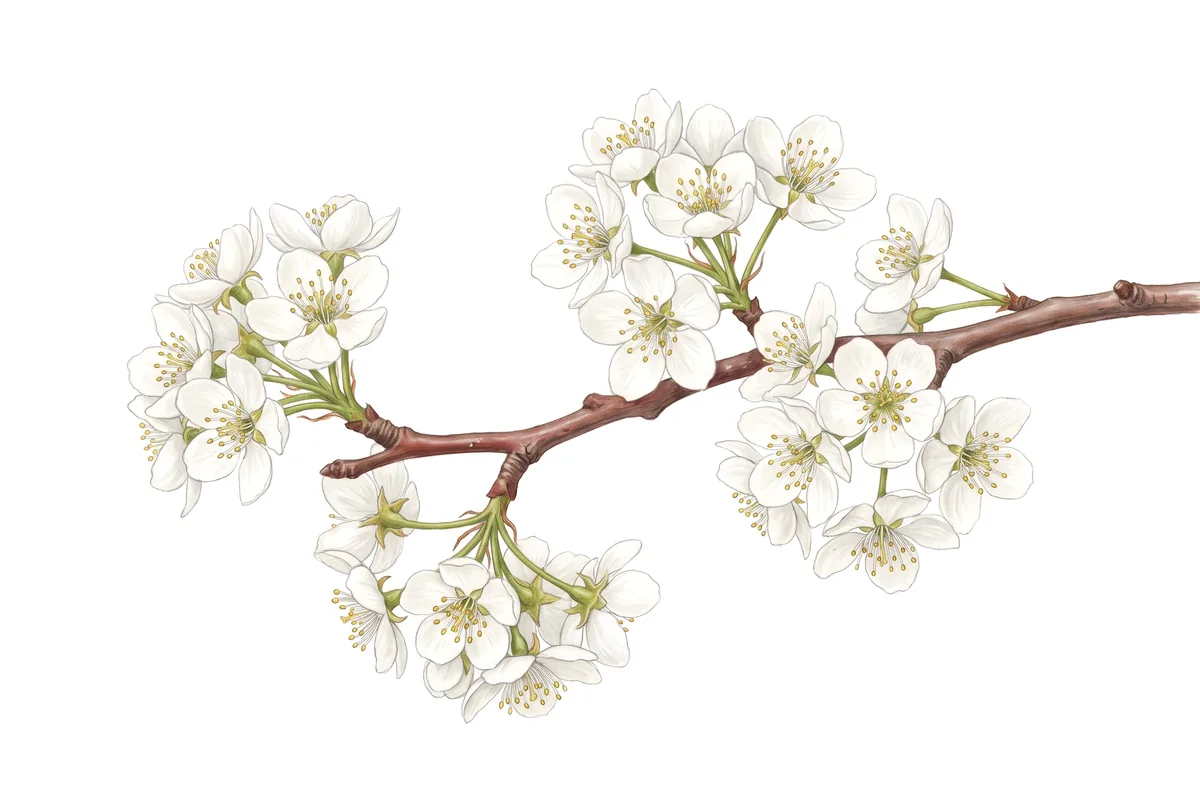
- White, spring
- Sun
- Full sun (the North Carolina toolbox)
- In Australia
- Not native
Growing chastity pear
Position and soil. The North Carolina toolbox grows Chastity in full sun, in loamy, moist, well-drained soil that is acid to neutral, and lists clay, sand and soils high in organic matter among those it takes. It gives USDA zones 5a to 9a.
Health. The toolbox says it resists fire blight, powdery mildew and leaf scorch, and the nursery that introduced it calls it fire blight resistant; the crop improvement lab says it is highly resistant to fire blight. Watch for aphids, scale and spider mites, the toolbox says, and root rot can set in where the soil stays too wet. These are American accounts.
Form. The nursery that introduced it describes a broadly pyramidal young tree maturing to an upright oval with sturdy branches and a dominant central leader, and the lab says it has good branch structure and an upright, pyramidal form.
Using chastity pear
The North Carolina toolbox suggests Chastity as a specimen, along a driveway or a border, as a shade tree or as an accent, with three seasons of interest: spring flowers, glossy summer leaves and autumn colour. It reaches 7.6 to 10.7 m high and 4.6 to 7.6 m wide, by the toolbox; the nursery that introduced it gives about 10.7 m by 7.6 m. The nursery that introduced it says the tree is poised to replace other flowering pears where invasiveness is a concern.
What to check before you buy
The point of Chastity is that it sets little seed. Callery pears have become weedy, the crop improvement lab says, and it bred this hybrid to be highly infertile and named it Pyrus x triploida to set it apart from the fertile kinds; the toolbox says it produces little viable seed, reducing weediness. Callery pear has a page of its own, Callery pear. Growers list it as Pyrus x triploida Chastity, with or without the code JFS-NCPX2. The table above shows the sizes growers list. Stock crossing a state border moves under the state and territory biosecurity rules. The guide to judging nursery plant quality covers what to check in the pot.
Prices are set by each grower and shown ex GST. Availability is confirmed by the grower at order.
Common questions
- How big does a Chastity pear grow?
- The North Carolina toolbox gives 7.6 to 10.7 m high and 4.6 to 7.6 m wide, oval at maturity; the nursery that introduced it gives about 10.7 m high and 7.6 m wide.
- Is Chastity pear sterile?
- Close to it. The crop improvement lab that bred it calls it highly infertile, and the North Carolina toolbox says it produces little viable seed and little fruit.
- How is Chastity different from other ornamental pears?
- It is a triploid hybrid bred to set little seed, where Callery pears have become weedy, by the lab that bred it. The lab and the toolbox also say it resists fire blight.
- What colour is Chastity pear in autumn?
- Red, orange, yellow and purple, by the North Carolina toolbox and the nursery that introduced it.
- Where does Chastity pear grow best?
- In full sun and a loamy, moist, well-drained, acid to neutral soil, by the North Carolina toolbox, which warns that root rot can set in where the soil stays too wet.
Sources
- GBIF species match API (the genus Pyrus; GBIF does not match the hybrid name)
- North Carolina State Extension Gardener Plant Toolbox: Pyrus x triploida Chastity 'NCPX2'
- J. Frank Schmidt and Son Co., the nursery that introduced it: Chastity pear
- J. Frank Schmidt and Son Co.: Chastity pear data sheet (PDF)
- NC State Mountain Crop Improvement Lab, Nursery and Landscape Notes, fall 2025: Fixing invasive nursery crops (PDF)
- The HortOS catalogue (the names growers list it under)
The growers, sizes and prices above are live and change as lists arrive. Cite this page: HortOS, Chastity pear (Pyrus x triploida 'NCPX2'), https://au.hortosapp.com/plants/pyrus-x-triploida-jfs-chastity.
Found a fact that is wrong? Tell us and it is checked against its source.