Prunus laurocerasus
Flowering Cherry / Flowering Plum
Every Prunus laurocerasus on HortOS in one place: the plain species and 1 variety. Pick a size to see it across all of them.
Part of Prunus: see them all
4 growers · 11 sizes · from $1.70 ex GST
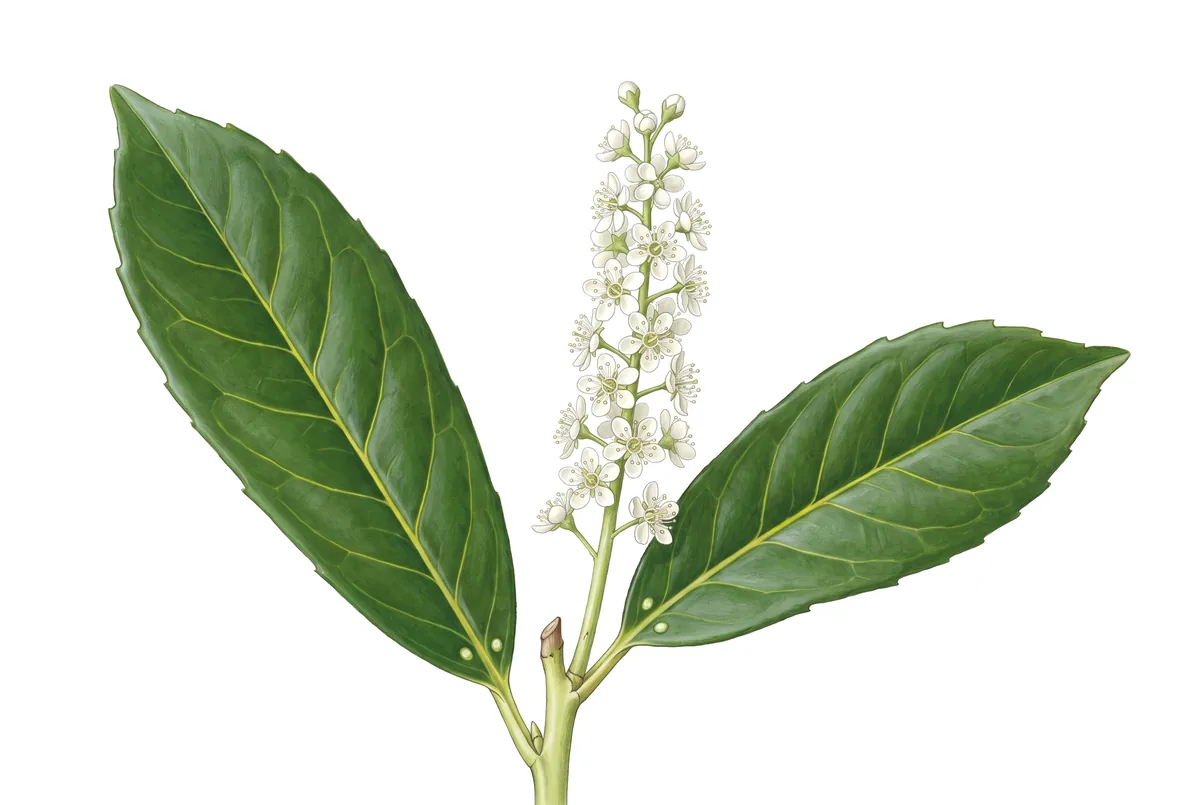
- Type
- Evergreen shrub
- Height
- 3 m to 8 m
- Spread
- 2.4 m to 8 m
- Growth
- Fast
- Flowers
- White, spring
- Sun
- Full sun to deep shade by North Carolina State Extension; full sun or partial shade by the RHS
- In Australia
- Naturalised
| Size | Grower | PricePrice ex GST | ||
|---|---|---|---|---|
| 50mm | Devon Tubestock Nursery50mm | $1.70 | ||
| 140mm | Yamina Rare PlantsOtto Luyken140mm | $47.62 | ||
| 200mm | Orths NurseryOtto Luyken200mm | $14.00 | ||
| 200mm | Yamina Rare PlantsOtto Luyken200mm | $50.29 | ||
| 450mm | Orths NurseryOtto Luyken450mm | $14.00 | ||
| 25L | Winter Hill Tree Farm25L | Price on application. Sign in to ask the grower. | ||
| 45L | Winter Hill Tree Farm45L | Price on application. Sign in to ask the grower. | ||
| 75L | Winter Hill Tree Farm75L | Price on application. Sign in to ask the grower. | ||
| 100L | Winter Hill Tree Farm100L | Price on application. Sign in to ask the grower. | ||
| 200L | Winter Hill Tree Farm200L | Price on application. Sign in to ask the grower. | ||
| 400L | Winter Hill Tree Farm400L | Price on application. Sign in to ask the grower. | ||
| 1000L | Winter Hill Tree Farm1000L | Price on application. Sign in to ask the grower. |
Also grown by 1 nursery (no sizes or prices listed)
Enquire with them for sizes and prices.
- Bell River NurserySpring Creek, NSW
Growing cherry laurel
Position. North Carolina State Extension gives full sun to deep shade, and the RHS full sun or partial shade. Its frost ratings are overseas ones: H5 on the RHS scale, and American zones 6 to 8.
Soil. The RHS calls it easy in any moist but well-drained, moderately fertile soil, and says it may turn chlorotic on poor, shallow chalk; North Carolina State Extension says it takes most soils and does best in rich soil high in organic matter.
Pruning. North Carolina State Extension calls it tolerant of heavy pruning, and the RHS prunes a hedge of it in late spring or early summer.
Spread. The Australian Plant Census records it naturalised in South Australia, New South Wales, the Australian Capital Territory and Victoria, and the cherry laurel page sets out what the Australian weed references say.
Using cherry laurel
The RHS lists it for hedging and screens and calls it a superb hedging shrub, and North Carolina State Extension suggests a screen for shade, a tall hedge, a mass planting in a woodland or shade garden, or a specimen. The Blue Mountains City Council weed page says it has been used widely in the Mountains as a hedge plant, and that birds eating the fruit and dumped garden waste carry it into the bush there; the cherry laurel page covers what that means for a planting.
What to check before you buy
Growers list it as Prunus laurocerasus, as Cherry Laurel and as Otto Luyken, which North Carolina State Extension calls a compact cultivar. The Weeds of Australia fact sheet regards it as an environmental weed in three states, and the cherry laurel page sets out how it spreads into native forest; see also the cautions.
Cautions
For the genus Prunus, the cherries, the ASPCA lists the plants as toxic to dogs, cats and horses, from cyanogenic glycosides in the stems, leaves and seeds. The RHS says the seed kernels are harmful if eaten and the plant harmful to pets.
Blue Mountains City Council lists it as a Local Priority Weed in the Blue Mountains, to be fully and continuously suppressed and destroyed. The Weeds of Australia fact sheet (2016) regards it as an environmental weed in Victoria, New South Wales and South Australia, and as a potential environmental weed or sleeper weed in other parts of southern Australia. (Blue Mountains City Council Local Priority Weeds; Weeds of Australia fact sheet (Environmental Weeds of Australia, Biosecurity Queensland edition; Identic Pty Ltd, 2016))
Prices are set by each grower and shown ex GST. Availability is confirmed by the grower at order.
Common questions
- Who grows Prunus laurocerasus wholesale in Australia?
- 4 wholesale growers list Prunus laurocerasus on HortOS right now, each with their own pot sizes and trade prices. They are in Victoria and New South Wales. The growers are named on this page.
- What pot sizes does Prunus laurocerasus come in?
- Growers on HortOS list Prunus laurocerasus in 50mm, 140mm, 200mm, 450mm, 25L, 45L, 75L, 100L, 200L, 400L and 1 more sizes.
- How do I order Prunus laurocerasus from these growers?
- HortOS is for the trade. Add the lines you want to a list and send it: each grower gets their part of the order by email, confirms what they have and quotes freight, and nothing is bought until you approve it. Listing, searching and ordering are free.
- Is cherry laurel the same as Portuguese laurel?
- No. HortFlora treats them as two species: cherry laurel has green leaf stalks and young shoots, and Portuguese laurel, Prunus lusitanica, red ones.
- How big does cherry laurel grow?
- HortFlora gives it to 8 m tall and VicFlora about 8 m. The RHS gives 4 to 8 m high and more than 8 m wide, and North Carolina State Extension 3 to 6.1 m high and 2.4 to 3 m wide.
- Is cherry laurel a weed in Australia?
- The Australian Plant Census records it naturalised in South Australia, New South Wales, the Australian Capital Territory and Victoria, and the Weeds of Australia fact sheet regards it as an environmental weed in Victoria, New South Wales and South Australia.
- When does cherry laurel flower?
- In spring by PlantNET, and in September and October, early to mid spring, by VicFlora. The Blue Mountains City Council weed page gives September to November.
Sources
- GBIF species match API (Prunus laurocerasus)
- Australian Plant Census (APC): Prunus laurocerasus, the taxon entry
- PlantNET, the New South Wales flora online (Royal Botanic Garden Sydney): Prunus laurocerasus
- Atlas of Living Australia (Prunus laurocerasus)
- ASPCA Animal Poison Control Center, toxic and non-toxic plants: Cherry (Prunus species)
- VicFlora, the Flora of Victoria (Royal Botanic Gardens Victoria): Prunus laurocerasus
- HortFlora, the Horticultural Flora of South-eastern Australia (Royal Botanic Gardens Victoria): Prunus laurocerasus
- HortFlora, the Horticultural Flora of South-eastern Australia (Royal Botanic Gardens Victoria): Prunus lusitanica
- Weeds of Australia fact sheet (Environmental Weeds of Australia, Biosecurity Queensland edition): Prunus laurocerasus
- Blue Mountains City Council, Weeds of the Blue Mountains: Cherry laurel (Prunus laurocerasus)
- Royal Horticultural Society (RHS) plant profile: Prunus laurocerasus (cherry laurel)
- North Carolina State Extension Gardener Plant Toolbox: Prunus laurocerasus
- The HortOS catalogue (the names growers list it under)
The growers, sizes and prices above are live and change as lists arrive. Cite this page: HortOS, Cherry laurel (Prunus laurocerasus), https://au.hortosapp.com/plants/prunus-laurocerasus.
Found a fact that is wrong? Tell us and it is checked against its source.