Prunus domestica Sugar
Flowering Cherry / Flowering Plum
One of 8 Plum - D ente Prunus domestica varieties: see them all
7 growers · 5 sizes · from $31.50 ex GST
- Type
- Deciduous tree
- Flowers
- White, late winter to mid-spring in Australia, for plums by the Pollination Aware study
- Sun
- Full sun, by the NC State toolbox (for the species)
- In Australia
- Not native
| Size | Grower | PricePrice ex GST | ||
|---|---|---|---|---|
| 250mm | Flemings Nurseries250mm | $31.50 | ||
| 250mm | Eumundi Roses250mm | $60.00 | ||
| 300mm | Blackall Range Nurseries300mm | $65.00 | ||
| 300mm | ILandscape.com.au300mm | $110.00 | ||
| 400mm | Camden Nurseries400mm | $85.91 | ||
| 29L | Tallegalla Fruit Trees29L | Price on application. Sign in to ask the grower. | ||
| 50L | Bigga Trees50L | $105.00 |
Also grown by 2 nurseries (no sizes or prices listed)
Enquire with them for sizes and prices.
- Cedar Nursery + DesignArmidale, NSW
- Rockbank NurseryRockbank, VIC
Growing sugar prune
What is known of Sugar itself comes from one saved text, the United States plant patent for Sutter, which sets the new prune against its parent. By that patent Sugar is decidedly alternate bearing and its trees are very open in form, less dense than Improved French or Sutter. No reference read gives Sugar's height, spread, chill need or frost figure.
For the species. The NC State toolbox, an American reference, gives European plum full sun and a fertile, moist, well-drained soil, and says the codling moth is its main insect, with webworms, mites and borers; as American references report it, viral, fungal and bacterial diseases, powdery mildew, rusts and brown rot can also affect it. It calls the species a large shrub or small tree of 3 to 6 m high and wide, and HortFlora a deciduous tree to 8 m.
Pollination. The Pollination Aware case study for Australian plums and prunes says the majority of plum and prune cultivars are self-incompatible and need another cultivar's pollen, usually carried by honey bees.
Using sugar prune
Sugar is a fruit tree. HortFlora calls the European plums the edible plums, prunes and gages among them, and the Pollination Aware study says the d'Agen plum, the prune plum, is the variety most Australian prunes are made from. The Sutter patent describes Sugar as a prune cultivar and sets its fruit at about 10 per cent larger than Improved French, which the patent calls the industry standard, in an average to light crop. Its stone matters to anyone drying the fruit: the patent says the large wing on it can leave stone fragments in mechanically pitted prunes. By the patent, Sugar ripens about five days to a week before Sutter.
What to check before you buy
No reference read gives the colour of Sugar's flesh. The table above shows the sizes growers list; the guide to nursery pot sizes explains them, and the guide to nursery plant quality covers roots, pests and hardening off. The Australian Plant Census lists European plum as naturalised in South Australia, New South Wales, Victoria and Tasmania, and notes that the identity below species of the plants naturalised in New South Wales and Victoria is uncertain. Stock moving between states travels under the state and territory biosecurity rules. The drawback the patent names is alternate bearing.
Cautions
The ASPCA lists plum (Prunus domestica) as toxic to dogs, cats and horses: the stems, leaves and seeds contain cyanide, particularly as they wilt. The NC State toolbox says the species may have some spines.
Used forfruit and orchardedible
Prices are set by each grower and shown ex GST. Availability is confirmed by the grower at order.
Common questions
- Who grows Prunus domestica Sugar wholesale in Australia?
- 7 wholesale growers list Prunus domestica Sugar on HortOS right now, each with their own pot sizes and trade prices. They are in Queensland, Victoria, New South Wales and Western Australia. The growers are named on this page.
- What pot sizes does Prunus domestica Sugar come in?
- Growers on HortOS list Prunus domestica Sugar in 250mm, 300mm, 400mm, 29L and 50L.
- How do I order Prunus domestica Sugar from these growers?
- HortOS is for the trade. Add the lines you want to a list and send it: each grower gets their part of the order by email, confirms what they have and quotes freight, and nothing is bought until you approve it. Listing, searching and ordering are free.
- What does a Sugar prune look like?
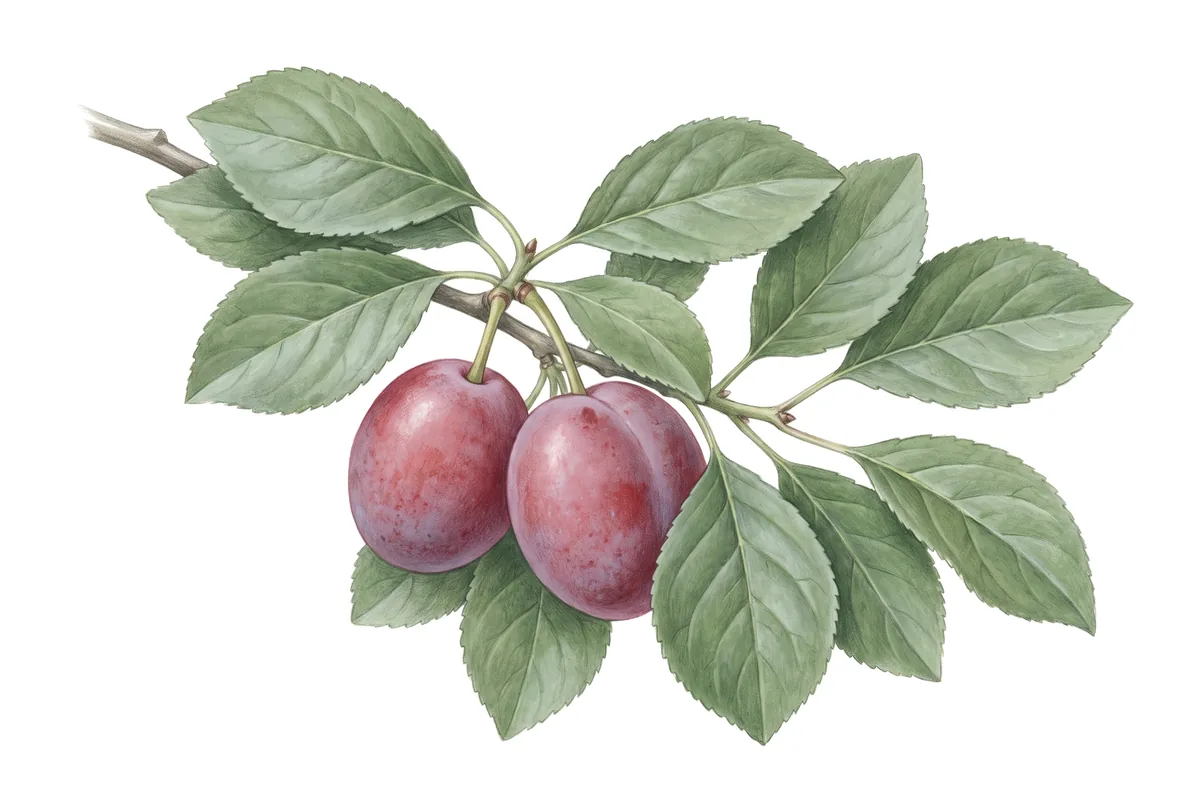
- The Sutter plant patent describes its parent Sugar's fruit as oval, medium-sized and reddish to reddish-purple, with a large stone that clings tightly to the flesh and commonly carries a large protruding wing along the basal suture.
- Is Sugar a freestone or clingstone plum?
- Clingstone, by the University of California's plant patent for Sutter, which says Sugar's stone tightly adheres to the fruit flesh. The same patent says the stone is large, and gives Sutter a smaller stone with no wing.
- Does Sugar plum need a pollinator?
- No reference read says. The Pollination Aware study for Australian plums and prunes says the majority of plum and prune cultivars are self-incompatible and need pollen from another cultivar, carried by bees.
- Does Sugar crop every year?
- Not evenly. The Sutter patent calls Sugar decidedly alternate bearing, where its offspring has little tendency to alternate bear.
- When does Sugar ripen?
- The patent puts Sugar's harvest about five days to a week before Sutter's. Plums flower in Australia from late winter to mid-spring, by the Pollination Aware study.
Sources
- GBIF species match API (the species name and family)
- Australian Plant Census (APC), Council of Heads of Australasian Herbaria: Prunus domestica
- Atlas of Living Australia: Prunus domestica
- ASPCA Animal Poison Control, Toxic and Non-Toxic Plants: Plum (Prunus domestica)
- United States Plant Patent PP12,398, Prune tree named 'Sutter' (University of California), which describes its seed parent Sugar
- HortFlora, the Horticultural Flora of South-eastern Australia (Royal Botanic Gardens Victoria): Prunus x domestica, European plum
- North Carolina State Extension Gardener Plant Toolbox: Prunus domestica (the species' leaf, flower, fruit and size)
- North Carolina State Extension Gardener Plant Toolbox: Prunus domestica (an American reference, for how the species grows: its words are labelled as its own)
- Pollination Aware, the case study for plums and prunes (Rural Industries Research and Development Corporation, published by Plant Health Australia)
- The HortOS guides (nursery-pot-sizes; judging-nursery-plant-quality)
The growers, sizes and prices above are live and change as lists arrive. Cite this page: HortOS, Sugar prune (Prunus domestica 'Sugar'), https://au.hortosapp.com/plants/prunus-domestica-sugar.
Found a fact that is wrong? Tell us and it is checked against its source.