Mint - Common Mentha viridis
No grower lists this plant right now
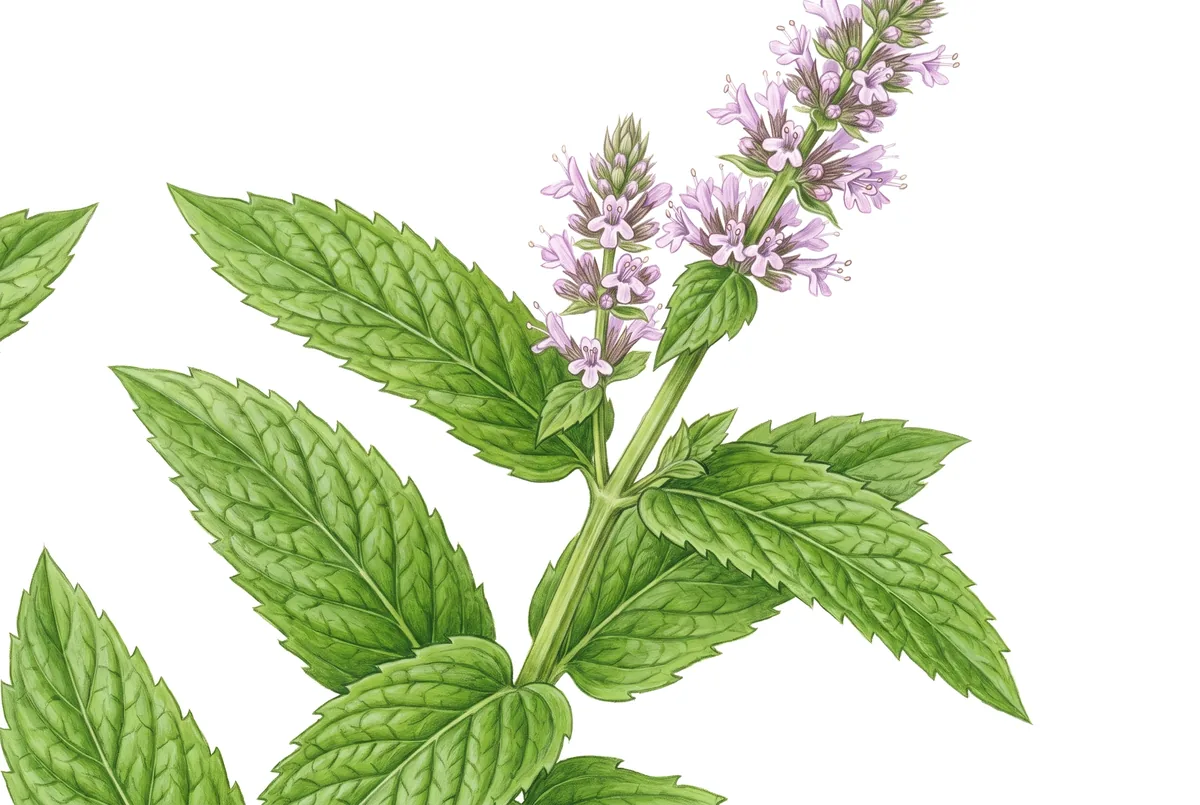
- Type
- Perennial
- Height
- 0.3 m to 1 m
- Spread
- 0.3 m to 0.6 m
- Growth
- Fast
- Flowers
- Lilac, summer to autumn
- Sun
- Full sun; tolerates part shade
- In Australia
- Naturalised
Growing common mint
Position and soil. The North Carolina toolbox, an American reference, gives full sun, tolerating part shade, and a moist, well-drained soil rich in organic matter; it takes a wide range of soils but does poorly in dry ones. In New South Wales the state flora records it naturalised in damp ground along drains and creeks.
Spread. The stems root wherever they touch the ground and the plant runs by rhizomes. The North Carolina toolbox calls it best grown in a container because it spreads rampantly, and suggests soil barriers in a border or a raised bed to hold it; HortFlora says most mints are best confined in some way.
Upkeep. The toolbox says to shear it after flowering to remove the spikes and bring on new leafy growth.
Propagation. By division, cuttings and runners, by HortFlora, and from seed as well by the North Carolina toolbox. The New South Wales flora notes that this mint sets fruit, unlike peppermint.
Pests. The North Carolina toolbox names rust and leaf spot as its two main diseases, both fungal; that is an American observation. No Australian reference read gives a frost or drought rating.
Using common mint
It is grown for its leaves. The North Carolina toolbox rates it among the best-flavoured mints and uses the leaves and flowers, fresh or dried, in teas, sauces and sweets as well as with lamb; HortFlora notes that its oil flavours most chewing gums. The toolbox adds that its spreading can serve as a ground cover in moist places, and that it draws bees and butterflies. The HortOS guide to planting an allotment or community plot warns that mint spreads under paths into the next plot.
What to check before you buy
Mint lines on growers' lists name a kind, and the kinds are different plants: this row is spearmint, and growers list peppermint, apple, Corsican and others beside it under the same first word, so match the botanical name before comparing prices. The plant is naturalised across southern and eastern Australia. The Weeds of Australia fact sheet, published in 2016, regarded it then as an environmental weed in Victoria and Western Australia and a sleeper weed elsewhere in southern Australia, by its account at that date; check your state's current weed list. The table above shows the sizes growers list. Stock crossing a state border moves under the state and territory biosecurity rules on moving plants and soil.
Cautions
The ASPCA's plant list, an American register, gives mint, Mentha species, as toxic to dogs, cats and horses: the essential oils cause vomiting and diarrhoea when large amounts are eaten. HortFlora adds that most mints spread by invasive creeping rhizomes and are best confined.
Used forediblepots and courtyardsgroundcoverpollinators and wildlife
Prices are set by each grower and shown ex GST. Availability is confirmed by the grower at order.
Common questions
- Is common mint the same as spearmint?
- Yes, as growers list it under Mentha viridis. GBIF treats Mentha viridis as a synonym of Mentha spicata, spearmint (of its typical subspecies); HortFlora and the Weeds of Australia fact sheet list it among spearmint's names, and the Weeds of Australia sheet gives common mint, garden mint and spearmint among its common names.
- Where has spearmint naturalised in Australia?
- The Australian Plant Census records it as naturalised in Western Australia, South Australia, Queensland, New South Wales, Victoria and on Lord Howe and Norfolk Islands, formerly naturalised in the ACT and doubtfully naturalised in Tasmania. The Weeds of Australia fact sheet says it was previously naturalised in south-eastern Queensland.
- How do I stop mint spreading?
- The North Carolina toolbox suggests growing it in a container, or holding it in a border with soil barriers or a raised bed. HortFlora says most mints have invasive creeping rhizomes and are best confined.
- How tall does spearmint grow?
- To 1 m by the New South Wales flora and to nearly 1 m by HortFlora; the North Carolina toolbox gives 0.3 to 0.6 m high and wide.
- When does it flower?
- In summer to autumn by HortFlora; the New South Wales flora gives mostly January to March there. The flowers are tiny, lilac, pink or white, in a dense spike at the stem tips.
Sources
- GBIF Backbone Taxonomy: Mentha spicata
- GBIF Backbone Taxonomy: Mentha viridis
- Australian Plant Census (APC), Council of Heads of Australasian Herbaria: Mentha spicata
- PlantNET, the New South Wales flora online (Royal Botanic Garden Sydney): Mentha spicata; Mentha
- Weeds of Australia, Biosecurity Queensland edition (Identic Pty Ltd, 2016): Mentha spicata
- Atlas of Living Australia: Mentha spicata
- ASPCA (American Society for the Prevention of Cruelty to Animals) toxic and non-toxic plants list: Mint (Mentha sp.)
- HortFlora, the Horticultural Flora of South-eastern Australia (Royal Botanic Gardens Victoria): Mentha spicata; Mentha
- North Carolina State Extension Gardener Plant Toolbox: Mentha spicata
- The HortOS catalogue
- The HortOS guide: Planting an Allotment or Community Plot, Season by Season
The growers, sizes and prices above are live and change as lists arrive. Cite this page: HortOS, Common mint (Mentha spicata), https://au.hortosapp.com/plants/mint-common-mentha-viridis.
Found a fact that is wrong? Tell us and it is checked against its source.