Hibiscus tiliaceus Rubra (syn. Talipariti)
Cottonwood / Coastal Hibiscus
9 growers · 9 sizes · from $4.50 ex GST
- Type
- Evergreen tree
- Height
- 6 m to 8 m
- Spread
- 5 m to 8 m
- Growth
- Moderate
- Flowers
- Bright yellow, summer by South Australia's Plant Selector; spring by the grower's fact sheet
- Sun
- Full sun to part shade; a warm, sheltered position or sun, by the grower
- Drought
- Tolerant
- Salt wind
- Tolerant
- In Australia
- Native
| Size | Grower | PricePrice ex GST | ||
|---|---|---|---|---|
| 250mm | Benara Nurseries250mm | $32.25 | ||
| Tube | Wallum NurseriesTube | $4.50 | ||
| 200mm | Kenthurst Nursery200mm | $16.50 | ||
| 250mm | Frenchams Wholesale Nursery (WA)250mm | $20.00 | ||
| 300mm | Plant Connections300mm | $35.00 | ||
| 300mm | Kenthurst Nursery300mm | $60.00 | ||
| 45L | Plant Connections45L | $93.00 | ||
| 200L | Logans Nursery200L | $550.00 | ||
| 400mm | Swanes Nurseries Australia400mm | $130.00 | ||
| 200mm | Ridgey Didge200mm | $13.40 | ||
| 200L | Green Results200L | Price on application. Sign in to ask the grower. | ||
| 300L | Green Results300L | Price on application. Sign in to ask the grower. | ||
| 500L | Green Results500L | Price on application. Sign in to ask the grower. |
Also grown by 1 nursery (no sizes or prices listed)
Enquire with them for sizes and prices.
- Lakewood PropagationPalmwoods, QLD
Growing red cottonwood
Position. Full sun or part shade, by South Australia's Plant Selector; a warm, sheltered position or sun, by the grower's fact sheet. Both say it suits coastal sites: the Plant Selector says it can take full coastal exposure, and the grower that it suits coastal conditions.
Soil and water. The Plant Selector lists clay, loam or sand, acid to alkaline, and says it copes with poorly draining soil and salty bore water, needs minimal extra water and tolerates drought. The grower asks for well-drained soil and moderate water. No reference read gives a frost rating for it.
Pruning. The City of Parramatta's sheet for the Red Cottonwood, which gives the botanic name as Hibiscus tiliaceus, says it reacts well to pruning and grows back thick.
The species page carries the wild cottonwood's range, its rooting branches and its tolerance of waterlogged ground, which no source written for Rubra repeats.
Using red cottonwood
South Australia's Plant Selector calls it an excellent shade tree and lists it for screening and ornament on plains and hills, coastal footslopes, dunes and cliffs. The grower's fact sheet offers it as a feature or accent tree and for screening, and the City of Parramatta's Red Cottonwood sheet says it is often used as a hedge or screen and brings colour to local streets. For street work, the guide to specifying and procuring trees sets out how to write the order. No reference read gives planting centres for it; worked from the lower figure of its 5 to 8 m spread, a screen goes in at about 5 m centres.
What to check before you buy
Lists write it as Hibiscus tiliaceus Rubra (syn. Talipariti) and as Hibiscus tiliaceus rubra; both mean this selection. Growers list Rubra apart from the species, but a line under the species name is not necessarily green in leaf: HortFlora says a purplish-brown-leaved form of the cottonwood is more widely grown than the green form. The guide to judging nursery plant quality covers the roots, stem and canopy to check. Stock crossing a state border moves under the state and territory biosecurity rules on moving plants and soil.
Used forshadehedging and screeningcoastalspecimenstreet and avenue
Prices are set by each grower and shown ex GST. Availability is confirmed by the grower at order.
Common questions
- Who grows Hibiscus tiliaceus Rubra (syn. Talipariti) wholesale in Australia?
- 9 wholesale growers list Hibiscus tiliaceus Rubra (syn. Talipariti) on HortOS right now, each with their own pot sizes and trade prices. They are in Queensland, Western Australia and New South Wales. The growers are named on this page.
- What pot sizes does Hibiscus tiliaceus Rubra (syn. Talipariti) come in?
- Growers on HortOS list Hibiscus tiliaceus Rubra (syn. Talipariti) in Tube, 200mm, 250mm, 300mm, 400mm, 45L, 200L, 300L and 500L.
- How do I order Hibiscus tiliaceus Rubra (syn. Talipariti) from these growers?
- HortOS is for the trade. Add the lines you want to a list and send it: each grower gets their part of the order by email, confirms what they have and quotes freight, and nothing is bought until you approve it. Listing, searching and ordering are free.
- What colour are red cottonwood leaves?
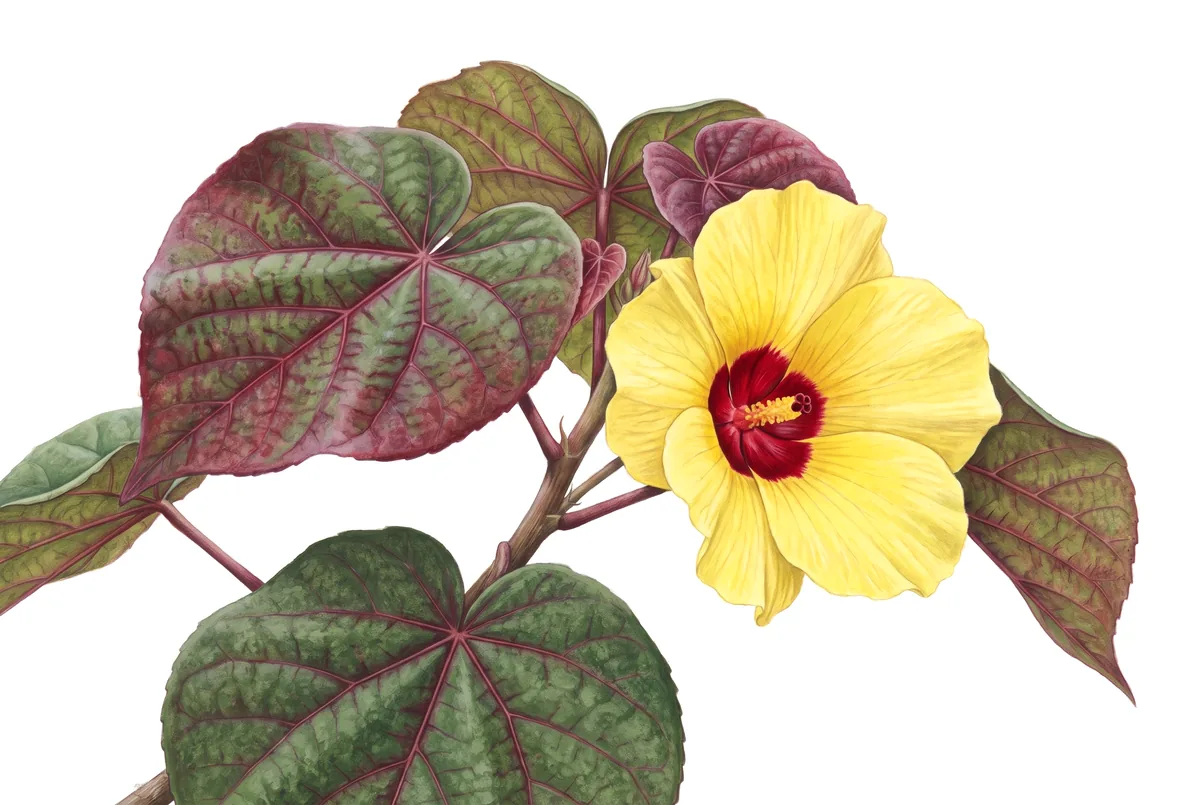
- The references disagree. A grower's fact sheet gives red and green foliage, and the City of Parramatta's Red Cottonwood sheet dark green and red heart-shaped leaves; South Australia's Plant Selector lists the foliage of 'Rubra' as dark green. HortFlora notes a purplish-brown-leaved form of the cottonwood, in a note that follows its account of the variety glaber and does not name Rubra, and the City of Burnside's sheet for the species gives dark green and maroon. The Flora of Australia says the species is cultivated as an ornamental, including cultivars with purple or variegated leaves; it names no cultivar, so it does not name Rubra either.
- How big does red cottonwood grow?
- South Australia's Plant Selector gives 6 to 8 m tall and wide; a grower's fact sheet and the City of Parramatta give 8 m tall and 5 m wide. The grower gives a medium rate of growth.
- What flowers does red cottonwood have?
- Bright yellow with a black spot in the centre, by the Plant Selector and the grower's fact sheet; yellow and funnel-shaped with a deep crimson centre, by the City of Parramatta's Red Cottonwood sheet. The Plant Selector gives summer, the grower spring.
- What does syn. Talipariti mean on a list?
- It refers to Talipariti tiliaceum, the name GBIF accepts for the cottonwood species. The Australian Plant Census keeps the name Hibiscus tiliaceus and lists Talipariti tiliaceum as a synonym, so both names mean the same tree.
Sources
- GBIF species match API (Hibiscus tiliaceus, treated by GBIF as a synonym of Talipariti tiliaceum)
- Australian Plant Census (APC), the National Species List: Hibiscus tiliaceus (the species name and its synonyms; and in sources/hibiscus-tiliaceus/)
- Plant Selector+ (Botanic Gardens and State Herbarium of South Australia, the Green Infrastructure Project): Hibiscus tiliaceus 'Rubra'
- Flora of Australia (Australian Biological Resources Study), the online profile of Hibiscus tiliaceus L. (its Uses line on cultivars with purple or variegated leaves, which names no cultivar and so does not name Rubra)
- A grower's fact sheet (Ellenby Tree Farm): Hibiscus tiliaceus rubra, Red Cottonwood (the grower's own description)
- City of Parramatta (New South Wales), street tree sheet: Red Cottonwood (the sheet gives the botanic name as Hibiscus tiliaceus)
- HortFlora, the Horticultural Flora of South-eastern Australia (Royal Botanic Gardens Victoria): Hibiscus tiliaceus, its note on a purplish-brown foliaged form (the note follows the account of var. glaber and does not name Rubra)
- City of Burnside (South Australia), Tree Species Fact Sheet: Cottonwood, Hibiscus tiliaceus (written under the species name; cited for its foliage colour only)
- The HortOS catalogue and guides (specifying and procuring trees; judging nursery plant quality)
The growers, sizes and prices above are live and change as lists arrive. Cite this page: HortOS, Red cottonwood (Hibiscus tiliaceus 'Rubra'), https://au.hortosapp.com/plants/hibiscus-tiliaceus-rubra-syn-talipariti.
Found a fact that is wrong? Tell us and it is checked against its source.