Gardenia augusta
Gardenia
Every Gardenia augusta on HortOS in one place: the plain species and 11 varieties. Pick a size to see it across all of them.
61 growers · 14 sizes · from $1.55 ex GST
- Type
- Evergreen shrub
- Height
- 0.9 m to 2.4 m
- Spread
- 1 m to 2.4 m
- Growth
- Moderate
- Flowers
- White, late spring to late autumn by an Australian fact sheet; summer to winter by HortFlora
- Sun
- Some shade, above all from full summer heat in a hot or tropical climate; full sun in cooler areas
- Frost
- Dislikes frost and cold climates
- In Australia
- Not native
Some growers show prices to verified trade buyers. Sign in or sign up with your ABN to see them and order.
Showing 50 of 161 offers (the smallest sizes first). Show all 161 or pick a size or state above.
Growing gardenia
An Australian gardening fact sheet calls gardenias warm climate plants at their best in a mild, humid climate, above all in frost-free areas north of Sydney and Perth, and able to grow in Adelaide and Melbourne in a warm spot. It says they hate frost and cold climates.
The same sheet asks for slightly acidic, cool, moist, well-drained soil and some shade, above all from full summer heat in a hot or tropical climate, with full sun in cooler areas. It says to water well, particularly from spring to summer while the plant flowers, to mulch the roots and to feed in spring and summer. The NC State extension toolbox adds that the roots are shallow and resent disturbance and competition from tree roots, and that soil beside a concrete path or foundation may be too alkaline.
Little pruning is needed unless it is grown as a hedge, by the Australian sheet. The toolbox prunes in spring for shape, since flowers come on new growth, and the Missouri Botanical Garden prunes after flowering; both say not to feed in autumn, which brings on tender growth.
The Australian sheet lists the common problems: buds that fall or fail to open, yellow leaves in spring, root nematodes in sandy soil, and scale and mealybug, which it reads as signs of a plant under stress. The toolbox calls the plant moderately drought tolerant, and both American references rate its maintenance as high. The Australian Plant Census, which leaves out plants known only from cultivation, has no entry for it.
Using gardenia
The Australian fact sheet names gardenias for mass plantings and hedges, as a background planting, as a standard in a pot, and in large pots, where it says they last for years in a good potting mix. It adds that the flowers can be picked for a buttonhole or posy but bruise easily. The Missouri Botanical Garden suggests siting plants near entries or paths so the fragrance can be enjoyed. Growers on HortOS list the species under its named forms: the fact sheet calls Florida the most commonly grown variety, gives Magnifica as a taller plant with larger flowers, and describes Radicans as a dwarf form of prostrate habit. HortFlora, the horticultural flora of the Royal Botanic Gardens Victoria, lists a run of newer cultivars as little known in appearance or history. No reference read gives a planting density.
What to check before you buy
Check the name: Gardenia augusta on a list is Gardenia jasminoides, the accepted name by GBIF, and the named form is what sets the size. The table above shows the sizes growers list, and the pot sizes guide explains the grades. For roots, pests and hardening off, the plant quality guide sets out what to check. Stock that crosses a state border moves under the state and territory biosecurity rules on moving plants and soil. The drawbacks the references give: it dislikes frost, the American references rate it high maintenance, and bud drop and yellow leaves are common.
Cautions
The ASPCA lists gardenia, Gardenia jasminoides, as toxic to dogs, cats and horses. It gives genioposide and gardenoside as the toxic principles, and mild vomiting or diarrhoea and hives as the clinical signs.
Used forhedging and screeningmass plantingpots and courtyardscut flowerspecimen
Prices are set by each grower and shown ex GST. Availability is confirmed by the grower at order.
Common questions
- Who grows Gardenia augusta wholesale in Australia?
- 61 wholesale growers list Gardenia augusta on HortOS right now, each with their own pot sizes and trade prices. They are in New South Wales, Queensland, Victoria, Western Australia, the Northern Territory and Tasmania. The growers are named on this page.
- What pot sizes does Gardenia augusta come in?
- Growers on HortOS list Gardenia augusta in Tube, 42mm, 50mm, 75mm, 125mm, 140mm, 175mm, 180mm, 200mm, 250mm and 4 more sizes.
- How do I order Gardenia augusta from these growers?
- HortOS is for the trade. Add the lines you want to a list and send it: each grower gets their part of the order by email, confirms what they have and quotes freight, and nothing is bought until you approve it. Listing, searching and ordering are free.
- Is Gardenia augusta the same as Gardenia jasminoides?
- Yes. GBIF gives Gardenia jasminoides as the accepted name and files Gardenia augusta under it, and HortFlora and the Missouri Botanical Garden treat the two names as one plant. Growers still write augusta.
- How big does a gardenia grow?
- An Australian gardening fact sheet gives 1 to 2 m tall and perhaps as wide. The NC State toolbox gives 1.2 to 2.4 m high and wide and the Missouri Botanical Garden 0.9 to 1.8 m. HortFlora describes a tree or shrub to 10 m or more, out of line with the other references read, and Flora of China gives the species in China 0.3 to 3 m.
- When do gardenias flower?
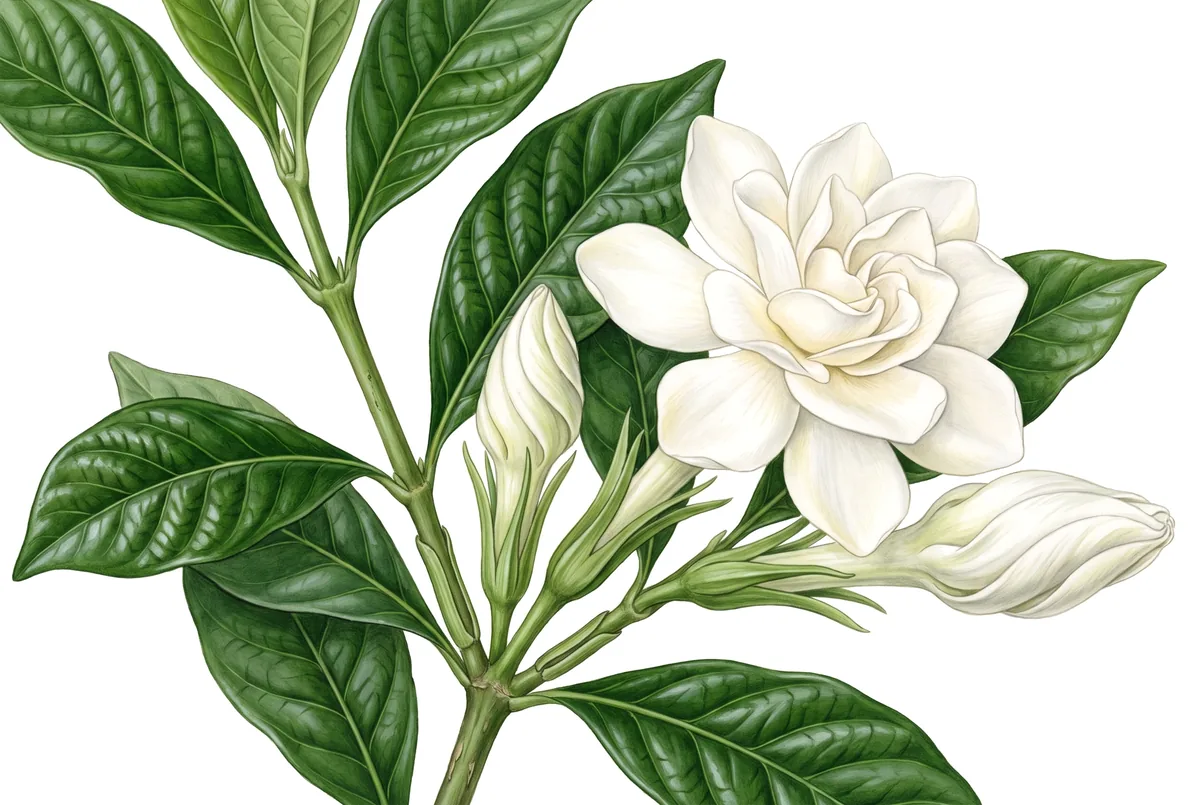
- In the warmer months, by an Australian gardening fact sheet, which gives late spring to late autumn. HortFlora gives summer to winter. The flowers are white to cream, age to yellow by the NC State toolbox, and are extremely fragrant.
- Why do gardenia leaves go yellow?
- An Australian gardening fact sheet says spring yellowing was long treated with Epsom salts, but that the plant more likely wants a general fertiliser and water. The Missouri Botanical Garden puts yellow leaves down to hard water, lack of iron or soil that is too alkaline. Where leaves stay yellow and the plant wilts in sandy soil, the fact sheet says to check the roots for nematodes.
- Do gardenias need sun or shade?
- An Australian gardening fact sheet says they need some shade, particularly from full summer heat in a hot or tropical climate, and are happy in full sun in cooler areas. It advises protection from hot afternoon sun.
- Are gardenias frost hardy?
- No, by an Australian gardening fact sheet, which says they hate frost and cold climates. It places them at their best in frost-free areas north of Sydney and Perth and says they will grow in cooler areas in a warm, protected position.
- Are gardenias poisonous to dogs and cats?
- The ASPCA lists Gardenia jasminoides as toxic to dogs, cats and horses, with genioposide and gardenoside as the toxic principles. It gives mild vomiting or diarrhoea and hives as the signs.
Sources
- GBIF species match API (Gardenia jasminoides, accepted; Gardenia augusta, a synonym of it)
- Atlas of Living Australia (species search for Gardenia augusta; biocache state facets)
- Australian Plant Census (APC), the National Species List search: no entry for Gardenia jasminoides
- Flora of China, volume 19: Gardenia jasminoides
- ASPCA Animal Poison Control, Toxic and Non-Toxic Plants: Gardenia (Gardenia jasminoides)
- HortFlora, the Horticultural Flora of South-eastern Australia (Royal Botanic Gardens Victoria): Gardenia jasminoides, and the genus Gardenia with its cultivars
- An Australian gardening fact sheet: Growing Gardenias (Gardenia augusta)
- An Australian gardening fact sheet: Gardenias
- North Carolina State Extension Gardener Plant Toolbox: Gardenia jasminoides
- Missouri Botanical Garden Plant Finder: Gardenia jasminoides
- The HortOS guides (nursery pot sizes; nursery plant quality) and the HortOS listings of the species' forms
The growers, sizes and prices above are live and change as lists arrive. Cite this page: HortOS, Gardenia (Gardenia jasminoides), https://au.hortosapp.com/plants/gardenia-augusta.
Found a fact that is wrong? Tell us and it is checked against its source.