- Type
- Evergreen tree
- Sun
- Full sun to part shade outdoors, by the NC State toolbox; as a houseplant, bright indirect light
- In Australia
- Naturalised
Growing banyan
Indoors. The NC State toolbox, an American reference, grows it as a houseplant in bright, indirect light, in a good potting mix with perlite that is moist but well drained and near neutral. It says to water well when the top 5 to 8 cm of the mix is dry, empty any water left in the saucer, keep it out of cold draughts and sudden swings of temperature, and keep the air humid. It notes that potted plants make none of the aerial roots seen in the wild.
Outdoors. The same toolbox gives full sun to part shade and clay, loam or sand with good drainage, and rates it on the American system for USDA zones 10a to 12b. It warns that planted out it grows fast and can kill a host tree it starts on. No Australian reference read gives a frost rating, a climate zone or a size for planting it out here.
Problems. The toolbox names spider mites, mealybugs, scale and fungus gnats, root rot from overwatering, leaf spot where the air is still and damp, dry brown patches from underwatering and cracked leaves when the air is too dry.
Propagation. Stem cuttings or air layering, by the toolbox, which also lists seed.
Using banyan
The NC State toolbox describes two lives for it. Outdoors it is usually planted for shade, and used in parks and gardens as a shade or street tree, with birds drawn to its figs; in colder places it is a houseplant grown for its leaves. HortFlora, the horticultural flora of south-eastern Australia, says it is sometimes grown as a pot plant for its early growth, and that in nature a single banyan may spread over several hectares on a frame of trunk-like aerial roots. The smaller cultivar Audrey has a page of its own.
What to check before you buy
Growers list the straight species and the cultivar Audrey separately, so check which one a line is; the table above shows the sizes growers list. The guide to nursery pot sizes explains what each size means, and the guide to judging nursery plant quality covers the roots, pests under the leaves and leaf condition before stock leaves the grower. Stock that crosses a state border moves under the state and territory biosecurity rules on moving plants and soil. Plan for the site: outdoors, the toolbox warns, its roots can damage structures nearby.
Cautions
The NC State toolbox, an American extension service and not a poisons register, gives it low-severity poison characteristics, says to keep it from pets and children as it is toxic if eaten, and advises gloves because the sap can irritate the skin. Outdoors, the same toolbox warns, its root system can damage buildings and other structures planted near it, and it reports that the tree has become a serious weed in Florida since it was introduced there.
Used forindoorpots and courtyardsshade
Prices are set by each grower and shown ex GST. Availability is confirmed by the grower at order.
Common questions
- Is the banyan an Australian native?
- No. Ficus benghalensis comes from the Indian subcontinent, from India and Pakistan to Nepal and Sri Lanka, by the NC State toolbox. The Australian Plant Census records it as naturalised in Queensland, and the Atlas of Living Australia holds most of its Australian records there.
- How big does a banyan get?
- In the wild the NC State toolbox gives up to about 30 m, with a wide crown carried on aerial roots that turn into secondary trunks. HortFlora says a single tree may spread over several hectares in nature. In a pot indoors it stays a houseplant and makes no aerial roots.
- What do the leaves look like?
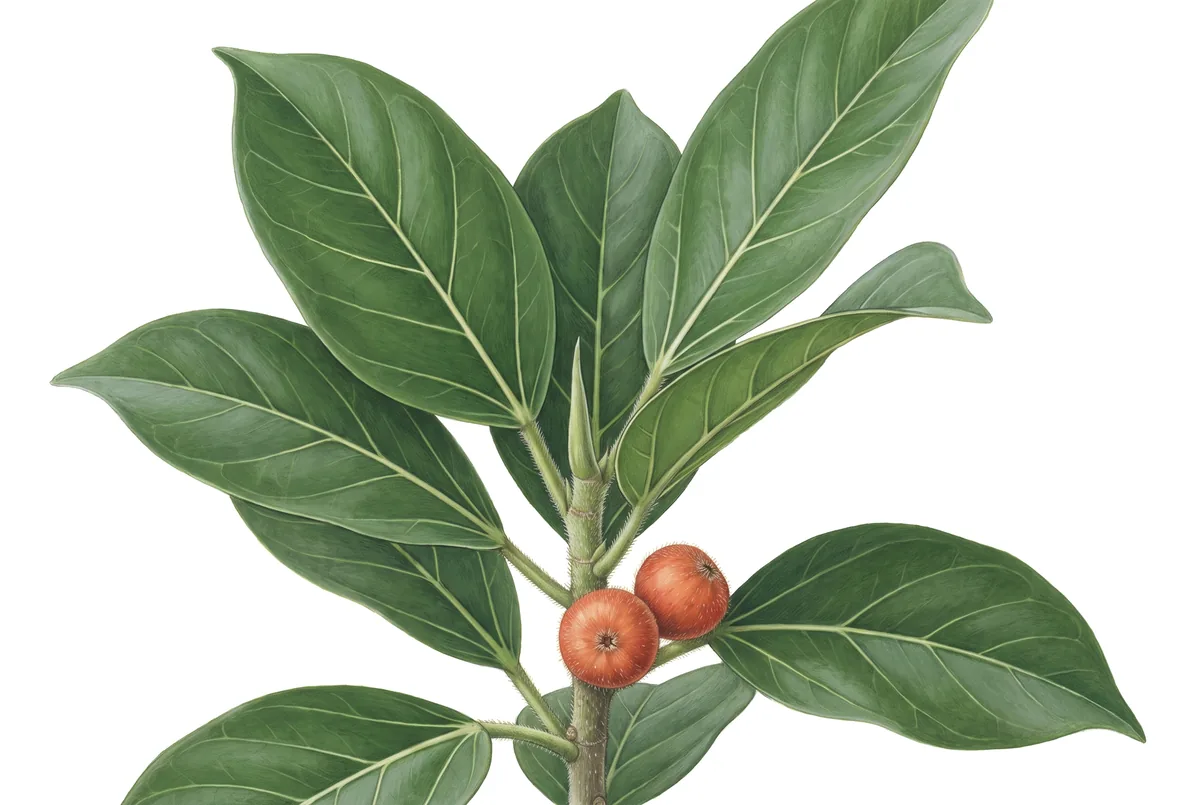
- Simple, alternate and leathery, elliptical to ovate with a pointed tip and smooth edges, green with light-coloured veins, finely hairy underneath and 10 to 25 cm long, clustered at the branch tips, by the NC State toolbox. HortFlora describes them as oval to elliptic and felty.
- Can a banyan be grown indoors?
- Yes. The NC State toolbox grows it as a houseplant in bright, indirect light, in a moist but well-drained potting mix, watered when the top 5 to 8 cm is dry, and kept out of cold draughts.
- Is Ficus benghalensis poisonous?
- The NC State toolbox, which is not a poisons register, says it is toxic if eaten and that the sap can irritate the skin; the cautions above give its advice in full.
- How is it propagated?
- By stem cuttings or air layering, by the NC State toolbox, which also lists seed. It notes that the figs are pollinated by a fig wasp.
Sources
- GBIF species match API
- Australian Plant Census (APC), the National Species List: Ficus benghalensis
- Atlas of Living Australia
- HortFlora, the Horticultural Flora of South-eastern Australia (Royal Botanic Gardens Victoria): the genus Ficus
- North Carolina State Extension Gardener Plant Toolbox: Ficus benghalensis
- The HortOS guides (nursery pot sizes; judging nursery plant quality)
The growers, sizes and prices above are live and change as lists arrive. Cite this page: HortOS, Banyan (Ficus benghalensis), https://au.hortosapp.com/plants/ficus-benghalensis.
Found a fact that is wrong? Tell us and it is checked against its source.