Euphorbia characias wulfenii
Euphorbia / Spurge
8 growers · 3 sizes · from $1.65 ex GST
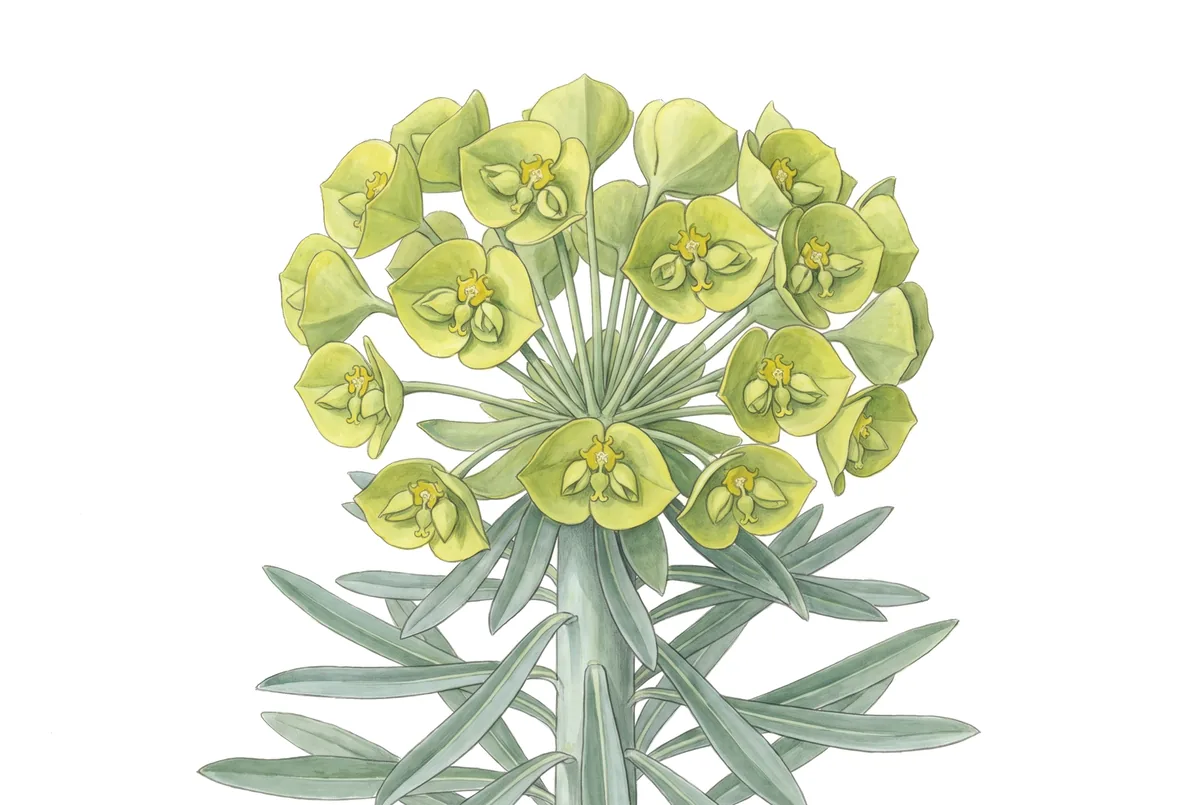
- Type
- Evergreen perennial
- Height
- 0.6 m to 1.8 m
- Spread
- 0.45 m to 1.5 m
- Flowers
- Greenish-yellow, early spring to early summer
- Sun
- Full sun; to part shade by the Missouri Plant Finder
- In Australia
- Not native
Some growers show prices to verified trade buyers. Sign in or sign up with your ABN to see them and order.
| Size | Grower | PricePrice ex GST | ||
|---|---|---|---|---|
| 140mm | Ballarat Advanced Tree Nursery140mm | Price shown to verified trade buyers. Sign in with your ABN to see it. | ||
| 200mm | Wells Design Landscapes and Gardens200mm | Price shown to verified trade buyers. Sign in with your ABN to see it. | ||
| 140mm | Premier Plants140mm | Price shown to verified trade buyers. Sign in with your ABN to see it. | ||
| 200mm | Premier Plants200mm | Price shown to verified trade buyers. Sign in with your ABN to see it. | ||
| 140mm | Plant Nest140mm | $12.95 | ||
| 140mm | Awesome Plants140mm | $15.99 | ||
| 200mm | Plant Nest200mm | $20.95 | ||
| 140mm | Greenstead Nursery140mm | $6.95 | ||
| 140mm | Chartwell Nurseries140mm | $6.75 | ||
| 50mm | Devon Tubestock Nursery50mm | $1.65 |
Growing euphorbia characias wulfenii
Position and soil. The RHS, a British reference, gives full sun and a light, well-drained soil, chalk, loam or sand, acid to alkaline; the Missouri Plant Finder, an American one, allows part shade and says the plant needs sharply drained soil and dislikes heavy clay. Both American references read warn that wet soil in winter can be fatal or cause problems. Missouri finds it happiest in a Mediterranean-type climate and says hot, humid summers can stress it.
Water. Dry to medium, by Missouri, which finds its drought tolerance generally good but says it welcomes some moisture in dry summer periods. No Australian reference read gives a drought or frost rating for it.
Pruning. Each stem generally lives two years, flowering in its second, by HortFlora and the North Carolina toolbox, and Missouri says plants often decline after flowering. The RHS says to cut the flowered shoots back to the ground in late summer or autumn, and Missouri to cut them at the base after flowering to give the new stems room.
Propagation. The RHS gives division in early spring or basal cuttings in spring or early summer, the cuts dipped in charcoal or lukewarm water to stop bleeding; the North Carolina toolbox has stem cuttings left to dry for a few days before planting.
Pests. The RHS, writing for Britain, finds it may be prone to aphids and generally free of disease, and Missouri knows no serious problems.
Using euphorbia characias wulfenii
The overseas references give it to beds and borders (Missouri), to Mediterranean, architectural, cottage, courtyard and wildlife plantings (the RHS), and as a specimen or ground cover on dry, sunny banks with poor soil where upkeep is hard (the North Carolina toolbox, writing of the species). The RHS lists it among its plants for pollinators. No reference read gives a planting distance; the spread runs from 0.45 m by Missouri to 1.5 m by the RHS.
What to check before you buy
Growers list this plant as Euphorbia characias wulfenii and, under the species, named forms such as Glacier Blue, Silver Swan and Tasmanian Tiger, so read the full name before comparing prices. HortFlora separates the two cultivated subspecies by height and glands: subsp. characias has stems under 0.8 m and dark reddish-brown, notched or short-horned glands, wulfenii stems to 1.8 m and yellow, long-horned glands. The table above shows the sizes growers list, and the guide to nursery plant quality sets out what to check before stock leaves the grower. Stock crossing a state border moves under the state and territory biosecurity rules on moving plants and soil.
Cautions
HortFlora says the white latex of euphorbias is poisonous if swallowed and can irritate the skin. The RHS calls this subspecies an irritant to skin and eyes, harmful if eaten, and advises gloves and protective gear when handling it; the North Carolina toolbox says the sap of the species can damage the cornea and cause dermatitis.
Used forpollinators and wildlifespecimen
Prices are set by each grower and shown ex GST. Availability is confirmed by the grower at order.
Common questions
- Who grows Euphorbia characias wulfenii wholesale in Australia?
- 8 wholesale growers list Euphorbia characias wulfenii on HortOS right now, each with their own pot sizes and trade prices. They are in Victoria and South Australia. The growers are named on this page.
- What pot sizes does Euphorbia characias wulfenii come in?
- Growers on HortOS list Euphorbia characias wulfenii in 50mm, 140mm and 200mm.
- What does Euphorbia characias wulfenii cost wholesale?
- The median trade price in a 140 mm pot is $9.95 ex GST, across 4 growers who price it. Prices by pot size and state are on its trade price page.
- How do I order Euphorbia characias wulfenii from these growers?
- HortOS is for the trade. Add the lines you want to a list and send it: each grower gets their part of the order by email, confirms what they have and quotes freight, and nothing is bought until you approve it. Listing, searching and ordering are free.
- How tall does Euphorbia characias wulfenii grow?
- The references differ. HortFlora and VicFlora give stems up to 1.8 m; the RHS a plant of 1 to 1.5 m high and wide; the Missouri Plant Finder and the North Carolina toolbox only 0.6 to 0.9 m, which Missouri says is shorter than the species.
- How is it told from the other subspecies?
- By HortFlora, subsp. wulfenii has taller stems, broader flower spikes and yellow glands with long horns, where subsp. characias has stems under 0.8 m and dark reddish-brown glands. The two American references read describe wulfenii's glands as dark purple instead, and its leaves as larger.
- Is it a weed in Australia?
- VicFlora, the flora of Victoria, says that although widely cultivated it has not been shown to have naturalised there: it turns up as an occasional garden escape or persists at old garden sites. The Australian Plant Census holds no entry for the species.
- What is its botanical name?
- Euphorbia characias subsp. wulfenii, accepted by GBIF with the authority (Hoppe ex W.D.J.Koch) Radcl.-Sm.; the RHS and HortFlora give Euphorbia wulfenii as a synonym. HortFlora and VicFlora write the authority differently, and the Australian Plant Census, which holds no entry for the species, cannot settle it. HortFlora calls the plant Dalmatian spurge, VicFlora large Mediterranean spurge and the RHS Mediterranean spurge.
- Does it need pruning?
- Each stem flowers in its second year, and the Missouri Plant Finder says plants often decline after flowering. The RHS says to cut the flowered shoots to the ground in late summer or autumn; the Missouri Plant Finder says to cut them at the base after flowering so the new stems have room. Wear gloves: the sap is an irritant.
Sources
- GBIF Backbone Taxonomy: Euphorbia characias subsp. wulfenii
- Australian Plant Census (APC), Council of Heads of Australasian Herbaria: Euphorbia characias
- VicFlora, Flora of Victoria (Royal Botanic Gardens Victoria): Euphorbia characias subsp. wulfenii; Euphorbia
- Atlas of Living Australia: Euphorbia characias subsp. wulfenii
- HortFlora, the Horticultural Flora of South-eastern Australia (Royal Botanic Gardens Victoria): Euphorbia characias; Euphorbia
- RHS (Royal Horticultural Society) plant profile: Euphorbia characias subsp. wulfenii
- Missouri Botanical Garden Plant Finder: Euphorbia characias subsp. wulfenii
- North Carolina State Extension Gardener Plant Toolbox: Euphorbia characias
- The HortOS catalogue
The growers, sizes and prices above are live and change as lists arrive. Cite this page: HortOS, Euphorbia characias wulfenii (Euphorbia characias subsp. wulfenii), https://au.hortosapp.com/plants/euphorbia-characias-wulfenii.
Found a fact that is wrong? Tell us and it is checked against its source.