Cuphea hyssopifolia
1 grower · 1 size · from $6.60 ex GST
- Type
- Evergreen shrub
- Height
- 0.3 m to 0.6 m
- Spread
- 0.2 m to 0.8 m
- Growth
- Moderate
- Flowers
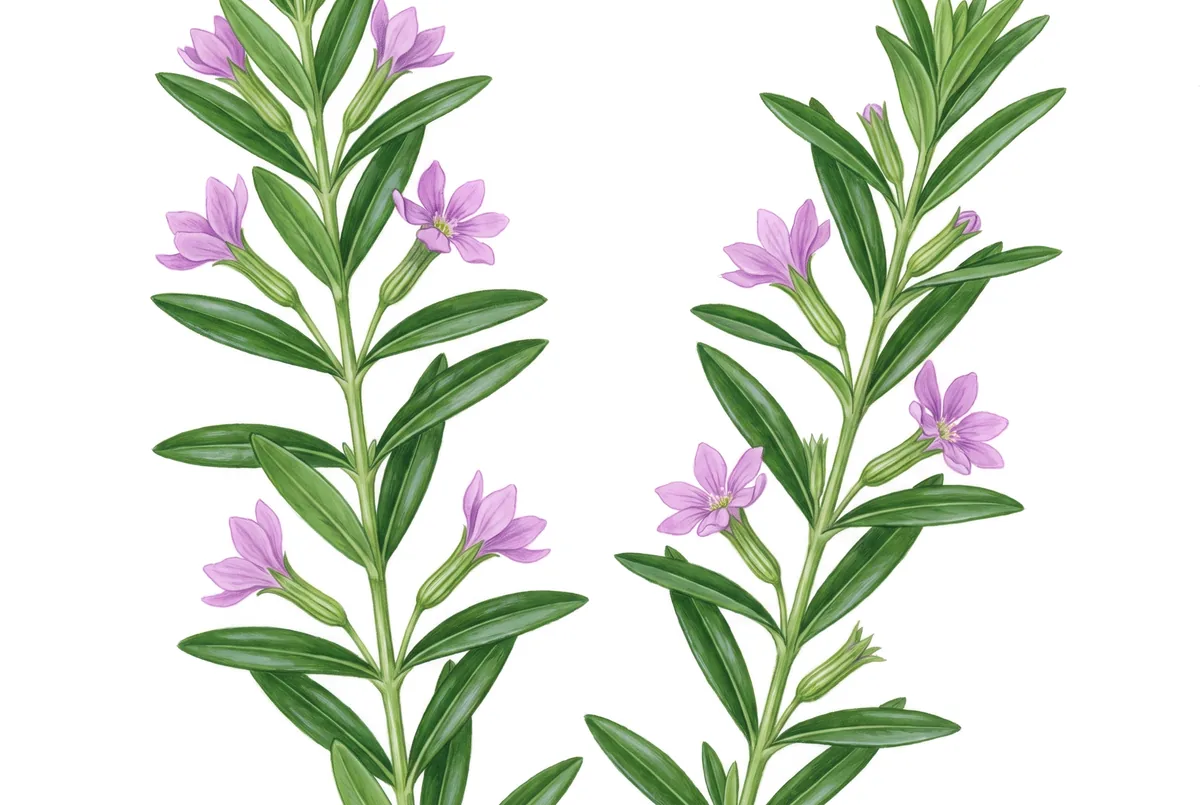
- Lilac, late winter to autumn
- Sun
- Full sun
- Drought
- Tolerant
- Salt wind
- Moderate
- Frost
- Dies back to the ground in cold weather and sprouts again from the base if well mulched
- In Australia
- Not native
| Size | Grower | PricePrice ex GST | ||
|---|---|---|---|---|
| 140mm | Mad About Plants140mm | $6.60 |
Growing false heather
Position. Full sun, by the North Carolina State toolbox, which says it takes high summer heat. The New South Wales flora records it from moist sites.
Soil and water. The toolbox says it adapts to most soils with good drainage, clay, loam or sand, withstands some drought but grows best with regular moisture, and is moderately salt tolerant. These are American observations; no Australian reference read grades it.
Climate. The toolbox gives USDA zones 9a to 11b and says that in cold weather it dies back to the ground in its cooler zones, sprouting again from the base if it was well mulched; where winters are colder it is grown as an annual, a container plant or a houseplant. No Australian reference read gives a frost figure.
Flowering. The New South Wales flora gives late winter to spring; HortFlora, the horticultural flora of south-eastern Australia, summer to autumn; the toolbox says it flowers profusely from summer until frost. Bees and butterflies visit the flowers, by the toolbox.
Pests. The toolbox lists mealybugs, thrips and whitefly, mostly on indoor plants, flea beetles that can strip the leaves quickly, and nematodes that weaken plants.
Propagation. From seed or softwood cuttings, by the toolbox.
In Australia. The New South Wales flora calls it widely cultivated and occasionally escaping from cultivation, and the Australian Plant Census records it as doubtfully naturalised in New South Wales. The NSW WeedWise list, as read, has no entry for it. The toolbox notes it has naturalised in New Zealand and Hawaii and is considered weedy in Hawaii.
Using false heather
The North Carolina State toolbox suggests false heather for borders, edging along walkways, groundcover, mass plantings and hedges, and for containers and hanging baskets on a patio. For spacing, the toolbox's table gives only an 'available space to plant' band, not a planting distance; its spread of 0.2 to 0.8 m is the figure to work the centres from. HortFlora names seven cultivars sold in south-eastern Australia, among them Rob's Mauve, Golden Ruby and Star White, and growers also list a mauve form with its own page.
What to check before you buy
Check the flower colour on the line: the species is lilac to purplish pink, and the North Carolina toolbox notes cultivars with white and with pink flowers. The North Carolina toolbox says plants are best replaced every year where it is grown as an annual; in a frost-free garden it is a small evergreen shrub. The table above shows the sizes growers list. The guide to nursery plant quality covers what to check in the roots, canopy and for pests before stock leaves the grower. Stock that crosses a state border travels under that state's biosecurity rules.
Used formass plantinggroundcoverpots and courtyardspollinators and wildlife
Prices are set by each grower and shown ex GST. Availability is confirmed by the grower at order.
Common questions
- Who grows Cuphea hyssopifolia wholesale in Australia?
- 1 wholesale grower lists Cuphea hyssopifolia on HortOS right now, each with their own pot sizes and trade prices. They are in Queensland. The growers are named on this page.
- What pot sizes does Cuphea hyssopifolia come in?
- Growers on HortOS list Cuphea hyssopifolia in 140mm.
- How do I order Cuphea hyssopifolia from these growers?
- HortOS is for the trade. Add the lines you want to a list and send it: each grower gets their part of the order by email, confirms what they have and quotes freight, and nothing is bought until you approve it. Listing, searching and ordering are free.
- How big does false heather grow?
- The New South Wales flora gives it to 0.6 m high and HortFlora about 0.5 m. The North Carolina State toolbox gives 0.3 to 0.6 m high and 0.2 to 0.8 m wide.
- When does Cuphea hyssopifolia flower?
- The references differ. The New South Wales flora gives late winter to spring, HortFlora summer to autumn, and the North Carolina toolbox says it flowers profusely from summer until frost.
- Is false heather a real heather?
- No. The North Carolina toolbox says it belongs to the loosestrife family, Lythraceae, not the heather family; it is called false heather because it looks like one.
- Is false heather drought tolerant?
- The North Carolina toolbox says it withstands some drought but grows best with regular moisture, and that it is moderately salt tolerant. No Australian reference read grades it.
- Is Cuphea hyssopifolia a weed in Australia?
- The Australian Plant Census records it as doubtfully naturalised in New South Wales, and the New South Wales flora says it occasionally escapes from cultivation. The NSW WeedWise list, as read, has no entry for it.
- Can you grow false heather in a pot?
- Yes. The North Carolina toolbox lists it for containers and hanging baskets and as a houseplant in a warm, sunny spot where winters are cold.
Sources
- GBIF species match API
- Australian Plant Census (APC), the National Species List: Cuphea hyssopifolia
- PlantNET, the New South Wales flora online (Royal Botanic Garden Sydney), Flora of NSW
- Atlas of Living Australia
- NSW WeedWise (NSW Department of Primary Industries and Regional Development): the list of weeds by scientific name
- HortFlora, the Horticultural Flora of South-eastern Australia (Royal Botanic Gardens Victoria): Cuphea hyssopifolia
- North Carolina State Extension Gardener Plant Toolbox: Cuphea hyssopifolia
- The HortOS guides (judging-nursery-plant-quality)
The growers, sizes and prices above are live and change as lists arrive. Cite this page: HortOS, False heather (Cuphea hyssopifolia), https://au.hortosapp.com/plants/cuphea-hyssopifolia.
Found a fact that is wrong? Tell us and it is checked against its source.