Crinum pedunculatum
Swamp Lily / River Lily
Part of Crinum: see them all
21 growers · 11 sizes · from $1.50 ex GST
- Type
- Bulb
- Height
- 1 m to 3 m
- Spread
- 2 m to 3 m
- Flowers
- White, summer; late spring to early autumn by the native plant societies
- Sun
- Full sun to half shade or more; semi-shade for best results by the Australian Plants Society NSW
- Frost
- Tolerates frost
- In Australia
- Native
Some growers show prices to verified trade buyers. Sign in or sign up with your ABN to see them and order.
Also grown by 20 nurseries (no sizes or prices listed)
Enquire with them for sizes and prices.
- Bridgetown Community Landcare NurseryBridgetown, WA
- Burringbar Rainforest NurseryBurringbar, NSW
- Bushland Flora Pty LtdMt Evelyn, VIC
- Cabbage Tree NurseryDural, NSW
- Carl's Rainforest NurseryKiama Downs, NSW
- Coffs Harbour Regional Landcare Community NurseryWoolgoolga, NSW
- Firewheel NurseryDorroughby, NSW
- ForsterianaDarawank, NSW
- Harvest Seeds and Native PlantsTerrey Hills, NSW
- Hunter Indigenous PlantsBeresfield, NSW
- Maclean Landcare GroupTownsend, NSW
- Newcastle Wildflower NurseryGlendale, NSW
- Port Macquarie Landcare Community NurseryPort Macquarie, NSW
- Premier Palms NurseryMariginiup, WA
- RareplantsNambour, QLD
- Sydney Wildflower NurseryHeathcote, NSW
- Tamworth Regional LandcareWest Tamworth, NSW
- Visitor Centre & Native Plant NurserySt Ives, NSW
- Wildplant Community NurseryOurimbah, NSW
- Yuruga Nursery (Arakai Pty Ltd)QLD
Growing swamp lily
Position. The Australian Native Plants Society says it grows from full sun to half shade or more and can be planted successfully under established eucalypts. The Australian Plants Society NSW gives a semi-shaded position for best results and says it could be grown under established trees.
Soil and water. The Australian Plants Society NSW says it does best on a sandy, free-draining soil with adequate water but may tolerate heavier soils; the Australian Native Plants Society says it tolerates poor drainage and clay soils. In the wild the New South Wales flora finds it in swamps and along stream banks.
Climate. The Australian Native Plants Society says it is suitable for coastal areas and tolerates frosts; no reference read gives a frost figure in degrees. Its wild range is coastal, and the CSIRO key finds it just above sea level.
Pests. The Australian Plants Society NSW names lily caterpillar, which burrows into the false stem at ground level and shows as dropping, yellowing leaves; it says the caterpillars can be teased out with wire, or a hose may work. The Australian Native Plants Society names the striped black, white and yellow caterpillars of the moth Spodoptera picta, which can strip a young plant fast, and says snails and slugs take the fleshy leaves of young plants, which may need protecting.
Propagation. From seed kept moist, by both societies; seed sometimes germinates while still on the plant. The CSIRO key gives germination in 47 to 49 days.
Using swamp lily
The Australian Native Plants Society calls it a very versatile and hardy plant and a feature plant for the home garden, especially when large, and says swamp lilies flower well in containers; the Australian Plants Society NSW also suggests containers. The Australian Native Plants Society says it is hardy enough for street planting, and gives large plants beside street benches on a shopping strip in Marrickville, in Sydney, amenity planting around a public pool at Airlie Beach and beach planting at resorts in the Whitsundays as examples. The Australian Plants Society NSW suggests it in place of Gymea lily, Doryanthes excelsa, which it says grows taller and spreads wider, and asks that swamp lily be given some room to spread. No reference read gives a planting distance.
What to check before you buy
Swamp Lily on a grower's list is Crinum pedunculatum, the plant the Atlas of Living Australia calls swamp lily; the references also call it river lily, spider lily and crinum lily. The New South Wales flora notes that a few authors have treated it as a subspecies of Crinum asiaticum, a view it says does not seem well founded on present evidence, so read the botanical name when comparing lines. The table above shows the sizes growers list, and the guide to nursery pot sizes sets out what each size means. What to look for in the roots and for pests before stock leaves the grower is in the guide to nursery plant quality; the pests the references name are the lily caterpillar and the Spodoptera picta caterpillar. Stock moving between states travels under the state and territory biosecurity rules like any other plant.
Prices are set by each grower and shown ex GST. Availability is confirmed by the grower at order.
Common questions
- Who grows Crinum pedunculatum wholesale in Australia?
- 21 wholesale growers list Crinum pedunculatum on HortOS right now, each with their own pot sizes and trade prices. They are in Queensland, New South Wales and Western Australia. The growers are named on this page.
- What pot sizes does Crinum pedunculatum come in?
- Growers on HortOS list Crinum pedunculatum in Tube, 40mm, 50mm, 70mm, 75mm, 140mm, 200mm, 300mm, 305mm, 9.5L and 1 more sizes.
- What does Crinum pedunculatum cost wholesale?
- The median trade price in a 200 mm pot is $13.63 ex GST, across 4 growers who price it. Prices by pot size and state are on its trade price page.
- How do I order Crinum pedunculatum from these growers?
- HortOS is for the trade. Add the lines you want to a list and send it: each grower gets their part of the order by email, confirms what they have and quotes freight, and nothing is bought until you approve it. Listing, searching and ordering are free.
- Is Swamp Lily the same as Crinum pedunculatum?
- Yes. Swamp lily is the common name of Crinum pedunculatum in the Atlas of Living Australia and both native plant societies, and a list that says Swamp Lily without a cultivar name is selling the species. The references also call it river lily and spider lily.
- How big does a swamp lily grow?
- The Australian Native Plants Society gives up to 2 m high, or even 3 m, and 2 to 3 m across; the CSIRO key says it flowers as a shrub about 1 to 2 m tall. The leaves run 50 to 150 cm long by the New South Wales flora and the CSIRO key, to 2 m by the Australian Native Plants Society, and up to 15 cm wide.
- When does swamp lily flower?
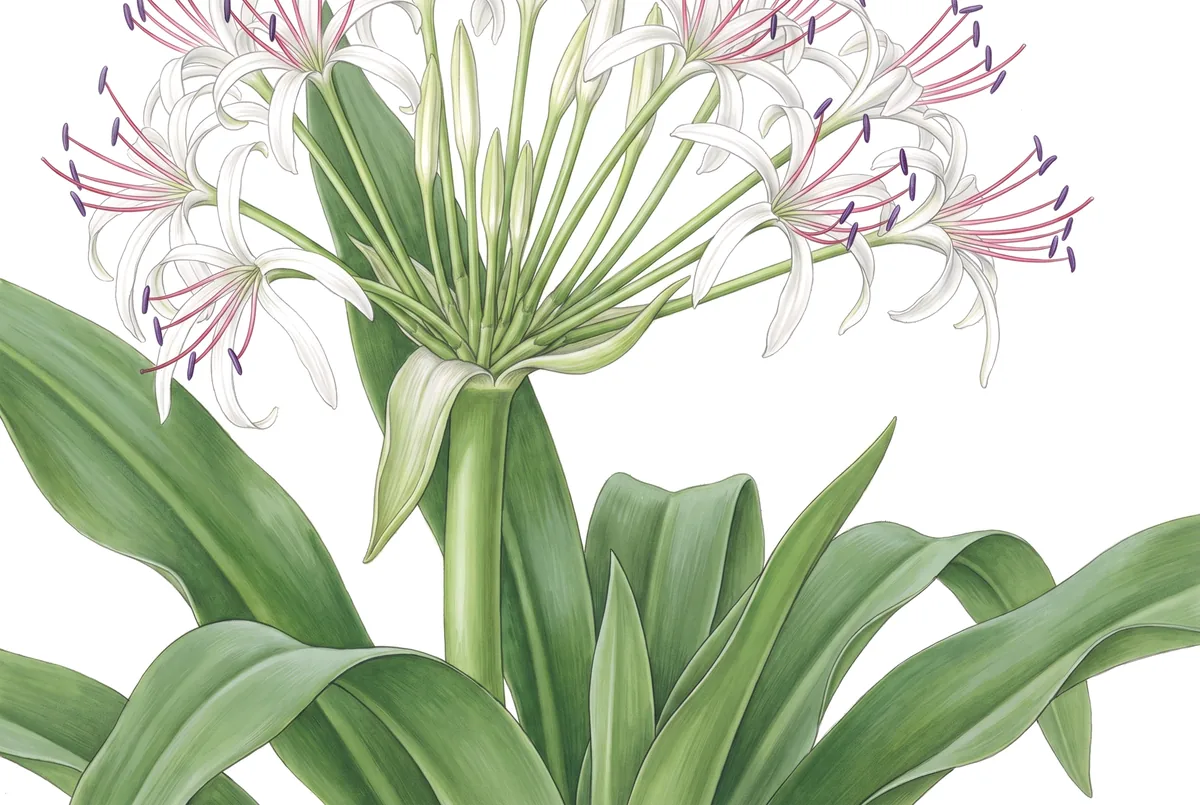
- In summer by the New South Wales flora, and from November to March by both native plant societies. The flowers are white and perfumed, about 10 cm across, in heads of 10 to 40 by the New South Wales flora, up to 25 by the societies and the CSIRO key, on a stalk to 150 cm, with long pink, red or purple stamens.
- Will swamp lily grow in wet or clay soil?
- The Australian Native Plants Society says it tolerates poor drainage and clay soils. The Australian Plants Society NSW says it does best on a sandy, free-draining soil with adequate water but may tolerate heavier soils. In the wild it grows in swamps and along stream banks.
- Does swamp lily grow in shade?
- The Australian Native Plants Society says it grows from full sun to half shade or more, and both societies say it can be planted under established trees. The Australian Plants Society NSW gives semi-shade for best results.
- Is swamp lily frost hardy?
- The Australian Native Plants Society says it tolerates frosts. No reference read gives a figure in degrees, and its wild range is coastal, from the Jervis Bay district of New South Wales north.
- What eats swamp lily?
- Lily caterpillar, which burrows into the false stem at ground level, by the Australian Plants Society NSW, and the striped caterpillars of the moth Spodoptera picta, which can strip a young plant fast, by the Australian Native Plants Society. Snails and slugs also take the fleshy leaves of young plants.
- Where is swamp lily native?
- To coastal eastern and northern Australia: north from the Jervis Bay district by the New South Wales flora, or from Newcastle by the Australian Native Plants Society, along most of the Queensland coast and into the Northern Territory, and on Lord Howe and Norfolk islands by the Australian Plant Census. The references also give New Guinea and the Pacific islands.
Sources
- GBIF species match API (the species name and family)
- Australian Plant Census (APC), the National Species List: Crinum pedunculatum (the authority, settled against GBIF's Tate)
- PlantNET, the New South Wales flora online (Royal Botanic Garden Sydney), Flora of NSW
- Australian Tropical Rainforest Plants, online edition (CSIRO)
- Atlas of Living Australia
- Australian Native Plants Society (Australia), plant profile
- Australian Plants Society NSW, plant database
- The HortOS guides (nursery pot sizes; judging nursery plant quality)
The growers, sizes and prices above are live and change as lists arrive. Cite this page: HortOS, Swamp lily (Crinum pedunculatum), https://au.hortosapp.com/plants/crinum-pedunculatum.
Found a fact that is wrong? Tell us and it is checked against its source.