Agave Pygmaea
Agave
No grower lists this plant right now
- Type
- Succulent
- Spread
- 0.3 m
- Flowers
- Yellow, winter, by LLIFLE for the species
- Sun
- Full sun or light shade (LLIFLE)
- Frost
- To about -3 C
- In Australia
- Not native
Growing agave seemanniana
Climate and frost. No Australian reference read covers this plant. LLIFLE, an overseas encyclopedia, calls it theoretically hardy to -3 C, particularly when dry, but advises avoiding hard freezes, and gives its heat tolerance as good. That is the only frost guidance found.
Position and soil. LLIFLE gives full sun or a lightly shaded spot, in porous soil with good drainage. At its type locality it grows on an arid white limestone wall at about 1000 m.
Water. Water thoroughly when the soil is dry to the touch; in winter, once every one to two months is enough, by LLIFLE. North Carolina State Extension, writing of agaves in general, warns that root rot follows soil that is too wet and overwatering.
Growth and pests. LLIFLE's page for the pygmaea form calls it a slow grower, while its page for Agave seemanniana as a whole calls that species relatively rapidly growing given the best conditions. For the genus, North Carolina State Extension names agave snout weevil, agave mite, mealybugs and scale as the pests to watch in the United States; no Australian reference read reports pests on this plant.
Using agave seemanniana
LLIFLE recommends it as a specimen in a container or in a well-drained spot in the garden, as an accent and for year-round foliage, and as a patio pot that can be moved about. The Flora of Australia notes that agaves in general are popular in Mediterranean-style landscape design and waterwise gardening. North Carolina State Extension lists rock gardens, waterwise gardens and containers among the uses of agaves in general. No reference read gives a planting distance.
What to check before you buy
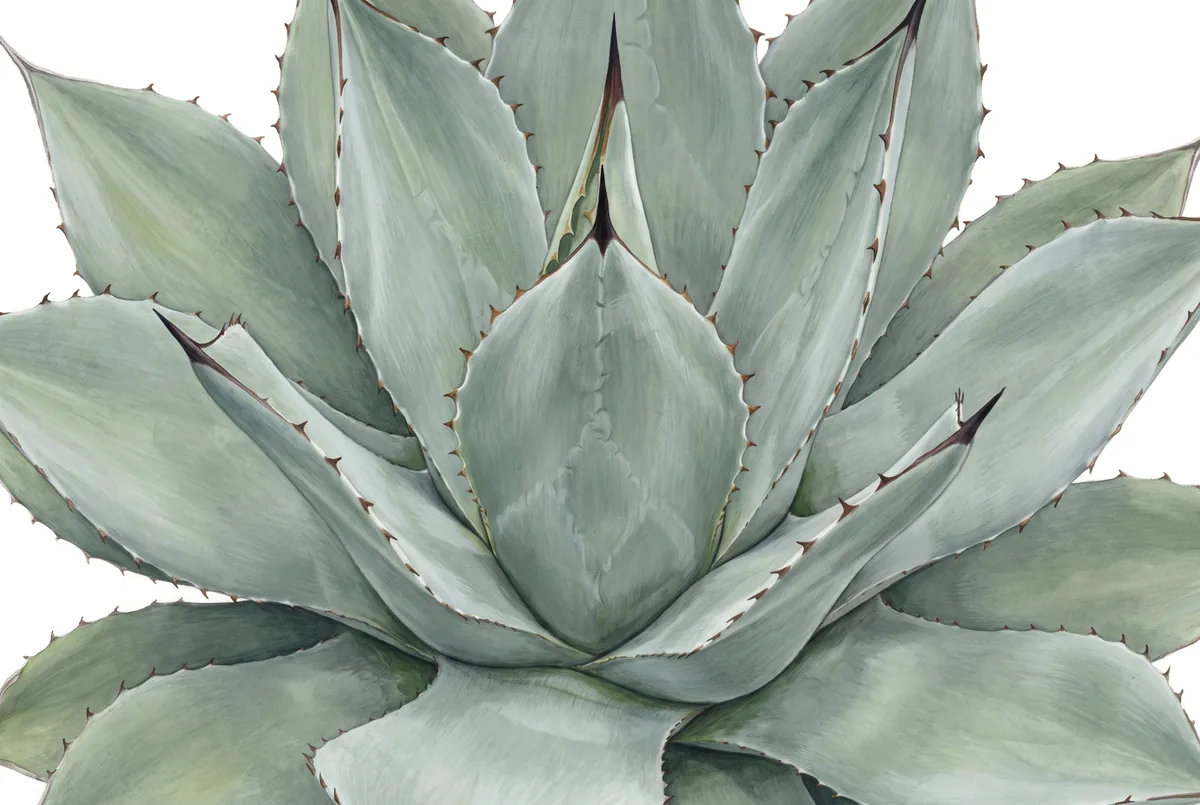
Growers list this plant as Agave pygmaea, and it is also listed under the name Dragon Toes; no reference read describes Dragon Toes, so the label name alone does not tell a buyer how it differs, if it does, from the plant described here. The table above shows the sizes growers list, and the HortOS guide to nursery pot sizes explains the pot grades. The leaves carry sharp spines, by LLIFLE. In Brisbane, the council's list of locally significant pest vegetation under its Natural Assets Local Law names Agave spp., the whole genus. Stock crossing a state border moves under the state and territory biosecurity rules on plants and soil.
Cautions
LLIFLE warns that Agave seemanniana is armed with sharp spines, and that taking suckers is awkward because they sit right against, or under, the spiny parent. North Carolina State Extension says the sap of some agaves can cause contact dermatitis in some people.
Agave spp., the genus as a whole, is on Brisbane City Council's list of locally significant pest vegetation species managed under its Natural Assets Local Law (Brisbane City Council, list of locally significant pest vegetation species managed under the Natural Assets Local Law)
Used forspecimenpots and courtyards
Prices are set by each grower and shown ex GST. Availability is confirmed by the grower at order.
Common questions
- Is Agave pygmaea the same as Agave seemanniana?
- GBIF, World Flora Online and the RHS treat Agave pygmaea Gentry as a synonym of Agave seemanniana Jacobi. LLIFLE also lists it as Agave seemanniana subsp. pygmaea, and says it may merely be a stunted form of that variable species. The trade still sells it as Agave pygmaea.
- How big does Agave pygmaea grow?
- LLIFLE gives rosettes rarely more than 30 cm across, with leaves 12 to 28 cm long, and says it often makes some offsets. Typical Agave seemanniana is larger, with leaves 30 to 35 cm long and up to 40 cm, by the same reference. No reference read gives a height.
- Is Agave pygmaea frost hardy?
- No Australian reference read gives a frost figure. LLIFLE, an overseas succulent encyclopedia, calls it theoretically hardy to -3 C, particularly when dry, and advises avoiding severe freezes.
- What is Agave pygmaea Dragon Toes?
- It is a name growers list this agave under. No reference read describes Dragon Toes or says who named it, so this page cannot say whether it is a distinct selection or the dwarf form under a trade name.
- Does Agave pygmaea flower?
- Yes. LLIFLE gives funnel-shaped yellow flowers for the species, only 32 to 35 mm long in the pygmaea form, and winter flowering. North Carolina State Extension says most agaves die after the flowers set seed, and the RHS says agaves can be perennial or flower once and die; no reference read says which applies to this plant.
- Is Agave pygmaea native to Australia?
- No. It comes from Chiapas in southern Mexico, where its type locality is an arid white limestone wall at about 1000 m, by LLIFLE; Agave seemanniana as a whole grows from Mexico to Costa Rica.
Sources
- GBIF species match API: Agave pygmaea, a synonym of Agave seemanniana
- GBIF species match API: Agave seemanniana
- World Flora Online: Agave pygmaea, placed under Agave seemanniana
- Flora of Australia online (Australian Biological Resources Study): Agave
- Australian Plant Census, taxonomy search: Agave pygmaea and Agave seemanniana
- Atlas of Living Australia species search: Agave pygmaea and Agave seemanniana
- RHS (Royal Horticultural Society) plant profile: Agave seemanniana
- LLIFLE, Encyclopedia of Living Forms: Agave pygmaea
- LLIFLE, Encyclopedia of Living Forms: Agave seemanniana
- North Carolina State Extension Gardener Plant Toolbox: Agave
- Brisbane City Council, list of locally significant pest vegetation species managed under the Natural Assets Local Law
- The HortOS listing (the names growers list it under), and the HortOS guide to nursery pot sizes
The growers, sizes and prices above are live and change as lists arrive. Cite this page: HortOS, Agave seemanniana (Agave seemanniana), https://au.hortosapp.com/plants/agave-pygmaea.
Found a fact that is wrong? Tell us and it is checked against its source.